Upholstered furniture acts as a reservoir for indoor particulate matter, including dust mites, skin cells, food particles, and airborne pollutants that settle into soft textile surfaces during daily use.
Environmental health studies indicate that fabric based furnishings can retain higher concentrations of allergens and microbial contaminants than hard surfaces, especially in low ventilation indoor environments.
Accumulated moisture and organic residue within upholstery layers may also support bacterial growth and odor formation if not removed periodically.
In this guide, I will explain how to clean upholstery safely using tested cleaning methods based on fabric type, stain composition, and manufacturer care codes in 5 steps.
Each step is designed to reduce cleaning risks while improving hygiene, comfort, and durability without damaging the furniture material.
Before You Start: Key Checks and Safety Steps
Upholstery cleaning should begin with basic safety checks to prevent fabric damage, dye transfer, or chemical reactions.
Many furniture fabrics react differently to moisture or solvents, so identifying cleaning limitations before applying any solution helps avoid permanent discolouration or fiber weakening.
1. Read the care label codes (W, S, WS, X)
- W = Safe to clean with water-based solutions
- S = Use solvent-based cleaner only (no water)
- WS = Both water or solvent based cleaners are safe
- X = Vacuum only (do not use any liquid)
Note: Using water on X-labelled upholstery may cause shrinkage, fabric damage, or permanent water rings.
2. Identify fabric type and color sensitivity
Fabric composition determines how upholstery reacts to cleaning products and friction. Natural fibers such as cotton or wool absorb moisture quickly and may bleed colour when exposed to alkaline solutions.
Synthetic materials such as polyester or nylon usually resist stains but can retain oily residues if not cleaned with the correct solvent-based method.
Darker dyed fabrics are more likely to experience colour migration during cleaning due to unstable pigments that dissolve in water or cleaning agents. Testing colour sensitivity before treatment reduces the risk of uneven fading or patch formation.
3. Gather safe tools and cleaning supplies
Use the right tools to clean upholstery safely without damaging the fabric or soaking the cushion.
- Soft brush attachment vacuum
- Lint-free microfiber cloth
- pH-neutral upholstery cleaner
- Spray bottle for light misting
- Soft sponge or soft-bristle brush
- Clean dry towel for blotting
Avoid using too much liquid. Excess moisture can take more than 24 hours to dry and may cause mold or bad odor inside the padding.
Step 1: Vacuum the Upholstery Properly
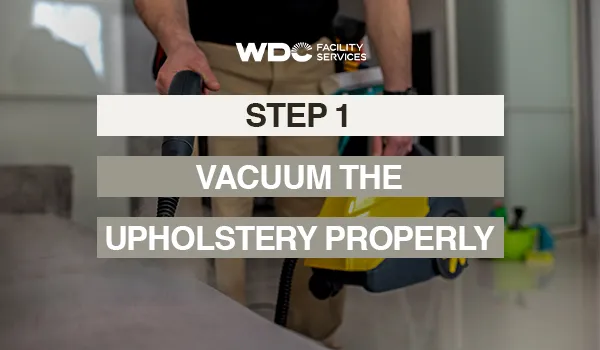
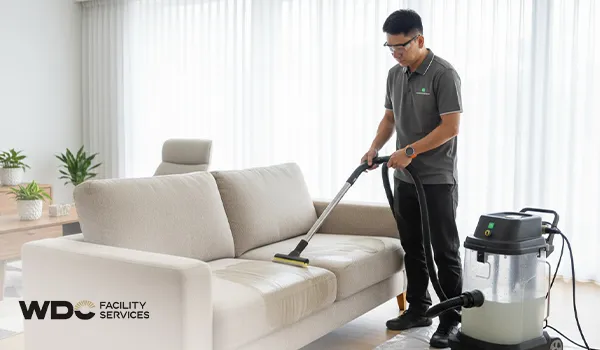
Vacuuming removes loose dust, pet hair, and dry debris that can scratch upholstery fibers when moisture or cleaning solutions are applied later.
These particles often sit on the surface and act like fine abrasives during scrubbing, which may gradually weaken the fabric weave.
Removing dry contaminants before wet cleaning helps prevent dirt from spreading deeper into the material where it becomes harder to extract.
• Use the crevice tool for corners and seams
Dust and organic debris tend to settle in upholstery seams where airflow is limited. These narrow areas trap crumbs, lint, and microscopic particles that may create friction damage when pressure is applied during cleaning.
Vacuuming along seams with a crevice attachment helps lift compacted debris that regular surface cleaning cannot reach. Upholstered seams often hold higher concentrations of indoor dust compared to open fabric areas due to reduced air circulation.
• Remove cushions and clean all sides
Cushions collect dust not only on the top surface but also underneath where airflow is restricted. Cleaning only the visible areas leaves hidden debris inside the furniture structure.
Turning cushions and vacuuming both sides helps prevent trapped particles from migrating back into the fabric during daily use. This also reduces odor buildup caused by organic matter breaking down inside the upholstery padding.
• Lift embedded dust, pet hair, and debris
Pet dander and fine dust can become embedded within upholstery fibers due to static charge and friction. Over time, these particles settle into the weave and resist light brushing or wiping.
Using a brush attachment allows suction airflow to dislodge trapped contaminants without damaging the fabric surface. Removing embedded debris improves the effectiveness of later cleaning steps by allowing solutions to reach stain particles directly.
• Lift embedded dust, pet hair, and debris
Pet dander and fine dust particles often cling to upholstery through static charge or fiber friction. Over time, these particles become embedded within the weave and resist light brushing or wiping.
A vacuum equipped with a brush attachment can dislodge these contaminants effectively without damaging the fabric surface. Removing embedded debris improves the effectiveness of subsequent cleaning steps by allowing solutions to reach stain particles directly.
Step 2: Spot Test Your Cleaning Solution
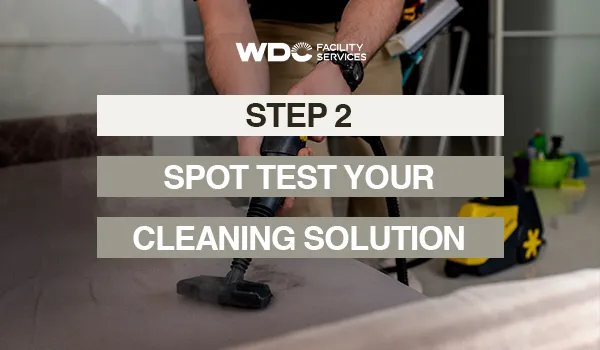
Spot testing helps determine whether a cleaning solution may cause discoloration, shrinkage, or texture change on upholstery fabric. Many dyed or delicate materials react differently to moisture or chemical exposure.
Applying any cleaning product without testing may result in color bleeding or fiber distortion that becomes visible after drying.
A small amount of cleaning solution should be applied to an inconspicuous area such as the underside of the furniture or the back panel. If no fading, dye transfer, or stiffness appears within several minutes, the solution may be suitable for broader use.
Waiting at least 10 minutes allows time for chemical reactions to occur. This helps confirm that the cleaning agent will not weaken fabric integrity during full surface treatment.
Step 3: Treat Stains Based on Type
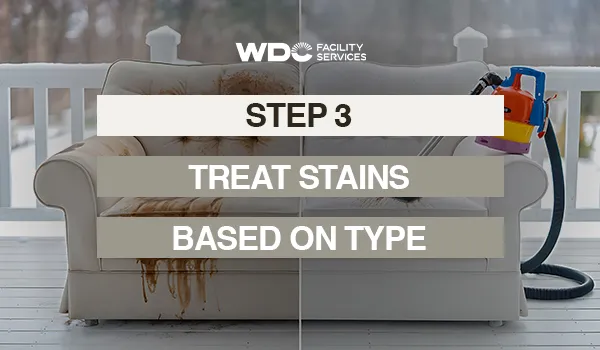
Different stains bond with upholstery fibers in different ways depending on their chemical composition.
Using the wrong treatment method may spread the stain across the fabric or push it deeper into the cushion padding.
• Food and drink spills
Liquid spills such as coffee or juice penetrate upholstery quickly and may oxidize if left untreated for several hours. Once oxidized, these stains form stronger bonds with textile fibers.
Immediate blotting helps prevent the liquid from reaching inner padding layers where moisture may take longer to evaporate.
Mild water based solutions can then break down residue before it dries permanently.
• Grease and oil stains
Oil based stains from food or cosmetics do not dissolve in water because they repel moisture at the molecular level. Applying water alone may push the grease sideways across the fabric rather than lifting it.
Solvent based cleaners help dissolve oily compounds so they can be absorbed and removed from synthetic or blended upholstery materials without spreading.
• Pet stains and odors
Pet related stains often contain proteins and ammonia that absorb into upholstery fibers and create persistent odors. These compounds may continue releasing smell even after visible marks disappear.
Enzyme based cleaners break down organic matter into smaller particles that can be removed more easily. This helps reduce odor causing bacteria trapped inside the fabric layers.
• Ink marks and dye transfer
Ink stains and dye transfer usually bond quickly with upholstery fibers due to their pigment content. These stains may spread if treated with water before proper testing.
Solvent based cleaning agents are generally more effective for breaking down ink particles without pushing them deeper into the weave. Light blotting helps lift the pigment gradually without damaging the material surface.
Step 4: Deep Clean the Entire Upholstery Surface
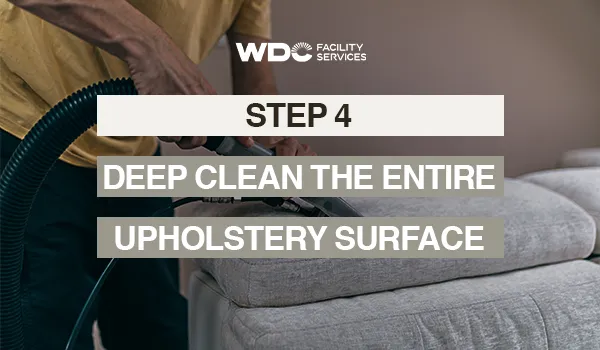
Deep cleaning removes sweat residue, body oils, and microscopic contaminants that remain trapped inside upholstery fibers after vacuuming or spot treatment. This step helps restore airflow within the fabric and improves overall hygiene.
• Cleaning with water based solutions
Water based solutions are suitable for upholstery labeled with W or WS care codes. These cleaners dissolve water soluble residues such as beverage spills or surface dirt.
Applying a light mist instead of soaking prevents moisture from penetrating inner padding layers where trapped water may take many hours to dry and create odor or mildew inside the furniture.
• Cleaning with solvent based products
Solvent based products are commonly used for fabrics labeled with S cleaning codes because they dissolve oil based stains without introducing excess moisture.
These solutions evaporate faster than water based cleaners and reduce the risk of mildew formation inside upholstery padding.
• When to use steam or extraction cleaners
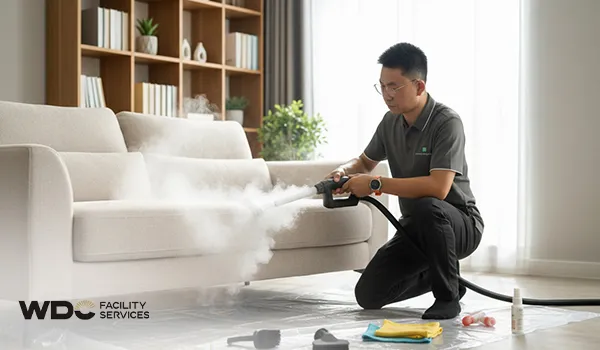
Steam cleaning or hot water extraction helps loosen residue that remains inside dense fabric layers. Heat softens bonded particles that cannot be removed through dry vacuuming alone.
However, applying excessive heat to delicate upholstery may weaken fiber bonds or cause shrinkage. Extraction methods should only be used on fabrics that tolerate controlled moisture exposure.
• Natural cleaning options baking soda vinegar mix
Baking soda may be used for mild deodorizing because it absorbs odor causing particles from upholstery fabric when left for several hours before vacuuming.
A diluted vinegar solution can also help dissolve light stains and neutralize bacteria without leaving strong chemical residues.
Step 5: Rinse and Dry the Upholstery
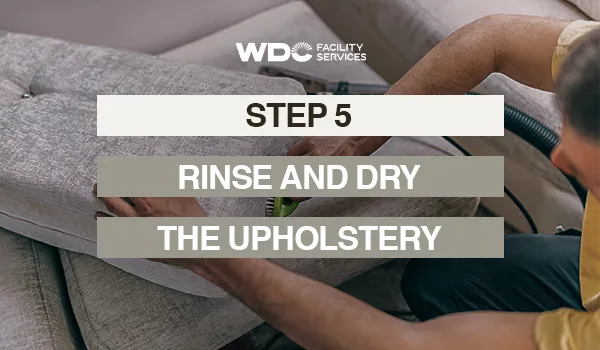
Rinsing removes leftover cleaning solution that may attract dirt if allowed to dry inside the fabric weave.
Proper drying is important because trapped moisture inside cushion padding may create conditions suitable for mold growth or unpleasant odors.
• Avoid water marks
Water marks often appear when upholstery dries unevenly after excessive moisture exposure. Applying too much liquid in one area may leave mineral deposits or detergent residue on the surface.
Blotting with a dry cloth immediately after rinsing helps reduce moisture concentration and prevents ring formation during drying.
• Speed up drying without damaging fibers
Proper airflow helps reduce upholstery drying time without exposing the fabric to direct heat.
Opening windows or using fans allows moisture to evaporate gradually from the material surface. Direct heat sources may shrink natural fibers or fade dyed fabrics if used improperly.
How to Clean Different Upholstery Fabrics
Different upholstery fabrics require different cleaning approaches because of variations in fibre structure and moisture tolerance.
Understanding how each material reacts to cleaning solutions helps prevent surface damage or discolouration.
Natural fibers cotton linen wool
Natural fibers absorb liquid more easily than synthetic materials and may shrink or fade if exposed to excessive moisture. Cotton and linen upholstery should be cleaned with minimal water to prevent fiber distortion.
Wool upholstery requires gentle cleaning because strong alkaline solutions may weaken its protein based fiber structure and reduce elasticity.
Synthetic fibers polyester microfiber nylon
Synthetic upholstery materials usually resist stains and moisture better than natural fibers. Polyester and nylon fabrics respond well to controlled cleaning methods and typically dry faster after treatment.
Microfiber upholstery can trap oils within its fine weave, so solvent based cleaning may be required for removing cosmetic or body oil stains effectively.
Leather and faux leather care basics
Leather upholstery requires specialised cleaning because water exposure may cause cracking or stiffness over time. Using pH-balanced cleaners helps maintain the flexibility of the leather surface.
Faux leather materials are generally more resistant to moisture, but should still be cleaned using gentle wiping techniques to avoid surface peeling.
Quick Methods for Common Situations
In certain situations, upholstery may need to be cleaned quickly without performing a full deep cleaning process. These quick methods help improve appearance and odour temporarily until a detailed cleaning can be done.
How to clean upholstery fast before guests arrive
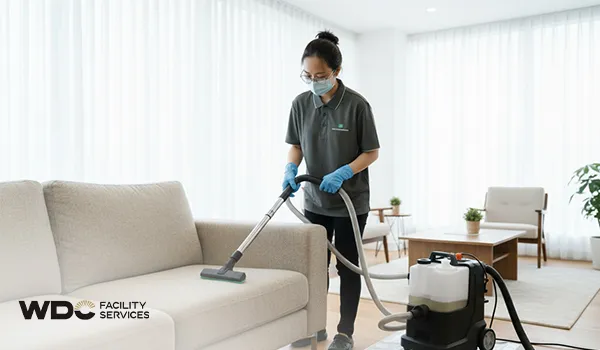
Surface stains can be improved by lightly blotting with a damp cloth and applying a mild cleaning solution to affected areas. Quick vacuuming also helps remove visible dust or pet hair from the upholstery surface.
This method provides temporary improvement in appearance but should not replace thorough cleaning for long-term hygiene.
How to remove bad smells from cushions and sofas
odors often develop due to moisture retention or organic residue trapped inside upholstery fibers. Sprinkling baking soda across the surface and vacuuming after several hours helps absorb odour-causing particles.
This process is commonly used to refresh upholstery without introducing additional moisture into the fabric.
How to refresh upholstery without water
Dry cleaning powders or fabric freshening agents may be used to improve upholstery smell and appearance without using liquid solutions. These products help reduce odour while maintaining safe moisture levels within the material.
Dry refresh methods are suitable for delicate upholstery labelled with X cleaning codes.
How Often You Should Clean Upholstery
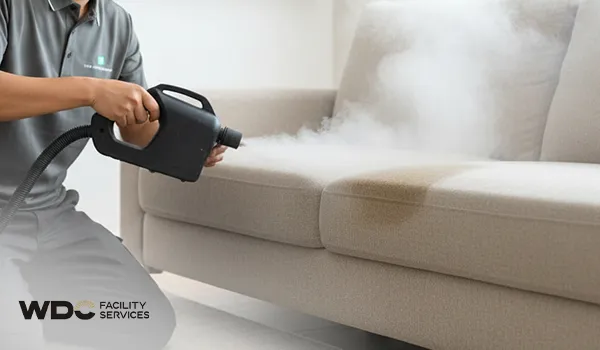
Upholstery cleaning frequency depends on usage level, indoor air quality, pets, and environmental humidity.
A structured cleaning routine helps prevent allergen buildup, odor formation, and long term fabric damage caused by dust and body oil accumulation.
| Cleaning Task | Recommended Frequency | Why It Is Needed |
| Light vacuuming | Once per week | Removes loose dust, crumbs, and pet hair before they settle into fabric fibers |
| Cushion rotation | Every 1 to 2 weeks | Prevents uneven wear and pressure damage on the upholstery surface |
| Spot stain removal | Immediately | Stops spills from oxidising and bonding permanently with textile fibers |
| Surface wipe or brushing | Once per month | Removes surface grime and improves airflow within upholstery weave |
| Odor removal treatment | Every 1 to 2 months | Helps absorb moisture related smell from sweat or pet residue |
| Deep upholstery cleaning | Every 3 to 6 months | Eliminates embedded dirt, body oils, and microbial buildup |
| Professional cleaning | Once every 12 months | Restores fabric condition and removes deep contaminants from cushion padding |
FAQ
1. What is the best way to clean a fabric sofa?
The most effective way to clean a fabric sofa is to follow the manufacturer’s cleaning code found on the care tag (W, S, WS, or X).
Generally, a three-step process of thorough vacuuming, applying a pH-balanced fabric cleaner, and blotting with a microfiber cloth provides the best results without damaging the textile fibers.
For deep-seated dirt, steam cleaning is the industry standard for thermal disinfection and soil extraction.
2. How do professionals clean upholstery?
Professional upholstery cleaners typically use a method called Hot Water Extraction (HWE). This process involves pre-treating the fabric with an alkaline emulsifier to break down oils, followed by a high-pressure rinse with heated water and a high-power vacuum recovery.
This “steam cleaning” technique removes deep-layer allergens, dust mites, and stubborn stains that residential surface cleaning cannot reach.
3. Can I use Dawn dish soap to clean upholstery?
Yes, you can use Dawn dish soap for spot-cleaning “W” (Water-safe) or “WS” coded fabrics, but it must be heavily diluted. Mix two drops of soap with a cup of warm water to create a mild surfactant solution.
Caution: Overusing soap can leave a sticky residue that attracts more dirt over time. Always rinse the area with a damp cloth to ensure all surfactants are removed from the upholstery fibers.
4. How can I clean a fabric sofa naturally?
To clean a sofa naturally, use a mixture of white vinegar, baking soda, and essential oils. Sprinkling baking soda over the dry fabric helps neutralize odors through pH-balancing.
For stains, a solution of one part white vinegar to two parts distilled water acts as a natural acetic acid cleaner that breaks down grime without harsh synthetic chemicals. Always test a small, inconspicuous area first to ensure colorfastness.
5. How do you clean upholstery without a machine?
Cleaning upholstery manually requires a targeted agitation and absorption technique. First, dry-brush the fabric to loosen debris. Apply a foaming fabric cleaner—which uses “dry foam” to minimize moisture and gently agitate with a soft-bristled brush. Finally, use a clean, dry microfiber towel to “wick” the moisture and soil out of the fabric. Ensure the room is well-ventilated to speed up the evaporation process and prevent mildew.
6. How do you remove stubborn upholstery stains?
The key to removing upholstery stains is identifying the stain type (organic vs. synthetic) and using the “blot, don’t rub” method. For protein-based stains (food/blood), use an enzymatic cleaner to break down the molecules. For oil-based stains, a solvent-based cleaner is required. Always work from the outside of the stain toward the center to prevent “ringing” and spread of the contaminant.
When to Transition from DIY to Professional Care
While routine maintenance is essential for managing daily surface dust, certain levels of contamination require specialized equipment to address. Over time, microscopic allergens, fine particulate matter, and oily residues settle deep into the internal padding areas that household vacuums and manual blotting simply cannot reach.
Professional cleaning services serves as a restorative process rather than just a surface refresh. Utilizing industrial-grade Hot Water Extraction (HWE) and thermal sanitization, our professional service targets the core of the furniture’s structure. This method effectively neutralizes deeply embedded bacteria and removes the “traffic lanes” of dirt that can prematurely age high-quality textiles.
Conclusion
Proper upholstery cleaning improves indoor hygiene, prevents stain buildup, and maintains the structural integrity of furniture fabrics. Dust, body oils, and organic residue can gradually weaken upholstery fibers if not removed through regular maintenance.
Following appropriate cleaning methods based on fabric type and care codes reduces the risk of discolouration, shrinkage, or mildew formation. Routine vacuuming and seasonal deep cleaning help remove embedded contaminants that affect both comfort and air quality.
Consistent care not only preserves the appearance of upholstered furniture but also extends its usable lifespan by preventing long term material damage caused by dirt accumulation and moisture exposure.