Medical cleaning plays a critical role in reducing hospital-acquired infections, which affect an estimated 1 in 31 patients in acute care settings, according to recent CDC data. Healthcare surfaces can carry pathogens for hours or even days, making structured cleaning and disinfection essential for controlling microbial spread.
Studies from the WHO show that consistent environmental cleaning can reduce infection rates by up to 32 percent in patient-care areas. The process supports safer recovery, protects immunocompromised individuals, and strengthens overall clinical outcomes.
As healthcare facilities manage rising patient volumes and increasing antibiotic resistance, medical cleaning remains a key defence for maintaining hygiene standards and preventing avoidable complications.
This guide explains what medical cleaning is, how it works, the tools used, who should perform it, and how it impacts patient health outcomes.
What Is Medical Cleaning?
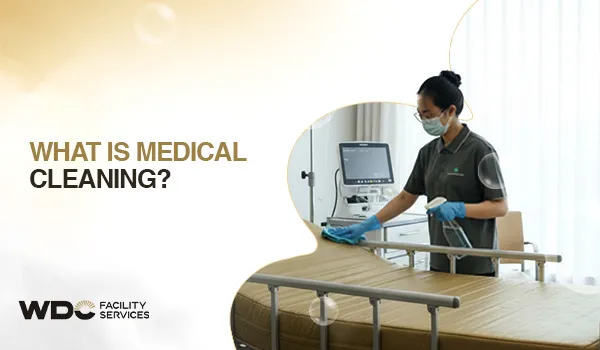
Medical cleaning is a specialised, high-level sanitation process designed to remove organic matter, debris, and pathogens from healthcare environments. It includes cleaning, disinfection, and routine monitoring to ensure patient areas stay safe.
Medical cleaning is essential because healthcare spaces can carry a high microbial load.
Studies from organizations such as the World Health Organization (WHO) and the Centers for Disease Control and Prevention (CDC) highlight that contaminated surfaces are a primary contributor to hospital-acquired infections (HAIs), which affect millions of patients globally every year. Proper cleaning greatly reduces these risks by removing pathogens before they spread to patients.
Tools, Equipment, and Products Used in Medical Cleaning
High-quality tools and equipment are essential because medical environments demand a higher level of hygiene compared to general cleaning. Each tool plays a role in reducing microbial contamination and improving cleaning efficiency.
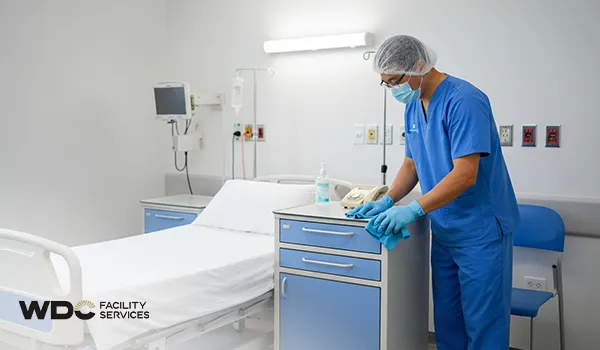
Here are the tools commonly used in medical cleaning:
- TGA-registered hospital-grade disinfectants
- Microfiber cloths colour-coded to AS/NZS 4146
- Microfiber flat-mop systems
- HEPA-filter vacuum cleaners
- Personal Protective Equipment, including gloves, masks, and gowns
- Biohazard waste bags and sharps containers
- Detergents for pre-cleaning surfaces
- Yellow wet-floor safety signs
- Aerosol-free applicator bottles
High-Touch Surfaces That Require Special Attention
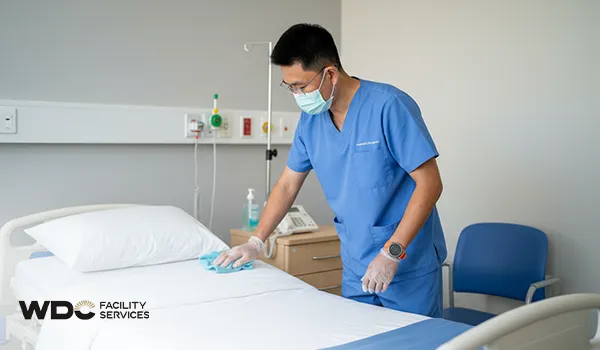
High-touch surfaces in healthcare settings are areas frequently touched by patients, staff, and visitors, making them more likely to spread germs.
Cleaning these surfaces more often reduces infection risk and prevents pathogen transfer between individuals.
The following high-touch areas require special attention:
- Patient Care Zones: Bed rails, overbed tables, nurse call buttons, IV poles, pumps, and bedside lockers often show high microbial contamination because patients interact with them throughout the day.
- Shared Medical Equipment: Items like blood pressure cuffs, stethoscopes, wheelchairs, trolleys, glucose monitors, and thermometers move between rooms.
Without proper cleaning, they can transfer bacteria between patients. - Room Fixtures: Door handles, push plates, light switches, handrails, and lift buttons are touched hundreds of times daily. Regular disinfection reduces viral and bacterial survival on these surfaces.
- Bathrooms and Wet Areas: Tap handles, toilet flush buttons, sinks, and grab rails often contain moisture, which allows microbes to survive longer.
Frequent cleaning helps prevent contamination in these high-use zones. - Staff and Administrative Stations: Keyboards, mice, telephones, kiosks, pens, and clipboards are frequently touched but often overlooked.
Research shows these surfaces can carry harmful organisms if not cleaned regularly.
The Medical Cleaning Process: Step-by-Step
The Professional medical cleaning process follows a structured sequence to ensure that every step reduces contamination.
It is designed to create a predictable workflow that keeps patient areas safe, supports infection control, and helps cleaners follow the same high standard every day.
Step 1: Preparation and Safety
Medical cleaning always starts with preparation because it keeps everyone safe. Cleaners cannot walk into a room and start working right away. They first make sure they are protected and know exactly what needs to be done.
Cleaners begin by putting on the right PPE. This usually includes gloves, masks, gowns, and sometimes eye protection. These items keep germs away from their skin and clothes. It also reduces the chance of carrying germs from one room to another.
Once dressed, they check the cleaning plan for the day so they know which rooms need general cleaning and which rooms need deeper work. Isolation rooms, for example, need extra attention because they may contain infectious patients. Cleaners need to follow strict steps in these areas to avoid spreading anything outside the room.
Step 2: The Physical Clean
The physical cleaning is the stage where cleaners remove all visible dirt, dust, and organic matter before any disinfectant is used. This step sounds simple, but it decides how effective the rest of the cleaning process will be.
In real healthcare settings, this is usually the longest and most hands-on stage. Cleaners move through patient rooms, waiting areas, bathrooms, and staff zones to make sure every surface is free from buildup.
A physical clean usually follows a simple flow that cleaners use every day in hospitals and clinics:
- Start with high surfaces like ledges and benches.
- Wipe down patient-touch areas such as tables, rails, and equipment.
- Clean furniture, handles, and fixtures.
- Vacuum or dust floors and hard-to-reach spots.
- Make sure no visible dirt is left before moving to disinfection.
Step 3: Disinfection
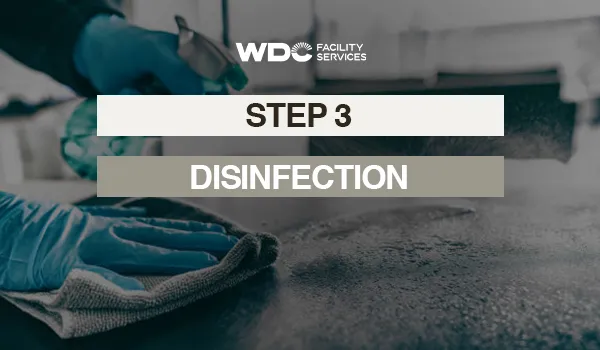
Disinfection is the stage where harmful germs are killed after the physical clean. Once the dirt is removed, cleaners use hospital-grade disinfectants on high-touch areas, patient equipment, and room fixtures. These surfaces can hold bacteria and viruses for many hours, so they need extra attention.
For disinfectants to work properly, surfaces must stay wet for the full recommended contact time.
Cleaners follow clear instructions for how much disinfectant to use and how long to leave it on the surface. They also check the product labels carefully because every disinfectant has its own rules. This helps make sure the solution works exactly as expected.
Step 4: Floor Maintenance
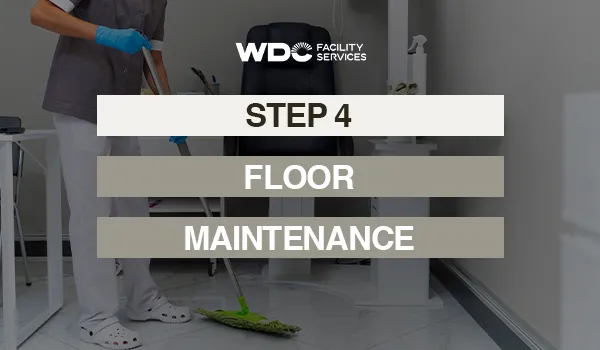
Floor maintenance happens after all surfaces have been cleaned and disinfected. This order is important. Dust, droplets, and small particles always fall down, so floors collect whatever was on higher surfaces. If floors were cleaned first, they would get dirty again before the job is even finished.
Cleaners use different tools depending on the type of floor. Some areas only need a mop, while busy zones like hallways may need an auto-scrubber or a stronger cleaning machine.
Keeping floors clean reduces the amount of contamination that travels through the room. It also improves safety.
Step 5: Final Inspection and Equipment Care
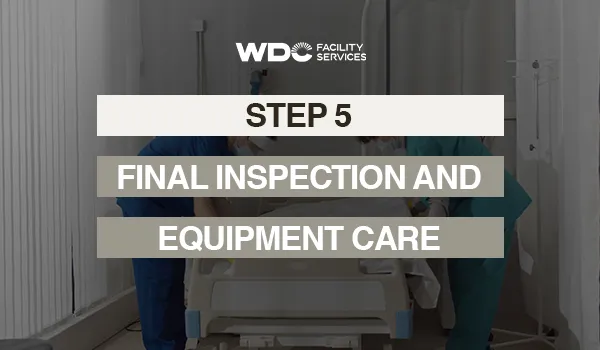
The final inspection is the moment when cleaners make sure the room is ready for use. It is a simple but important step because it confirms that nothing was missed and every cleaning task was done correctly. This check helps keep patients and staff safe, and it also shows that the facility is meeting quality and hygiene standards.
During this stage, cleaners or supervisors walk through the room with fresh eyes. They look at high-touch areas, corners, and small spaces that are easy to overlook. They check if surfaces are dry, if the room smells clean, and if everything looks tidy and in place. This quick review often catches small issues that would otherwise go unnoticed.
A good inspection makes a big difference. It adds confidence to the cleaning process and ensures the room is safe for the next patient or staff member who enters. Hospitals and clinics rely on this step because it helps them meet audit and accreditation requirements.
How Medical Cleaning Impacts Patient Health Outcomes
Medical cleaning improves patient health outcomes by reducing infection risks, lowering cross-contamination, and creating safer treatment spaces.
When healthcare environments stay clean, patients recover faster, experience fewer complications, and feel more confident in the care they receive.
Reduction in Pathogen Transmission
Medical cleaning reduces pathogen transmission by removing microorganisms that spread through touch, surfaces, and shared equipment.
Because healthcare facilities experience constant patient movement, stopping pathogens at the surface level is one of the most effective ways to prevent infection.
High-touch areas such as bed rails, IV pumps, and door handles can hold bacteria and viruses for long periods.
Some studies show that organisms like Staphylococcus aureus or certain gastrointestinal viruses can survive on surfaces for hours, and sometimes even days.
Combatting Antimicrobial Resistance (AMR)
AMR threatens healthcare systems because bacteria become harder to treat when they stop responding to antibiotics. Medical cleaning helps fight this problem by reducing the spread of resistant organisms before they reach patients.
When surfaces carry resistant bacteria such as MRSA or VRE, they can transfer from one patient to another through touch. Proper surface disinfection lowers the presence of these organisms, preventing them from multiplying and moving around the facility.
This reduces the number of infections that require antibiotics, which is important because every unnecessary antibiotic use contributes to stronger resistance patterns.
Effective environmental cleaning supports global health goals by limiting the places where resistant bacteria hide.
Increase Patient Satisfaction (HCAHPS Scores)
Clean medical environments improve patient satisfaction because they create a sense of safety, professionalism, and trust. Many patients judge the quality of care not just by treatment outcomes but by how clean and well-maintained the hospital feels.
HCAHPS surveys in countries like the United States show that cleanliness consistently influences how patients rate their hospital experience. Rooms that smell clean, have spotless surfaces, and feel orderly give patients more confidence in the staff caring for them.
A clean space also reduces stress, which plays an important role in recovery, especially during long hospital stays.
How to Choose the Right Medical Cleaning Provider
Choosing the right medical cleaning service provider means looking for a team that understands how healthcare environments work and why proper infection control matters.
A good provider should meet national standards, follow safe cleaning practices, and use products that are approved for hospitals and patient care facilities.
The first thing to check is the training and certification of their staff. The medical cleaning team must know how to handle high-touch areas, isolation rooms, biohazard waste, and infection risks.
Well-trained cleaners understand how to prevent cross-contamination and how to use disinfectants correctly so the cleaning actually reduces harmful microorganisms.
You should also review the systems the provider uses to maintain safety and consistency. Strong providers follow documented procedures, colour-coded tools, and clear cleaning schedules that match patient traffic and room types.
Partner With a Trusted Medical Cleaning Provider
Healthcare facilities require cleaning teams who understand safety, compliance, and the demands of clinical environments. With 11 years of experience, WDC Facility Services delivers structured medical cleaning supported by trained staff, verified procedures, and hospital-grade products.
Our team follows strict infection-control standards to help maintain safer patient spaces and support better health outcomes across hospitals, clinics, and aged care settings.
Frequently Asked Questions
What does a medical cleaner do?
A medical cleaner is responsible for maintaining hygiene and infection control in healthcare environments such as hospitals, clinics, and medical centers. Their duties include disinfecting surfaces, sanitizing patient rooms, cleaning operating areas, removing biohazard waste, and preventing the spread of bacteria and viruses to keep patients, staff, and visitors safe.
What kills bacteria?
Bacteria are killed by disinfectants, heat, and antimicrobial cleaning agents. Common hospital-grade solutions include bleach (sodium hypochlorite), hydrogen peroxide, alcohol-based disinfectants, and quaternary ammonium compounds. These substances break down bacterial cell structures, effectively eliminating harmful microbes on medical equipment, floors, and high-touch surfaces.
What do hospitals mop with?
Hospitals typically mop floors using hospital-grade disinfectant solutions such as diluted bleach, hydrogen peroxide cleaners, or quaternary ammonium disinfectants. Microfiber mop systems are commonly used because they trap dirt and bacteria more effectively than traditional mops and help prevent cross-contamination in healthcare environments.
What are the four types of cleaners?
The four main types of cleaning agents are detergents, degreasers, abrasives, and acids. Detergents remove general dirt, degreasers break down oils and fats, abrasives help scrub tough residues, and acidic cleaners dissolve mineral deposits and rust. Each type is used depending on the surface and level of contamination.
What is the medical clean technique?
Medical cleaning techniques follow strict infection control protocols to prevent the spread of pathogens. This usually includes cleaning from clean areas to dirty areas, using color-coded tools, applying hospital-grade disinfectants, and focusing on high-touch surfaces such as bed rails, door handles, and medical equipment.
Conclusion
Medical cleaning is a fundamental part of modern healthcare safety. By combining structured cleaning procedures, hospital-grade disinfectants, and trained professionals, healthcare facilities can significantly reduce the spread of harmful microorganisms and protect vulnerable patients.
From removing visible contamination to disinfecting high-touch surfaces and maintaining strict infection-control protocols, every step in the medical cleaning process contributes to safer clinical environments. When performed correctly and consistently, it supports better patient outcomes, lowers the risk of hospital-acquired infections, and helps healthcare facilities meet hygiene and accreditation standards.