High-rise window cleaning has become a critical component of urban facility management as cities continue to densify with glass-heavy architecture.
Industry data indicates that global demand for exterior façade maintenance has grown by roughly 6% over the last five years, a trend driven by the aesthetic and structural requirements of modern skyscrapers.
However, this work requires specialized methodology. Height, wind velocity, and architectural complexity create conditions that standard cleaning tools cannot manage.
According to the International Window Cleaning Association, selecting the correct access method can improve operational efficiency by up to 30% while significantly mitigating safety risks.
In this guide, we break down the primary high-rise cleaning techniques for 2026, safety protocols, and how to choose the right solution for your property.
5 Types of High-Rise Window Cleaning Methods
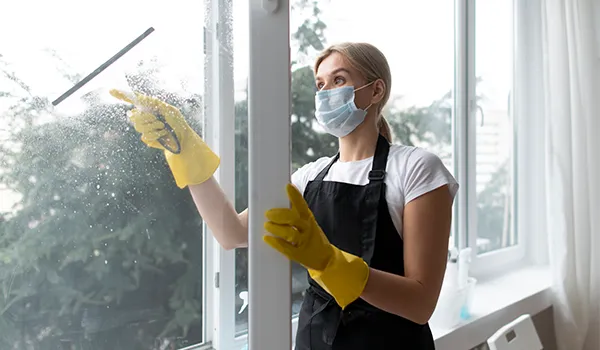
Cleaning methods vary based on building height, architectural access points, and safety compliance. Below is an overview of the primary techniques used across commercial properties worldwide.
- Rope Access Window Cleaning
- Aerial Work Platforms EWP
- Building Maintenance Units (BMU)
- Water-Fed Pole Systems Pure Water Technology
- Robotic and Automated Window Cleaning
1. Rope Access Window Cleaning
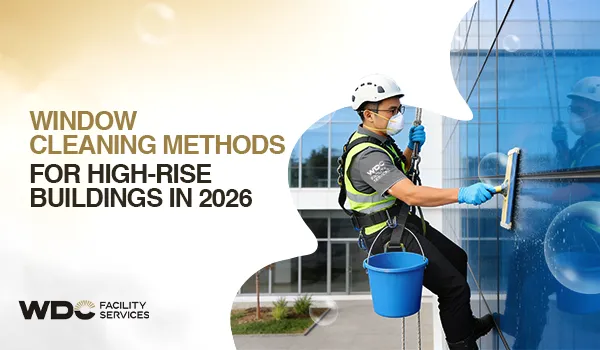
Rope access is one of the most flexible and practical ways to clean high-rise buildings. It works well for towers with complex shapes, tight corners, or areas where machines cannot reach.
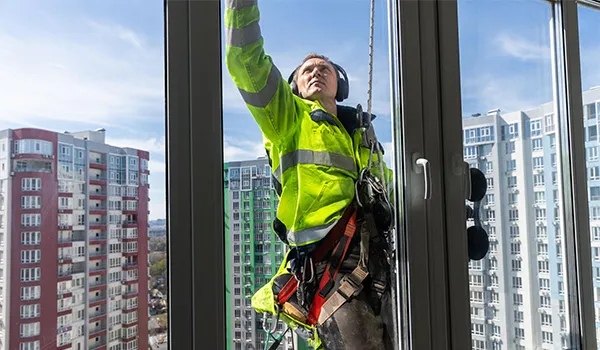
How Rope Access Works
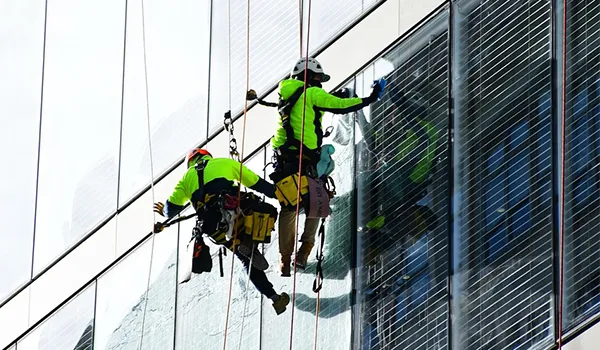
Rope access uses two ropes: one for working and one for safety backup. Both ropes connect to certified anchor points on the roof that are tested to hold heavy loads.
Technicians wear secure harnesses and use controlled descent devices to move up or down the building. This setup gives them steady control, even on uneven or curved surfaces.
Most trained rope access teams follow strict procedures, which is why incident rates remain very low according to IRATA’s safety reports.
Because the system is light and doesn’t require large machines, workers can move quickly between windows while keeping full visibility of the surface.
When Rope Access Is the Best Option
Rope access is the best fit for buildings where machinery cannot be placed due to narrow streets, heavy foot traffic, or limited ground space.
It also works well on buildings with irregular architecture, recessed windows, or steep angles that make other methods difficult.
This approach is often more cost-effective for mid-to-high-rise buildings, especially between 6 and 40 stories. Setup time is short, and cleaners can reach almost any section without blocking roads or walkways.
It keeps the job moving smoothly while reducing disruptions for people in and around the building.
Safety Standards IRATA or SPRAT
Professional rope access requires strict training. Technicians are certified through IRATA or SPRAT, two organizations known for some of the toughest safety programs in the industry.
Training includes classroom lessons, supervised practice, rescue techniques, and equipment inspections.
Reaching advanced levels takes time. IRATA notes that Level 3 technicians often log more than 1,000 supervised hours before they qualify.
These standards ensure that every worker understands safety procedures, equipment checks, and emergency responses before stepping off the roof.
2. Aerial Work Platforms EWP
Aerial Work Platforms are used when a building allows machinery access from the ground. They give cleaners a stable platform and are common on mid-rise buildings or areas with enough open space for equipment to move safely.
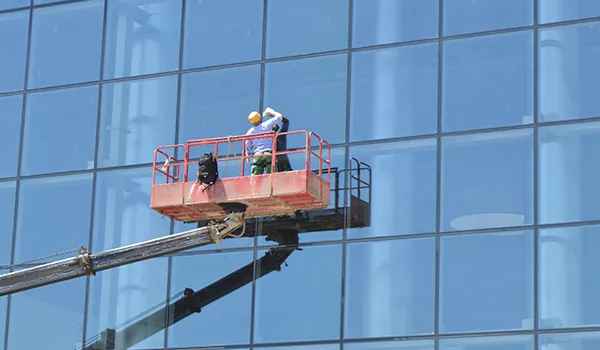
Types of EWP Booms vs Scissor Lifts
Boom lifts and scissor lifts are the two main types of aerial platforms used in window cleaning. Both provide stable access at height, but they work differently and fit different building conditions.
Here is a simple comparison table to make the differences clear:
| Feature | Boom Lift | Scissor Lift |
| Movement Range | Moves up, down, and extends outward | Moves straight up only |
| Max Reach | Can reach up to around 180 feet depending on model | Usually 20–60 feet depending on model |
| Best For | Buildings with obstacles like trees, signs, parking areas | Flat facades with clear vertical access |
| Platform Space | Smaller platform, designed for mobility | Larger platform for carrying tools and working comfortably |
| Flexibility | High flexibility to reach angled or hard-to-access areas | Limited flexibility but very stable |
| Ground Access Needs | Needs space for rotation and extension | Needs level ground but less clearance than booms |
Ideal Situations for Machinery Access
EWPs are best for buildings with open surroundings. Properties with parking lots, service lanes, or wide sidewalks give machines enough room to set up safely.
They are not ideal for tight city streets or crowded areas where the machine cannot be positioned properly.
Because the platform stays steady during cleaning, studies show EWPs can reduce job time by around 25 percent for mid-rise buildings.
Ground Access and Permit Requirements
Using EWPs requires proper checks and approvals. The ground must be level and strong enough to support heavy equipment, which often weighs several tons. Operators must be trained or licensed to run the machinery safely.
In many cities, permits or traffic control plans are needed if the lift reaches over a sidewalk or road. These rules ensure public safety and prevent accidents during the cleaning process.
3. Building Maintenance Units BMU
Building Maintenance Units are permanent systems installed on the rooftops of tall buildings.
They are designed to move a suspended cradle across the exterior so cleaners can work safely at very high levels. These systems are common in large commercial towers where regular glass maintenance is needed.
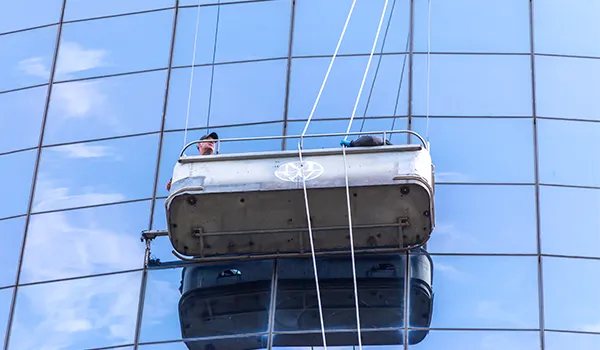
How BMU Roof Cars and Cradles Operate
A BMU works through a roof car that travels along fixed rails or tracks at the top of the building. The cradle hangs from the roof car and moves up, down, or sideways depending on the structure.
This setup lets two or more cleaners work together while covering wide sections of glass. Many modern BMUs come with remote controls, automatic movement systems, and built-in safety sensors.
Because the cradle stays stable and doesn’t need a fresh setup for each drop, BMUs save a significant amount of time on tall buildings.
Industry data shows they can increase efficiency by around 30 to 40 percent, especially on towers with large flat glass areas.
Best Applications for Skyscraper
BMUs are the best option for very tall buildings, usually anything above 35 or 40 stories. They work well on skyscrapers with smooth facades or gentle curves since the cradle can move along the full surface without interruption.
You’ll find BMUs on many buildings in business districts because they allow cleaning without closing sidewalks or bringing in heavy machinery.
They’re also useful when rope access is possible but not the safest choice due to strong winds, extreme height, or complex architectural features.
Limitations and Maintenance of the BMU Itself
BMUs need regular inspections to keep them safe. Components like brakes, motors, and cables must be checked and load-tested every year according to building safety rules.
Installation and maintenance costs are high, so BMUs are normally built into premium high-rise towers rather than smaller commercial buildings.
They also can’t reach every shape. Deep window recesses, sharp angles, or heavy overhangs can limit cradle access.
Even with these limitations, a well-maintained BMU is one of the most reliable platforms for cleaning very tall buildings.
It provides stability, predictable movement, and long-term efficiency when the building is designed with the system in mind.
4. Water-Fed Pole Systems Pure Water Technology
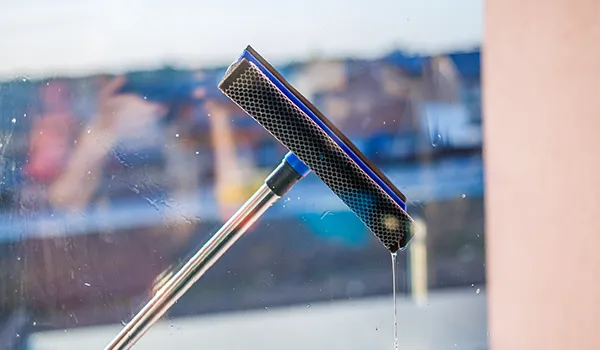
Water-fed pole systems use extendable poles and purified water to clean windows from the ground. This method works best for low and mid-rise buildings and offers a simple, chemical-free way to maintain glass.
How Pure Water Technology Cleans Without Chemicals
Pure water cleaning works by removing minerals, metals, and impurities from regular water using multi-stage filtration. Once the water is purified, it becomes naturally hungry for dirt. When it touches the glass, it pulls dust and residue off the surface and then dries clear without streaks.
This approach replaces the need for detergents, which is why many commercial properties prefer it. It keeps sidewalks cleaner, avoids chemical runoff, and still delivers strong cleaning results.
Industry testing shows that pure water systems reduce chemical use by nearly 100 percent while keeping cleaning quality consistent across most mid-rise buildings.
Height Limitations Grounded to 80ft
Water-fed poles can extend to around 70 to 80 feet, depending on the model. Past that height, the poles become harder to control, especially in windy conditions. For buildings within this range, cleaners can stay safely on the ground while reaching upper-floor windows.
This reduces the need for harnesses, lifts, or heavy equipment, which also lowers cost. It works best for offices, schools, retail centers, and any building where regular cleaning is needed but extreme height is not a factor.
Eco-Friendly Benefits of Water-Fed Systems
This method is popular for its environmental advantages. Pure water dries naturally, so there is no need for soaps or chemical cleaners. That means less waste, fewer pollutants, and safer runoff.
Because the glass dries spot-free with fewer strokes, water usage also decreases. Many organisations that follow sustainability goals choose water-fed poles for this reason. Another benefit is worker safety.
The cleaner stays on the ground, which removes many of the risks that come with climbing or operating machinery at height.
5. Robotic and Automated Window Cleaning
Robotic window cleaning is becoming more common on modern glass buildings. These systems handle wide, flat surfaces and help reduce the amount of time workers spend at height. They are not a replacement for human cleaners, but they act as a support tool for certain sections of a building.
How Tethered Robots and Drones Operate
Robotic cleaners stay attached to the glass using suction pads or magnetic systems that keep them secure while they move. They follow a programmed cleaning path or are controlled remotely from the ground.
Some buildings also use drones for lighter washing tasks, especially at mid-level heights where access is difficult. These machines spray water, wipe the glass with microfiber pads, and use built-in sensors to avoid edges.
Recent data from robotic cleaning manufacturers shows that these systems can lower the amount of direct worker exposure at height by almost half because fewer people need to physically be on the outside of the building.
Pros: Speed and Safety
Robots are fast on flat glass panels. They can clean repetitive surfaces without taking breaks, allowing crews to finish large areas sooner than traditional methods.
This helps improve safety because workers spend less time hanging on ropes or standing on platforms. For tall buildings with big, uninterrupted window sections, robots bring consistency and help teams finish projects on tighter schedules.
Cons Setup Time and Cleaning Quality
Although robots help with speed, they still have limits. Many models cannot clean corners, edges, or curved sections well. A technician usually needs to prepare the area, position the robot, connect the safety tether, and check the suction system before starting. This setup takes time. After the robot finishes, a worker may still need to touch up areas where dirt remains or where the robot could not reach. Because of these gaps, buildings rarely rely on robots alone. Instead, they combine robotic cleaning with rope access or BMU work to make sure the entire facade is cleaned properly.
Essential Safety Measures for All Methods
High-rise window cleaning services relies on solid safety procedures because even a small mistake at height can turn serious fast. Every crew follows strict steps before, during, and after a job to keep workers protected and prevent equipment failures. Below are the core safety elements most professional teams use, no matter which cleaning method they’re working with.
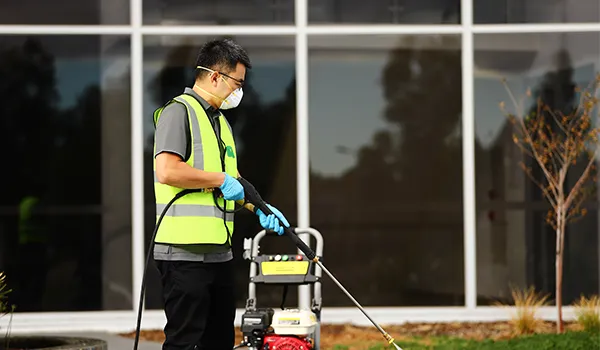
- Full-body harnesses: Harnesses keep workers secure during rope access, BMU work, and platform cleaning. They distribute weight safely and help prevent serious injury if someone slips or loses balance.
- Shock-absorbing lanyards: These lanyards reduce the force of a fall by slowing the impact. They play a major role in minimizing injuries when someone loses footing at height.
- Certified anchor points: Buildings use anchor points tested to hold heavy loads, often above 15kN. They act as the main connection point for ropes and safety lines. Most regulations require annual testing to make sure they remain reliable.
- Fall-arrest systems: These systems include ropes, descenders, and backup safety lines. If one system fails, the backup prevents a fall. This redundancy is required in almost every country.
- Helmet and protective gear: Hard hats, gloves, and protective eyewear shield workers from falling debris, rope friction, and sudden impact. Good gear is essential on every job, even at lower heights.
- Weather checks before starting: Crews evaluate wind speed, rain, temperature, and lightning risk. Wind gusts above 25 mph can make rope access and platforms unstable, so teams often delay the job until conditions are safe.
- Daily risk assessments: Teams inspect the building, check access points, confirm ground stability for EWPs, and review any hazards around the worksite. This helps prevent unexpected issues once the work begins.
- Training and legal compliance: Workers go through specialized training programs that cover equipment use, rescue procedures, and safe movement at height. Companies must follow OSHA or local regulations, document their work, and maintain updated certifications.
- Rescue planning: Every job includes a rescue strategy, so if a worker experiences equipment failure or a medical issue, the team can respond immediately. This plan is reviewed before starting work.
- Equipment inspections: Ropes, connectors, descenders, and all mechanical parts are checked before each shift. Any worn or damaged gear is removed from service right away. Regular inspections lower accident risks dramatically.
- Maintenance records: Many companies keep detailed logs for every tool and piece of safety gear. Tracking service history helps identify when parts need to be replaced, which prevents unexpected failures at height.
Tools and Equipment Used in High-Rise Window Cleaning
High-rise window cleaning relies on a mix of tools that help workers clean safely and leave glass streak-free. Different buildings require different equipment depending on height, access difficulty, and how dirty the windows are. Below are the main tools and safety items professionals use, along with a simple explanation of how each one helps.
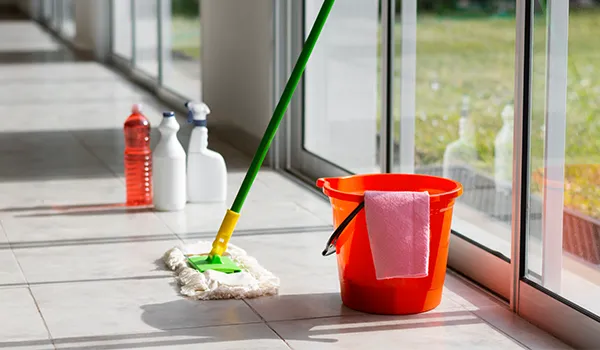
- Squeegees: Squeegees pull water off the glass in a clean line, preventing marks and streaks. They are the most reliable tool for finishing the glass and getting a clear view.
- Scrapers: Scrapers remove tough dirt like dried paint, bird droppings, or mineral spots. They help loosen buildup that normal wiping cannot remove.
- Microfibre Cloths and Pads: Microfibre material picks up dust and leaves a polished finish. It is soft on glass and works well for detailing edges and corners.
- Telescopic Poles: These extendable poles help cleaners reach higher areas while staying safely on the ground for lower to mid-rise buildings. They work especially well with pure-water systems.
- Pure Water Filtration Systems
These systems remove minerals from water so it dries without spots. They replace chemical cleaners in many cases and reduce streaking. - Buckets and Cleaning Solutions
Buckets carry water or cleaning mixtures. Solutions vary from mild detergents to ammonia-based cleaners depending on the glass condition and level of buildup. - Harnesses and Full-Body Safety Gear
Harnesses protect workers during rope access and BMU work. They distribute weight safely and prevent falls when used with certified anchor points. - Helmets and Protective Headgear
Helmets protect workers from falling objects, unexpected impacts, or equipment movement on the facade. - Ropes, Carabiners, and Connectors
These form the core support system for rope access cleaning. Each piece is rated to hold high loads and must pass strict safety inspections. - Gloves and Grip-Enhanced Hand Protection
Gloves improve grip on wet surfaces and protect hands from rope friction, sharp edges, or chemical contact. - Safety Glasses or Goggles
Eye protection helps prevent debris, cleaning spray, or wind-blown particles from entering the eyes while working at height. - Communication Devices (Radios or Headsets)
Cleaners use communication gear to coordinate movement, request support, or follow instructions from ground supervisors without shouting across floors. - Chemical Cleaners (Used When Needed)
Some windows need stronger cleaning agents to break down grease or environmental buildup. Neutral pH cleaners are used for sensitive coatings, while stronger formulas handle tougher stains.
Choosing the Right Cleaning Method for a Building
Choosing the right method depends on how tall the building is, how easy it is to reach the windows, the type of glass, and the budget. Every structure comes with its own challenges, so the cleaning approach has to match the building’s design and safety requirements.
Height and Accessibility Constraints
Height is always the first thing professionals look at.
Short and mid-rise buildings usually work well with aerial lifts or water-fed poles. Once the building gets taller, rope access or BMU systems become more practical because they offer better reach and safer control at height.
Accessibility also shapes the decision. If a building sits on a narrow street or is surrounded by landscaping, machinery cannot be positioned safely. That’s why rope access is used on more than half of high-rise buildings in busy city areas.
It doesn’t require ground space and technicians can move freely across the facade. The goal is simple: choose a method that reaches all windows safely without blocking roads or public walkways.
Glass Type and Building Shape
Different types of glass react differently to cleaning tools and chemicals. Coated, reflective, or tinted panels need gentler handling to avoid scratches or surface damage.
Some buildings also have double-glazed units or custom architectural glass that should not be exposed to harsh pressure.
Building shape matters just as much.
Curved facades, deep setbacks, and unusual angles often make machinery hard to use. Rope access gives cleaners more flexibility in these cases.
BMU systems also work well on tall, straight facades where the cradle can move smoothly across large sections.
Robots perform best on wide, flat surfaces but struggle around corners or uneven frames.
Budget and Time Requirements
Budget is a practical factor for property owners. Rope access tends to be the most cost-friendly option for tall buildings because the setup is minimal.
BMU systems cost more due to installation and ongoing maintenance, but they provide steady long-term service for skyscrapers.
Aerial lifts are great for mid-rise buildings, but they come with permit fees and operator costs.
Time also matters. Research shows BMU cradles can finish large flat surfaces up to 40 percent faster because the platform covers more glass at once.
Choosing the right method helps save money, reduce labor time, and keep the cleaning schedule efficient.
Environmental and Water Considerations
Environmental rules and local conditions also influence the cleaning choice.
Some buildings follow green cleaning policies, which makes pure water systems a better fit because they use no chemicals.
Areas with water restrictions might require low-consumption methods or adapted cleaning schedules.
Buildings near highways, construction sites, or industrial zones may need stronger cleaning solutions due to heavy dust and pollutants.
Local laws, water availability, and sustainability goals all play a role in determining which cleaning method is the most responsible and practical.
Benefits of Hiring Professional High-Rise Window Cleaners
Hiring a professional high-rise window cleaning team ensures the job is done safely, correctly, and on schedule. These crews bring training, equipment, and experience that general maintenance staff simply don’t have.
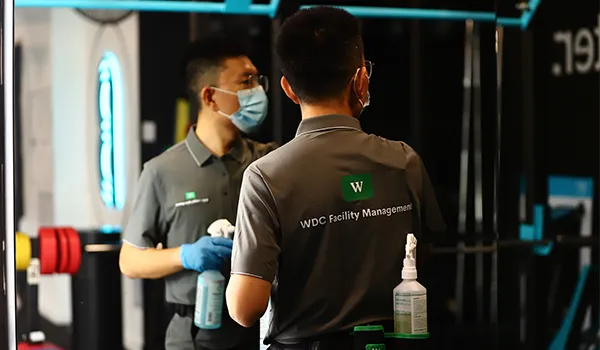
Companies like WDC Facility Services specialize in handling tall commercial buildings, which helps reduce risk and keeps the cleaning process smooth from start to finish.
Safety Assurance
Cleaning windows at height is not something regular staff can do safely. Professional teams follow strict safety rules, use tested fall-protection systems, and work under trained supervisors.
OSHA data shows that certified high-rise crews have a significantly lower accident rate compared to untrained workers.
WDC Facility Services places a strong focus on safety. Their technicians follow regulated procedures, use up-to-date gear, and conduct risk checks before starting any job.
This approach gives building owners peace of mind, knowing every cleaner on-site is trained, insured, and working under a controlled system.
Faster More Consistent Results
Professionals know how to work at height without wasting time. They understand how different glass types behave, how to remove stains safely, and how to maintain consistent quality.
With the right equipment, they can complete floors in shorter timeframes while keeping streaks and marks under control.
WDC Facility Services is known for quick turnaround times and reliable work quality. Their teams combine rope access, BMU systems, and high-reach tools depending on the building.
This helps them finish large projects on schedule while still delivering clear, uniform glass surfaces.
Access to Advanced Tools and Methods
High-rise cleaning often requires specialized tools that most companies don’t own. Professionals use BMU cradles, rope access gear, pure-water cleaning systems, and glass-safe chemicals designed for tall buildings. Some projects even use robotic tools for wide facade sections.
WDC Facility Services invests heavily in updated equipment, which helps them handle complicated building shapes, tight access points, and delicate glass finishes.
Their ability to switch between methods makes them suitable for modern commercial towers with mixed architectural features.
Reduced Liability for Building Owners
When professionals handle the work, the responsibility shifts away from the building owner. Certified companies carry insurance, follow legal safety standards, and document every job. This protects property managers from liability issues that may arise if an accident occurs on-site.
WDC Facility Services provides full insurance coverage, compliance reports, and job documentation for every project. Building owners choose them because it reduces administrative stress and ensures operations stay within local laws and building safety guidelines.
How WDC Facility Services Helps
WDC Facility Services supports commercial buildings with safe, reliable, and well-organized high-rise cleaning. Their team handles rope access, BMU operations, pure-water cleaning, and all types of facade work.
They assist property managers, facility teams, and building owners who want a dependable partner for tall-building maintenance. People contact them because they respond fast, give clear pricing, and provide consistent results across multiple cleaning cycles.
Maintenance Frequency and Seasonal Considerations
High-rise windows don’t stay clean for long because they’re constantly exposed to weather, pollution, and dust. The cleaning frequency depends on where the building is located, nearby activity, and seasonal shifts. Some buildings only need a few cleanings each year, while others require more frequent work because dirt buildup happens much faster.
Factors That Decide How Often High-Rise Windows Should Be Cleaned
The ideal cleaning schedule usually sits between two to four times a year for most commercial buildings. Properties in high-traffic zones, coastal areas, or industrial districts often need more frequent cleaning to protect glass clarity and prevent long-term damage. Weather patterns also play a major role since wind, rain, and temperature changes directly affect dirt accumulation.
Below is a simple table that shows how different conditions influence cleaning frequency.
| Factor | Typical Impact on Cleaning Needs | Notes |
| Building Location | High-traffic or coastal areas may need monthly or bi-monthly cleaning | Pollution, salt, and vehicle emissions stick quickly to glass |
| Seasonal Weather | Spring and fall are the best cleaning periods | Stable temperatures and lower winds help achieve better results |
| Pollution Levels | Industrial zones and construction-heavy areas require frequent cleaning | Dust and debris settle faster on exposed facades |
| Dirt Exposure | Pollen, road dust, and high winds increase cleaning cycles | Especially common near parks, highways, and open landscapes |
| Glass Sensitivity | Coated or treated glass requires regular gentle cleaning | Prevents stains and damage from sitting contaminants |
Importance of Cleaning High-Rise Buildings
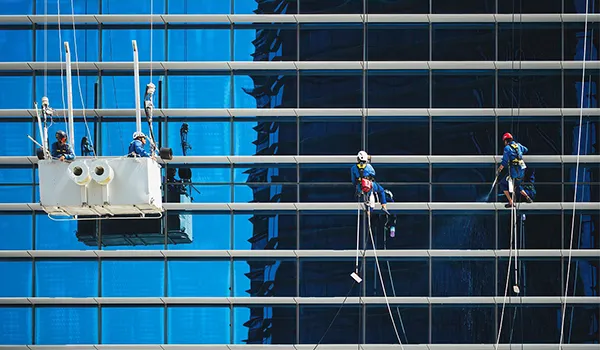
Cleaning high-rise buildings is important because it keeps the exterior looking sharp, protects the glass, and helps the building last longer. When windows stay clean, more natural light enters the interior, which improves comfort for the people working or living inside.
Regular cleaning also reduces long-term damage because dirt, pollution, and mineral deposits slowly wear down the surface of the glass.
Property reports show that well-maintained facades often increase a building’s perceived value, which matters for commercial spaces where appearance influences tenant demand.
Clean windows also make inspections easier. When the surface is clear, maintenance teams can spot cracks, seal failures, or structural issues before they turn into expensive repairs. This supports overall safety and reduces unexpected problems.
Key reasons why high-rise window cleaning matters:
- Helps maintain a professional and clean building appearance
- Allows more natural light, improving indoor comfort and energy efficiency
- Prevents dirt and pollutants from damaging the glass or window seals
- Supports routine building inspections by making surfaces easier to check
- Extends the lifespan of exterior materials and reduces long-term repair costs
- Boosts property value, especially in competitive commercial districts