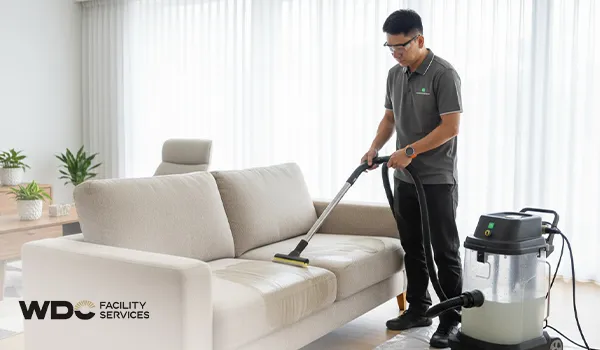
Carpet cleaning services is vital for indoor hygiene, air quality, and fibre longevity. Studies from the Institute of Inspection Cleaning and Restoration Certification report that carpets can trap up to four times their weight in dust, allergens, and soil, making proper cleaning essential for health and durability.
Research also shows that consistent maintenance can extend carpet life by nearly 30 percent, while incorrect cleaning methods often increase residue buildup and fibre wear.
Reduced ventilation increases indoor pollutant levels in modern homes, making evidence-based carpet care essential. This guide covers how cleaning methods, stain chemistry, and fibre types influence effective maintenance.
Essential Tools
- High suction vacuum cleaner
- Stiff brush
- Microfiber cloth
- Spray bottle
- Wet vacuum or carpet extractor
- Fans or air movers
Ingredients for Natural Cleaning Methods
- Vinegar
- Baking soda
- Salt
6 Steps to Clean Carpet
This section outlines the complete cleaning process, from vacuuming to drying, following common standards used by certified cleaning technicians. Careful execution ensures the carpet stays cleaner longer and wears more evenly.
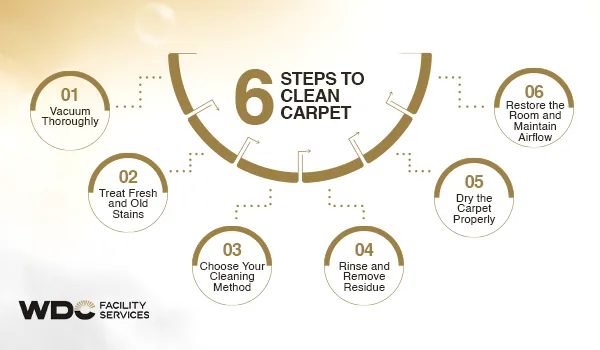
- Vacuum Thoroughly
- Treat Fresh and Old Stains
- Choose Your Cleaning Method
- Rinse and Remove Residue
- Dry the Carpet Properly
- Restore the Room and Maintain Airflow
Step 1: Vacuum Thoroughly
Vacuuming removes dry soil, preventing long-term fibre damage. It also prepares the carpet by allowing cleaning solutions to penetrate deeper.
Dry soil makes up around 70 to 80 percent of total dirt found in a home. If you wet clean without vacuuming first, this soil mixes with water, becomes mud, and pushes dirt deeper into the backing, making stains harder to lift.
Vacuum slowly. Let the machine pull up trapped particles rather than rushing over the surface. Move in overlapping strokes and vacuum in two different directions. This allows the machine to reach the base of the fibres where debris settles.
Use a crevice tool around corners, under furniture edges, and near walls. These areas often collect dust because the airflow is weaker. Proper vacuuming reduces the strain on your cleaning machine and improves the overall result.
Recommended Vacuuming Pattern Before Deep Cleaning
| Area | Recommended Passes | Reason |
| High traffic zones | 4 to 6 passes | More soil buildup |
| Medium traffic zones | 2 to 4 passes | Regular dust accumulation |
| Low traffic zones | 1 to 2 passes | Light surface dust |
Step 2: Treat Fresh and Old Stains
Pre-treating stains before full cleaning maximizes removal and prevents long-term discoloration.
Respond to stains quickly. Stains older than 24 hours bond more tightly to carpet fibres. These pigments often settle into the backing and require stronger cleaners or longer dwell time.
Apply a stain-targeted cleaner lightly. Blot with a microfiber cloth to absorb the stain without spreading it. Never rub aggressively. Rubbing frays fibres and pushes the stain deeper.
For older stains, let the product sit for several minutes. Professional cleaners rely on dwell time; it softens the soil and breaks down residue. Manufacturers often report up to 40 percent better removal when dwell time is used correctly.
For protein-based stains (like pet urine or blood), use an enzyme solution. These break down organic material more effectively than general cleaners.
Step 3 Choose Your Cleaning Method
Carpet cleaning methods depend on soil level, fibre type, and how much time you have for drying. Below are the main options used in offices and homes, along with how they work in real situations.
- Hot Water Extraction (HWE)
- Dry Cleaning Powder
- Carpet Shampooing
- Natural Methods (Vinegar, Baking Soda, Salt)
Comparison Table: Which Carpet Cleaning Method Should You Choose?
| Method | Depth of Cleaning | Dry Time | Best For | Notes |
| Steam cleaning | Deep | Medium | Families, pets, heavy soil | Most effective overall |
| Dry powder | Light to medium | Fast | Wool, quick clean | Low moisture |
| Shampooing | Medium to deep | Medium | Old carpets | Must rinse well |
| Natural methods | Light | Fast | Spot cleaning | Not a full deep clean |
Hot Water Extraction (HWE)
Hot water extraction uses hot water under pressure and strong extraction. It removes deep soil, bacteria, dust mites, and allergens. Many manufacturers recommend this method because it cleans the full depth of the fibres.
Hot water softens dirt and breaks down residue. The machine injects water and immediately extracts it.
Cleaning science studies show that hot water extraction removes more fine particulate matter compared to most other methods. This makes it ideal for allergy-sensitive homes.
Carpets may remain damp for a few hours. Proper airflow is important to prevent odours or mould.
Best For
- Deep cleaning
- Homes with pets
- Heavily soiled carpets
Dry Cleaning Powder
Dry powder cleaning uses very little water. It works well when you need a quick clean or when drying time is limited.
A slightly moist cleaning powder is sprinkled over the carpet. When brushed in, it attaches to soil. After a short wait, the powder is vacuumed out. Wool carpets benefit from this method because excess water can cause fibre swelling.
This method is not as deep as HWE. However, the carpet is ready for use almost immediately.
Best For
- Wool carpets
- Quick cleaning
- Low moisture cleaning needs
Carpet Shampooing
Carpet shampooing is effective for visible dirt and older carpets that hold a lot of residue.
The machine spreads a foamy shampoo across the fibres. As the foam dries, it traps soil. You vacuum the residue afterward. Modern shampoos are designed to reduce sticky buildup, but rinsing is still important.
Improper rinsing is the main cause of post-cleaning re-soiling. A quick rinse cycle removes leftover foam and leaves the fibres softer.
Best For
- Heavily soiled older carpets
- Areas with traffic marks
- Restoring dull fibres
Natural Methods Vinegar Baking Soda Salt
Natural cleaning methods are safe for everyday maintenance. They do not replace deep cleaning machines, but they help control small stains and odours.
Vinegar works on light stains and helps dissolve residue. Baking soda absorbs moisture and odours. Salt helps pull liquid from fresh spills. These methods are gentle and suitable for families who prefer low-chemical cleaning.
Natural cleaners are ideal for mild spots or regular upkeep between deep cleaning cycles.
Best For
- Mild stains
- Deodorising
- Chemical sensitive households
Step 4: Rinse and Remove Residue
Rinsing is an important step because leftover cleaner attracts dirt. Carpets with residue can look dull within days. Proper rinsing keeps fibres soft and prevents re-soiling.
Use clean water in the extractor to pull out any remaining detergent. For small areas, lightly blot with a damp cloth. Studies show carpets with leftover shampoo trap around 30 percent more dirt within a week.
Avoid overwetting. Excess water can reach the carpet backing and slow drying. Once the backing stays wet for long, it becomes more vulnerable to odour and mould.
Step 5: Dry the Carpet Properly
Proper drying is critical: it prevents odours, mould growth, fibre distortion, and helps the carpet retain its shape.
Increase airflow by opening windows or using fans. Air movers can reduce drying time by almost half. Lift furniture off the carpet if possible. This prevents moisture from getting trapped underneath.
Avoid walking on the carpet until it is fully dry. Dirt sticks quickly to damp fibres and leaves new marks.
How to Speed Up Carpet Drying?
- Use ceiling fans or floor fans
- Open windows to create cross ventilation
- Turn on the air conditioner in humid areas
- Place towels under furniture legs
Step 6: Restore the Room and Maintain Airflow
Restoring the room protects your freshly cleaned carpet. Proper airflow keeps fibres fresh and prevents trapped moisture.
Move furniture back only after the carpet is fully dry. Add protective pads under chairs and tables to prevent new dents. Keep the room ventilated for a few more hours to remove any cleaning smell or leftover humidity.
Regular airflow keeps the carpet fresh longer and slows down odour buildup.
How to Clean Common Carpet Stains
Carpet stains behave differently based on their chemical makeup—acidic, protein-based, or containing oils, wax, or dyes. Because of this, each stain needs a different cleaning approach.
This section explains the safest and most effective methods for removing the most common household stains. The instructions are simple and clear for safe, effective removal.
Pet Urine, Vomit, and Odour (Protein-Based)
Pet accidents contain proteins, bacteria, and salts. These materials create strong smells and can penetrate the carpet quickly. Use enzyme-based cleaners; they break down organic matter instead of only masking the smell.
Fresh urine can reach the carpet padding within a few minutes. Once urine dries, it forms crystals that release a sharp ammonia smell. Blot the area gently with a dry cloth to absorb as much liquid as possible. Avoid pressing too hard because it drives the liquid deeper.
Spray an enzyme cleaner generously over the area. Let it sit for the full dwell time listed on the bottle. Enzymes need contact time to break down the proteins. Studies by home hygiene institutes show that enzyme cleaners remove up to 90 percent of organic residues, while standard detergents leave some residue behind.
After the dwell time, blot again and extract any remaining moisture with a wet vacuum. Improve airflow by opening windows or using a fan. This helps remove odours and reduces the chance of mould.
For vomit stains, remove solid material first. Apply the enzyme cleaner and rinse lightly after treatment. This helps remove bacteria and prevents lingering smells.
Red Wine and Drink Spills
Red wine stains are difficult because wine contains tannins and natural dyes that attach to fibres quickly. The faster you act, the better the results.
Start by blotting the spill with a clean cloth. Work from the outside toward the centre to avoid spreading. Never rub because friction pushes the stain deeper into the carpet.
Cold water helps dilute fresh wine and slows the bonding process. Pour a small amount on the stain and blot again. If the stain is still visible, apply a mild acidic solution such as diluted white vinegar or a specialised stain remover. Professional removers often contain oxidizing agents that target red and purple pigments.
Research on household stain chemistry shows that wine stains left untreated for more than 30 minutes become significantly more difficult to remove.
Oxygen-based cleaners work well for older stains because they release oxygen bubbles that lift dye particles from the fibres.
Always test any cleaner on a hidden area to check for colour changes. Continue blotting until the stain fades.
Oil, Grease, and Makeup
Oily stains resist water because oils bond easily to synthetic carpet fibres. These stains need products that break down lipids.
Start by removing any excess oil with a dry cloth or paper towel. Do not rub because this pushes the oil deeper. Apply a degreasing cleaner or a small amount of dishwashing liquid diluted with warm water. Degreasers contain surfactants that lift oils from the fibre surface.
Warm water helps soften grease and makeup residue. Blot the area gently and repeat as needed. Many oily stains appear to disappear but reappear after the carpet dries. This happens because oil trapped in the backing moves upward.
To prevent this, use a wet vacuum or extractor after treatment. It pulls moisture and dissolved oils from the deeper layers. Continue extraction until the area feels slightly damp but not wet.
For long-lasting stains like lipstick, repeat the process slowly. Patience gives the best results.
Ink, Paint, and Wax
These stains contain strong dyes, polymers, or solidifying materials. Each type needs a targeted method for safe removal.
Ink spreads very quickly. Start by placing a cloth under the stain if possible. Dab the surface with a small amount of solvent-based cleaner such as rubbing alcohol. Use only a little at a time. Too much liquid spreads the stain wider. Continue blotting until the ink lifts.
Paint stains depend on the type of paint. Fresh water-based paint can be softened with warm water and mild detergent. Blot and lift the paint as it loosens. Dried paint is harder. You may need to gently scrape it with a plastic tool. Avoid metal because it can damage fibres.
Wax becomes brittle when cold. Place ice in a plastic bag and lay it over the wax. When the wax hardens, break off the larger pieces by hand. Place a clean cloth on the carpet and use a warm iron on low heat. The remaining wax will melt and transfer to the cloth safely.
Repeat until no residue remains. Vacuum the area to restore texture.
Blood and Protein-Based Stains
Protein stains react strongly to heat. Warm or hot water sets the stain permanently. Always use cold water for blood stains.
Start by blotting fresh blood with a clean cloth. Do not scrub because scrubbing forces proteins into the fibres. Apply cold water and continue blotting. The stain should start lifting slowly.
For dried blood, enzyme-based cleaners work best. Enzymes break down the proteins that bind the stain to the carpet. Apply the cleaner and allow it to sit for several minutes. Blot and rinse lightly.
Protein stains often lighten gradually. Patience is important because repeated gentle cleaning prevents damage. Researchers in textile care note that cold water and enzyme cleaners produce the highest removal rate without harming the carpet.
Natural Carpet Cleaning Methods
Natural cleaning methods support light maintenance, managing small spots and maintaining freshness between scheduled deep cleanings without heavy chemicals. This section explains how these simple options can be used safely and effectively.
Cleaning with Vinegar
Vinegar works well for light marks and everyday surface buildup. Its mild acidity helps loosen simple residues without harming most commercial carpet fibres when properly diluted.
A diluted vinegar and water mix can be used for small touch-ups in offices, hallways, or low-traffic areas. It evaporates quickly and helps reduce mild odours, which makes it a practical option when you need a fast, low-odour cleanup.
Always test on a hidden area first. Strong vinegar solutions can affect certain carpet dyes or protective coatings used in commercial flooring.
Cleaning with Baking Soda
Baking soda is useful for controlling odours that develop in shared commercial areas such as waiting rooms, meeting spaces, or kitchen zones.
Lightly spread baking soda over the affected area and leave it for a few hours. It absorbs odour molecules and helps restore a clean scent. Vacuum the area thoroughly afterwards.
Many facility managers use baking soda between professional cleanings because it is gentle, safe around staff, and does not interfere with most carpet protection treatments.
Salt-Based Cleaning for Fresh Spills
Salt is helpful when dealing with fresh spills in commercial environments. It draws moisture from the carpet and reduces the spread of stains before they set.
Apply salt immediately after a spill to pull out excess liquid. This prevents moisture from sinking deeper into the backing and helps limit odour formation.
Salt is only a first-response option. It does not replace deep extraction, but it helps stabilise the area until a professional cleaning service can complete a full treatment.
How Often Should You Clean Your Carpet?
Carpet cleaning frequency depends on foot traffic, fibre type, and indoor environment. Regular cleaning improves appearance and reduces allergens. This section explains routine cleaning schedules and when professional help becomes necessary.
| Frequency | What To Do | Why It Matters | Key Notes |
| Daily | Spot clean new stains. Check for spills, pet accidents, or tracked dirt. | Fresh stains are easier to remove before pigments bond with fibres. | Blot gently with a microfiber cloth. Avoid scrubbing. |
| Weekly | Vacuum high traffic areas 2 to 3 times per week. | Research shows vacuuming removes over 70 percent of dry soil that damages fibres. | Vacuum slowly in two directions for deeper soil removal. |
| Monthly | Light brushing on matted areas. Apply deodorising treatments if needed. | Monthly fibres check helps prevent long term wear and odour buildup. | Homes with pets benefit from baking soda deodorising or low moisture maintenance cleaning. |
| Every 6 to 12 Months | Schedule deep cleaning or hot water extraction. | Deep cleaning removes residue, allergens, and embedded soil not reachable by vacuum. | Many carpet manufacturers recommend annual cleaning to maintain warranty. |
| As Needed | Use a targeted stain remover for recurring spots or high traffic dirt. | Quick response prevents permanent staining and reduces restoration cost. | Test cleaners on an inconspicuous area before full use. |
When You Should Call a Professional Cleaner
Some carpet problems require advanced tools and expertise that go beyond home cleaning. Professional cleaners use high powered machines, controlled moisture systems, and fibre safe chemicals that remove deep soil safely. This section explains when expert help becomes the better and safer choice.
Signs Your Carpet Needs Deep Extraction
Carpets show clear signals when they require a professional deep clean. These signs are easy to notice once you know what to look for.
Dark traffic lanes that stay visible even after vacuuming are the most common indicator. This happens because soil settles deep in the lower layers of the carpet. Studies on indoor floor coverings show that fine dust can settle up to the backing, where home vacuums cannot reach. Persistent odours also suggest deep soil or bacteria buildup inside the fibres.
If the carpet feels rough, matted, or flat in high traffic areas, extraction helps restore fibre texture. Another sign is recurring stains. These stains reappear after cleaning because residue remains in the base layer. Professional extraction removes residue completely, preventing the stain from returning.
How to Choose a Reliable Carpet Cleaning Service
Choosing the right cleaning service ensures safe treatment and better results. A good company uses certified methods and modern equipment.
Look for a service with technicians trained by recognised organisations such as the IICRC. Certification shows they understand fibre science, chemistry, and safe cleaning procedures. Read customer reviews to check reliability and service quality. A trustworthy cleaner explains their process clearly and provides a cost estimate before beginning work.
Ask whether they use hot water extraction, low moisture systems, or eco friendly products. A professional company also gives aftercare advice, helps manage drying time, and guides you on maintenance. These steps ensure your carpet receives the correct cleaning while protecting its long term condition.
Conclusions
Effective carpet cleaning requires the correct tools, safe solutions, and proper technique. Vacuuming, pre-treating stains, choosing the right cleaning method, and ensuring complete drying all contribute to better results.
Different carpet fibres need specific care, and natural cleaning methods help maintain freshness between deep cleanings. Avoiding common mistakes prevents damage and keeps your carpet looking new for longer.
Understanding stain types, following a regular cleaning schedule, and knowing when to call a professional help maintain both carpet appearance and indoor hygiene. With the right approach, your carpet can stay clean, fresh, and comfortable for many years.