Maintaining a sterile office environment directly correlates to employee well-being and organizational performance. Research cited by the CDC indicates that robust hygiene practices can reduce illness-related absenteeism by up to 40%. Furthermore, studies in indoor environmental quality link sanitized workspaces with faster task completion and enhanced cognitive function.
Dust, poor air circulation, and contaminated surfaces are primary drivers of Sick Building Syndrome and respiratory irritation, critical concerns in modern, high-density office layouts. As businesses navigate hybrid work models and “hot-desking,” consistent disinfection protocols are essential for mitigating cross-contamination.
This guide provides a structured, high-efficiency office cleaning checklist encompassing daily, weekly, and monthly maintenance to preserve health and long-term facility assets.
Daily Office Cleaning Checklist
Daily intervention focuses on high-traffic zones and high-frequency touchpoints where bacterial density peaks rapidly.
1. General Office Areas and Workstations
Workstation sanitization is critical; keyboards, mice, and desk surfaces are high-frequency touchpoints that harbor significant pathogen loads.
- Action: Wipe all desk surfaces with EPA-approved disinfectants.
- Action: Sanitize peripherals (keyboards, mice, phones).
- Action: Empty personal waste bins and replace liners.
2. Reception and Lobby Areas
As the primary point of entry, the lobby creates the first impression for stakeholders while acting as a gateway for outdoor pollutants.
- Action: Clean glass entry doors to remove fingerprints and smudges.
- Action: Vacuum entry mats to prevent debris tracking.
- Action: Sanitize visitor seating and reception counters.
3. Meeting and Conference Rooms
Shared spaces require daily attention to prevent “meeting-room-to-workstation” germ transmission.
- Action: Sanitize conference tables and chair armrests.
- Action: Wipe down shared technology (remotes, touchscreens, HDMI cables).
- Action: Clear whiteboards and restock markers.
4. Office Kitchens and Break Rooms
Moisture and food waste facilitate rapid bacterial growth and unpleasant Volatile Organic Compounds (VOCs).
- Action: Disinfect all countertops and sinks.
- Action: Clean microwave interiors and wipe down external appliance handles.
- Action: Empty communal bins and sanitize the surrounding area to deter pests.
5. Office Bathrooms and Restrooms
Restrooms are high-risk zones for viral transmission and require rigorous disinfection.
- Action: Deep-clean toilets, urinals, and sinks with hospital-grade disinfectants.
- Action: Polish mirrors and sanitize faucets and soap dispensers.
- Action: Restock consumables (toilet paper, hand towels, soap).
- Action: Ensure floor drains are clear to prevent odor buildup.
6. High-Touch Surface Protocol
Pathogens can survive on hard surfaces for days. Daily disinfection of the following is mandatory:
- Door handles and push plates
- Elevator buttons and stairwell handrails
- Light switches and thermostat controls
- Shared printer/copier interfaces
Weekly Office Cleaning Checklist
Weekly maintenance addresses cumulative pollutants and surface degradation that daily protocols cannot fully mitigate. These tasks optimize Indoor Air Quality (IAQ) and preserve the structural integrity of office assets.
1. Vertical Surfaces and HVAC Exteriors
Static-charged dust accumulates on vertical partitions and vents, circulating through the air conditioning system and triggering respiratory irritation.
- Action: Dust high shelves, office partitions, and the tops of cabinets using microfiber technology.
- Action: Vacuum and wipe exterior air vents to prevent dust redistribution.
2. Detailed Floor Care: Edges and Corners
Debris and allergens often migrate to room perimeters and under-furniture zones bypassed during daily high-traffic vacuuming.
- Action: Vacuum all corners, wall edges, and “dead zones” beneath desks and furniture.
- Action: Sanitize floor-level trim and baseboards to remove scuff marks.
3. Hard Floor Restoration
High-traffic hard surfaces develop dull patches and stubborn grime that regular mopping fails to lift.
- Action: Buff and polish hard floors to restore the protective seal and maintain non-slip safety standards.
- Action: Inspect grout lines and high-friction zones for deep-seated dirt.
4. Kitchen Appliance and Cabinet Deep-Wiping
Communal equipment accumulates organic residue and grease, which can lead to bacterial cross-contamination.
- Action: Degrease microwave interiors and sanitize external refrigerator panels.
- Action: Wipe down cabinet handles and interior shelving surfaces.
5. Interior Glass and Visual Transparency
Smudges on glass partitions and doors diminish natural light penetration and professional aesthetics.
- Action: Spot-clean glass doors, meeting room partitions, and mirrors to remove fingerprints and smudges.
Monthly Office Cleaning Checklist
Monthly protocols focus on Asset Restoration, deep-level tasks designed to rejuvenate surfaces and eliminate pollutants trapped in porous materials.
1. High-Access Sanitation: Ceilings and Fixtures
Overhead fixtures accumulate fine particulate matter that eventually settles on workstations and equipment.
- Action: Perform high-dusting of ceiling fans, light fixtures, and recessed lighting.
- Action: Clean overhead pipes and horizontal beams in industrial-style layouts.
2. Carpet Restoration and Extraction
Standard vacuuming only removes surface-level dirt. Monthly (or quarterly) extraction is required to remove embedded pathogens.
- Action: Utilize Hot Water Extraction or steam cleaning on high-traffic carpet zones to neutralize odors and allergens.
- Action: Pre-treat and remove deep-seated stains to prevent fiber permanent damage.
3. Machine Scrubbing and Surface Refinishing
Manual mopping often pushes dirt into the pores of tile and vinyl. Professional machinery is required for deep-pore sanitation.
- Action: Execute machine scrubbing on tile, vinyl, or stone floors to lift absorbed pollutants.
- Action: Apply a fresh coat of floor finish (if applicable) to maintain durability and shine.
4. Vertical Hygiene: Walls and Doorframes
Walls and frames collect cumulative skin oils and dust that age the workspace prematurely.
- Action: Clean smudges and fingerprints from walls and doorframes using non-abrasive detergents.
- Action: Sanitize light switches and thermostat interfaces.
5. Upholstery and Textile Deep-Cleaning
Fabric seating acts as a filter for dust, perspiration, and environmental pollutants, impacting both hygiene and comfort.
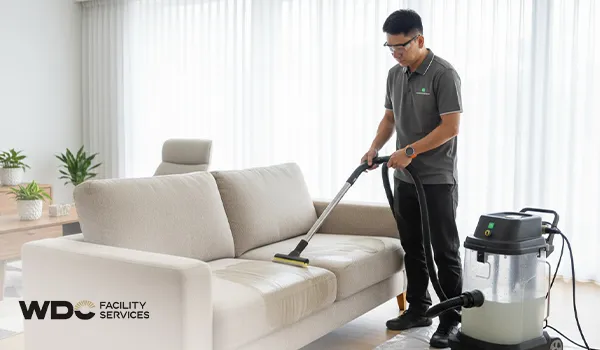
- Action: Deep-clean fabric chairs, sofas, and upholstered partitions in reception and meeting areas.
- Action: Vacuum and treat fabric surfaces to restore texture and improve air quality.
Area-Specific Office Cleaning Protocols
A standardized office cleaning strategy requires zonal differentiation. Different environments, ranging from high-traffic lobbies to sensitive storage areas, require specific intervention frequencies and chemical applications to ensure safety and longevity.
1. Desk and Workstation Sanitization
Workstations are high-frequency touchpoints that harbor significant bio-loads.
- Action: Disinfect hardware (keyboards, mice, monitors) using electronic-safe sanitizers.
- Action: Clear and wipe desk surfaces to reduce visual cognitive load and allergen buildup.
- Action: Sanitize ergonomic chair adjustments and armrests.
2. Reception and Lobby Maintenance
The lobby serves as the primary gateway for outdoor pollutants and the initial “brand touchpoint” for stakeholders.
- Action: Execute high-frequency glass polishing on entry doors to maintain transparency.
- Action: Vacuum heavy-duty walk-off mats to capture moisture and debris before it enters the main floor.
- Action: Sanitize visitor seating and high-touch reception counters.
3. Restroom and Hygiene Facilities
Restrooms are critical zones for the transmission of enteric pathogens and require hospital-grade disinfection protocols.
- Action: Disinfect all porcelain surfaces, faucets, and flush valves.
- Action: Maintain floor drains and prioritize ventilation to manage Volatile Organic Compounds (VOCs) and odors.
- Action: Ensure a 100% fill rate for essential consumables (soap, liners, paper products).
4. Kitchen and Breakroom Sanitation
Shared food prep areas are susceptible to cross-contamination, pests, and bacterial growth.
- Action: Sanitize all food-contact surfaces and shared appliance handles.
- Action: Deep-clean sinks and drains monthly to prevent organic buildup and fruit fly infestations.
- Action: Implement a strict “clear-out” policy for communal refrigerators to prevent mold growth.
5. Warehouse and Storage Management
Storage zones are prone to particulate accumulation (dust) and physical hazards.
- Action: Sweep floors and remove cobwebs to maintain fire safety and air quality.
- Action: Organize inventory to ensure clear paths of egress and minimize accident risks.
- Action: Wipe shelving units to protect stored assets from environmental degradation.
6. Vertical Circulation: Elevators and Staircases
Enclosed cabins and stairwells are high-risk zones for germ transmission and slip-and-fall incidents.
- Action: Disinfect elevator button panels and handrails every 4-8 hours in high-occupancy buildings.
- Action: Clean stair treads and risers to remove moisture or debris that could compromise traction.
Essential Office Cleaning Inventory and Equipment
A standardized inventory of professional-grade supplies is the foundation of a healthy workplace. Utilizing the correct tools not only accelerates operational efficiency but also ensures compliance with health safety standards and preserves the long-term value of office assets.
1. Surface Sanitation and Dust Control
- EPA-Registered Broad-Spectrum Disinfectants: Mandatory for eradicating surface-bound pathogens and breaking the chain of infection on high-frequency touchpoints (desks, handles, and shared interfaces).
- Microfiber Technology: These positively charged synthetic fibers capture 99% of bacteria and particulate matter, significantly reducing the volume of chemical cleaners required and preventing “smearing.”
- Industrial Glass and Surface Polishes: Formulated to eliminate smudges and oils without leaving residue, ensuring maximum natural light penetration and visual clarity.
- Electrostatic Dusters: Designed to reach recessed vents, ceiling fixtures, and high-level surfaces where fine dust accumulates, optimizing Indoor Air Quality (IAQ).
2. High-Efficiency Floor Maintenance
- HEPA-Filtration Vacuum Cleaners: Unlike standard units, HEPA-equipped vacuums trap 99.97% of allergens and micro-particles (0.3 microns), preventing the redistribution of dust into the office environment.
- Color-Coded Mopping Systems: Utilizing a color-coded system (e.g., Red for restrooms, Blue for lobbies) is critical to mitigating cross-contamination risks across the facility.
- Industrial Floor Cleaners: Targeted chemical solutions designed to dissolve oils and restore the Coefficient of Friction (COF) to prevent slip-and-fall incidents.
- Abrasive Scrubbing Tools: Mechanical pads and brushes required for lifting calcified minerals, grout stains, and stubborn organic buildup in high-moisture zones.
3. Waste Management and Personnel Safety (PPE)
- Heavy-Duty Trash Liners: Sized appropriately for workstation and kitchen bins to prevent leakage and trap odors from Volatile Organic Compounds (VOCs).
- Nitrile Protective Gloves: The professional standard for hand protection; nitrile provides superior chemical resistance compared to latex and prevents skin irritation or allergic reactions.
- SDS-Compliant Storage: All cleaning chemicals must be stored alongside their respective Safety Data Sheets (SDS) to ensure OSHA compliance and staff safety in the event of accidental exposure.
When Should You Hire a Professional Office Cleaning Service?
Hiring a professional cleaning team becomes important when you want consistent results, better hygiene, and a work environment that feels clean every day. Professional cleaners bring experience, the right equipment, and trained methods that help maintain a healthier workspace.
When is the right time to bring in professional cleaners?
You should consider hiring professional Commercial Cleaning when the office starts feeling harder to maintain or when your team doesn’t have enough time to manage cleaning properly. Many businesses notice this when dust builds up faster, carpets look dull, or shared areas start feeling untidy even after regular cleaning. Professional cleaners take care of the deeper tasks that often get skipped, such as steam cleaning carpets, sanitizing high-touch points, cleaning vents, and handling floor care.
They also work well for offices with high foot traffic, where dirt and germs spread quickly throughout the day. A trained team knows how to clean efficiently without interrupting workflow. Research has shown that cleaner workplaces experience fewer sick days, better air quality, and higher employee satisfaction.
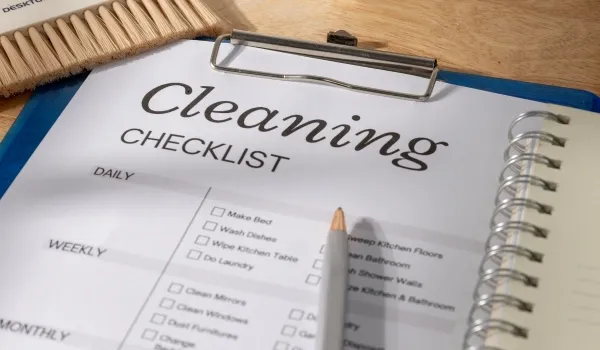
Office Cleaning Checklist (Printable PDF Download)
A printable checklist helps staff follow consistent cleaning routines without missing any tasks. It supports daily, weekly, and monthly processes in a simple format.