The main benefits are better workplace hygiene, safer premises, consistent cleaning standards, less work for internal teams and stronger control over long-term maintenance. The value comes from having a cleaning plan that matches the site, not simply from having cleaners attend.
For a facility manager, operations manager or business owner, the practical question is whether outsourcing cleaning will reduce recurring problems. These may include missed tasks, washroom complaints, dirty high-traffic areas, staff spending time on cleaning, or a workplace that is not ready for customers and visitors.
A professional service can address these problems through trained cleaners, an agreed scope of work, suitable equipment, flexible scheduling and quality checks. However, the results depend on the cleaning frequency, site requirements and accountability built into the service.
The 12 Main Benefits at a Glance
| Benefit | Practical value for the business |
| Better workplace hygiene | Frequently used areas receive planned attention |
| Safer premises | Spills, rubbish and other cleaning-related hazards are addressed |
| Support for site requirements | Cleaning can follow industry and workplace procedures |
| Consistent standards | Tasks, frequency and quality expectations are documented |
| More time for core work | Employees are not expected to perform routine commercial cleaning |
| Stronger first impressions | Customer-facing areas remain clean and presentable |
| Better staff comfort | Shared spaces are more pleasant and ready to use |
| Specialist capability | Trained cleaners use suitable equipment and methods |
| Flexible service | The plan can reflect occupancy, risk and operating hours |
| Asset protection | Correct maintenance helps limit avoidable surface wear |
| Better cost control | Cleaning costs and responsibilities are easier to define |
| Less management pressure | One provider is accountable for staffing, delivery and follow-up |
1. Creates a Healthier Workplace
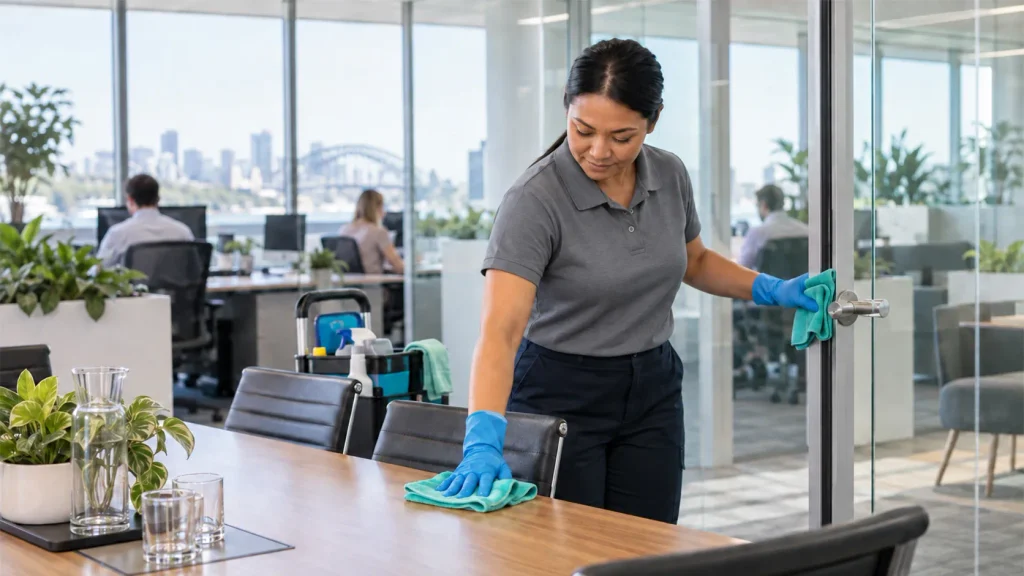
Professional commercial cleaning supports a healthier workplace by removing visible soil, dust and residue and by giving high-touch surfaces regular attention.
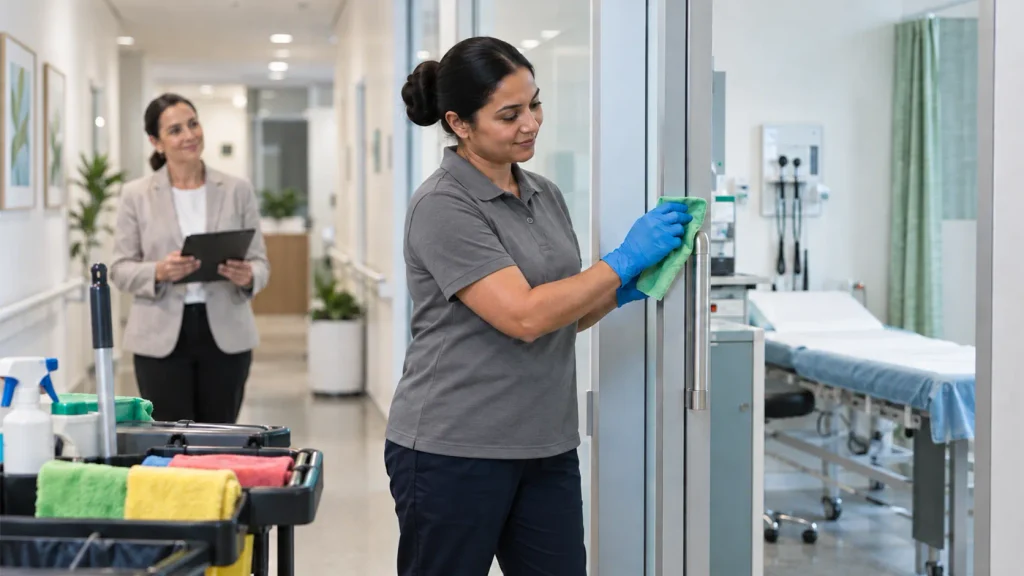
Shared areas collect contamination quickly. Door handles, lift buttons, reception counters, kitchen benches, taps and washroom fixtures may be touched by many people during one working day. A site-specific schedule makes it clear which surfaces require cleaning and how often they need attention.
Cleaning and disinfection are not interchangeable. Cleaning removes dirt and organic matter from a surface. Disinfection uses an appropriate product to reduce microorganisms after the surface has been cleaned. Not every surface needs routine disinfection, and using the wrong chemical or contact time can make the process ineffective or damage the material.
Requirements are more controlled in healthcare settings. The Australian Guidelines for the Prevention and Control of Infection in Healthcare support health services in developing local infection-prevention protocols. A clinic’s cleaning plan should therefore follow its own risk assessment, applicable guidance and documented procedures.
Commercial cleaning cannot guarantee that employees will not become ill. It can, however, make workplace hygiene more systematic and reduce reliance on occasional wiping or individual staff habits.
2. Improves Workplace Safety
Commercial cleaning can improve workplace safety by keeping floors, walkways and shared areas free from preventable cleaning-related hazards.
Wet floors, unreported spills, overflowing bins and items left in walkways can create avoidable risks. Safe Work Australia recommends cleaning spills, removing rubbish, using cleaning schedules and drying floors after cleaning as part of managing slip and trip risks.
A competent cleaning team should also use warning signs and barriers when work creates a temporary hazard. Cleaning equipment should not block exits or busy paths. Chemicals need to be labelled, stored and used according to their instructions and the site’s safety procedures.
The cleaning contractor supports the site’s safety system but does not replace it. The business still needs reporting procedures, risk controls and clear responsibility for hazards that arise between scheduled visits.
3. Supports Workplace Hygiene and Industry Requirements
A commercial cleaning service can support compliance by following the cleaning procedures, frequencies and records required for the site.
Different facilities have different expectations. An office may focus on workstations, kitchens, washrooms and presentation. A medical centre needs infection-conscious procedures. A childcare centre or school requires attention to frequently touched surfaces and shared facilities. A warehouse may prioritise floors, amenities, dust control and safe access routes.
Where documentation matters, the service may use:
- Site-specific cleaning schedules
- Task completion records
- Safety data sheets for cleaning chemicals
- Incident and hazard reports
- Quality inspection records
- Corrective-action logs
Hiring a commercial cleaner does not automatically make a workplace compliant. The scope must reflect the relevant industry requirements, and the business must confirm which responsibilities remain with site management.
4. Delivers More Consistent Cleaning Standards
Commercial cleaning provides more consistent results when the provider works from a clear scope, trained team and quality-control process.
Inconsistent cleaning often begins with an unclear agreement. The client expects a task to be completed, but the cleaner does not know it is included or how often it should be done. A written scope removes much of this ambiguity by defining the areas, tasks, frequencies and expected outcomes.
Consistency also depends on what happens after the contract begins. Useful controls include site checklists, supervisor inspections, a clear contact person, issue tracking and backup cover when a regular cleaner is unavailable.
The goal is not a checklist that looks detailed on paper. It is a system that catches missed work before the same complaint returns each week.
5. Gives Employees More Time for Their Core Work
Outsourcing routine cleaning allows employees to spend more time on the work they were hired to perform.
Staff will still need to manage personal work areas and report spills or hazards. They should not, however, be relied upon to deep-clean washrooms, maintain floors, manage cleaning chemicals or complete large cleaning tasks around their normal responsibilities.
This division of work also creates clearer accountability. When everyone is loosely responsible for cleaning, unpleasant or time-consuming tasks are easily delayed. A commercial cleaning scope assigns those tasks to a trained team and establishes when they should be completed.
The benefit is not an automatic increase in productivity. It is the recovery of staff time and the removal of work that sits outside their primary role.

6. Creates a Stronger First Impression
A professionally maintained workplace helps the business present a clean, organised and credible environment to customers, clients, tenants and visitors.
People often notice reception areas, entrance glass, floors, meeting rooms and washrooms before they see behind-the-scenes work. Visible dust, full bins, marks on glass or unpleasant washrooms can weaken an otherwise professional experience.
Presentation matters most in customer-facing environments such as offices, clinics, retail stores, gyms, hotels and shared commercial properties. The cleaning plan should prioritise the spaces people see and use most, rather than spreading the same frequency across every part of the building.
Cleanliness cannot compensate for poor service or an unsuitable facility. It supports the brand by showing that the workplace is maintained with care.
7. Supports Employee Comfort, Morale and Focus
A clean workplace supports employee comfort by keeping shared spaces usable, orderly and ready for the working day.
Staff notice when kitchens are left dirty, bins overflow, washrooms are not stocked or floors remain marked. These problems may not stop operations, but they create repeated frustration and complaints. Reliable cleaning removes avoidable distractions and makes the workplace easier to use.
Claims that cleaning directly increases productivity should be treated carefully. Productivity is influenced by workload, leadership, systems, workplace design and many other factors. Cleaning contributes by removing environmental problems that can interrupt work or make staff feel their workplace is poorly managed.

8. Provides Access to Trained Cleaners and Specialist Equipment
Professional providers give businesses access to cleaners, equipment and methods suited to commercial environments.
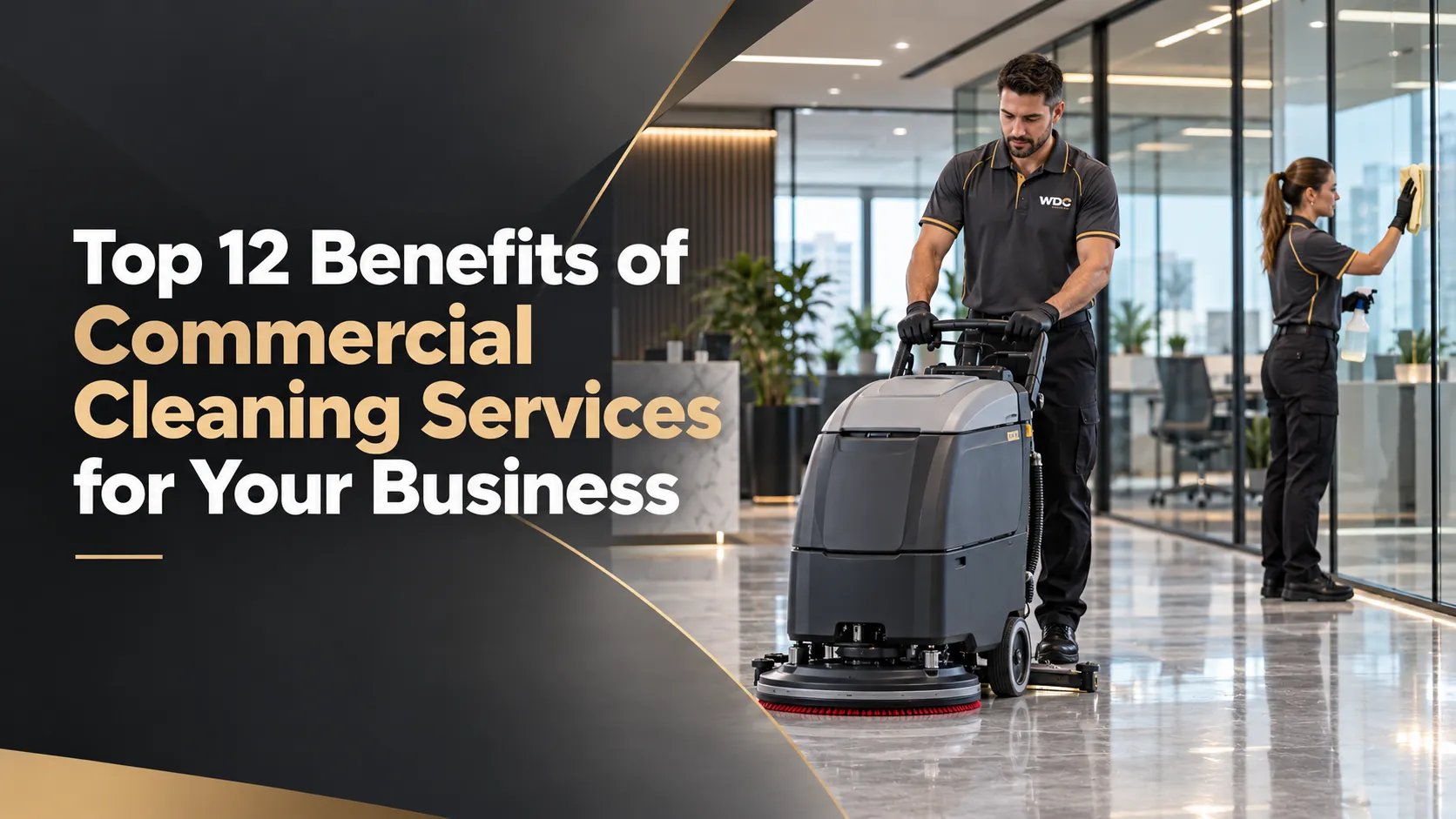
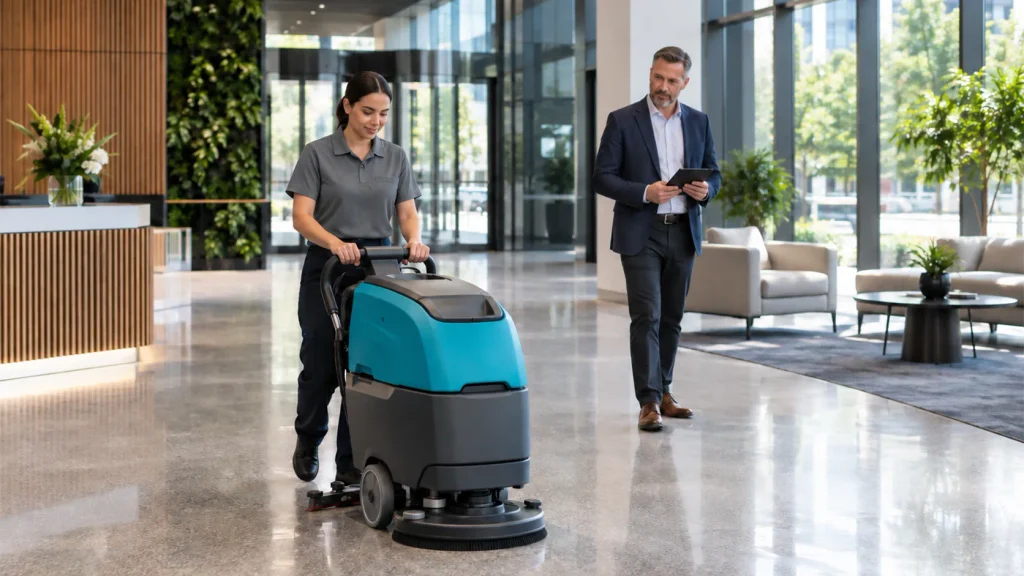
Commercial sites may require HEPA-filtered vacuums, floor scrubbers, carpet extraction equipment, high-reach tools, colour-coded materials or surface-specific chemicals. Buying this equipment is only part of the issue. It also needs correct operation, maintenance and storage.
Training matters because different surfaces respond to different methods. An aggressive chemical may damage a sealed floor. Excess moisture may affect carpet drying. Incorrect product use can leave residue or create a safety concern.
A business should ask what training cleaners receive and how the provider manages chemical safety, equipment maintenance and site-specific instructions. The presence of professional equipment alone does not guarantee professional results.
9. Provides a Cleaning Plan Built Around the Workplace
Commercial cleaning can be tailored to the site’s traffic, layout, industry, operating hours and budget.
A useful plan does not clean every area at the same frequency. High-use washrooms and kitchens may need daily attention, while low-use meeting rooms need less frequent service. Entrances may require extra work during wet weather. Periodic carpet, window or floor maintenance can be scheduled separately from routine cleaning.
Flexible timing is also important. Depending on access and security arrangements, cleaning may be completed:
- Before staff arrive
- During low-traffic periods
- After business hours
- On weekends
- In stages across a multi-site operation
Flexibility should not mean constantly changing cleaners or service times without notice. The best schedule reduces disruption while maintaining predictable access, supervision and security.

10. Protects Flooring, Furniture and Workplace Assets
Correct cleaning and planned maintenance can help protect floors, carpets, furniture and fixtures from avoidable deterioration.
Tracked-in soil can act as an abrasive on carpet and hard flooring. Spills may stain or damage surfaces when they are left untreated. Unsuitable chemicals can strip finishes, discolour materials or leave residue.
A commercial cleaning plan should distinguish routine care from periodic maintenance. Vacuuming, mopping and spot cleaning manage daily soil. Carpet extraction, floor scrubbing, polishing or sealing may be scheduled according to the material, traffic and condition.
Cleaning will not prevent normal ageing or repair existing damage. Its value is in slowing avoidable wear and helping the business identify issues before replacement becomes the only option.
11. Helps Control Long-Term Cleaning and Maintenance Costs
Commercial cleaning can improve cost control by turning cleaning into a defined service with an agreed scope, schedule and price.
The fair comparison is not simply a contractor’s invoice against an employee’s hourly rate. An in-house approach may also involve recruitment, supervision, leave cover, training, equipment, chemicals, storage, uniforms and replacement costs.
Outsourcing is not automatically cheaper for every business. A small, low-traffic site with simple needs may manage some tasks internally. A larger or specialist facility may gain more value from a provider that can supply trained staff, equipment, supervision and backup coverage.
Businesses should compare the total cost of each option and the standard each one can reliably maintain. The cheapest quote may cost more over time if tasks are missed, surfaces are damaged or managers spend hours resolving the same problems.
12. Reduces the Facility Manager’s Workload
A well-managed commercial cleaning service reduces the time facility managers spend organising cleaners, checking tasks and responding to repeated complaints.
This is often the benefit that matters most in practice. A facility manager does not need another supplier who requires constant reminders. They need a provider that understands the site, communicates early, covers absences and fixes issues when the standard slips.
One accountable provider can manage:
- Cleaner scheduling and replacement cover
- Equipment and cleaning supplies
- Site inductions and access instructions
- Routine quality checks
- Issue escalation and corrective work
- Changes to the scope as occupancy or operations change
The result is not zero involvement. The client still needs to provide access, share operational changes and review performance. The benefit is that management becomes oversight rather than daily supervision.
When Are Commercial Cleaning Services Most Valuable?
Commercial cleaning delivers the most value where cleaning is frequent, operationally important or difficult to manage with existing staff.
It is especially useful for:
- High-traffic workplaces with busy entrances, kitchens and washrooms
- Medical, education, childcare and other hygiene-sensitive facilities
- Customer-facing businesses where presentation affects the visitor experience
- Warehouses, gyms and other sites with specialist surfaces or cleaning risks
- Properties that require early-morning, evening or weekend service
- Multi-site businesses that need consistent standards and central reporting
- Workplaces experiencing recurring complaints or inconsistent cleaning
A small site may still benefit, but the scope should remain proportionate. Paying for daily service across areas that receive little use is not efficient. Frequency should follow traffic, risk and observed cleaning needs.
How Can You Measure the Value of a Commercial Cleaning Service?
The value of a cleaning contract should be measured through reliable service outcomes, not by how busy the cleaning team appears.
| Measure | What it reveals |
| Missed or incomplete tasks | Whether the agreed scope is being delivered |
| Repeat complaints | Whether root causes are being corrected |
| Inspection results | Whether standards remain consistent over time |
| Issue response time | How accountable and responsive the provider is |
| Washroom supply shortages | Whether consumables are being checked properly |
| Unplanned deep cleans | Whether routine cleaning is preventing avoidable buildup |
| Floor and carpet condition | Whether cleaning methods support asset maintenance |
| Manager follow-up time | Whether the service is genuinely reducing workload |
Review these measures at an agreed interval. A cleaning plan should change when staffing levels, operating hours, tenancy, foot traffic or risk areas change. A static scope may become poor value even when the cleaners complete every listed task.
Are Commercial Cleaning Services Worth It for Your Business?
Commercial cleaning services are worth considering when a business needs reliable hygiene, defined accountability, flexible scheduling or specialist capability that internal staff cannot provide efficiently.
The strongest benefit is not simply a cleaner-looking workplace. It is a controlled cleaning system: the right areas are cleaned at the right frequency, problems have an owner and managers can verify whether the service is working.
Before choosing a provider, ask for a site inspection and a written proposal that explains:
- Which areas and tasks are included
- How often each task will be completed
- What periodic or specialist services cost extra
- Who supervises the cleaners and checks quality
- How absences, complaints and urgent issues are handled
- What insurance, training and site documentation are available
For more than 11 years, WDC Facility Services has supported commercial workplaces with site-specific cleaning plans. Our local, police-checked cleaners follow structured routines, with clear communication and quality checks supporting the service. Work is backed by our 24 Hour Redo Guarantee. Businesses can request a free site inspection and a transparent quote before deciding whether the scope is right for their premises.
Frequently Asked Questions
Are Commercial Cleaning Services Worth It for a Small Business?
Commercial cleaning can be worthwhile for a small business when staff time, hygiene, presentation or specialist tasks justify outsourcing. A smaller site may need a limited weekly plan rather than a large daily service.
How Often Should a Commercial Workplace Be Professionally Cleaned?
Cleaning frequency should reflect occupancy, foot traffic, operating hours, industry risk and the use of shared areas. Busy washrooms and kitchens may need daily service, while lower-use areas can follow a less frequent schedule.
Does Commercial Cleaning Include Disinfection?
Commercial cleaning may include disinfection when it is specified in the scope. Cleaning and disinfection are different processes, so the required surfaces, products, frequency and contact time should be clearly defined.
Is Commercial Cleaning Cheaper Than Hiring In-House Cleaners?
It depends on the site. Compare wages, recruitment, leave cover, supervision, training, equipment, supplies and management time with the complete contractor price and service scope.
What Should Be Included in a Commercial Cleaning Quote?
A commercial cleaning quote should define the areas, tasks, frequencies, service times, periodic work, consumables, exclusions, quality-control process, issue response and total price. A site inspection usually produces a more accurate scope than pricing based only on floor area.