A gym cleaning service is a professional hygiene and maintenance solution designed to keep fitness facilities safe, clean and compliant with health standards. Gyms accumulate sweat, bacteria and odour faster than most commercial spaces. This makes regular cleaning essential for member safety, equipment lifespan and business reputation.
A structured cleaning program improves air quality, reduces infection risks, lowers operational hazards and strengthens brand trust. It also supports member retention since new and existing clients prefer clean, fresh workout environments.
This guide explains gym cleaning services include, why they matter, how often gyms should be cleaned and how to choose the right cleaning partner.
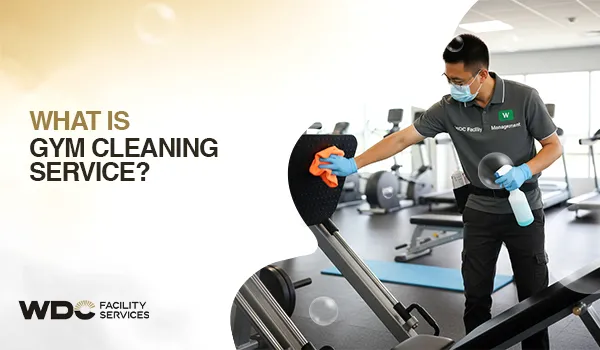
What Is a Gym Cleaning Service?
A gym cleaning service is a professional cleaning solution designed to keep fitness centres healthy, safe and comfortable for members. It focuses on removing sweat, germs, odours and daily build-up that naturally occurs in busy training environments.
Gyms have more high-touch surfaces than most workplaces, and these areas collect bacteria quickly. Equipment is shared all day, floors take in moisture and dust, and warm rooms create the perfect conditions for germs to spread. Because of this, gyms need a more specialised cleaning routine than standard commercial spaces.
Several studies, including one published in the International Journal of Environmental Research and Public Health, found that shared fitness equipment can carry significantly higher bacterial loads than surfaces in public toilets. Another study from FitRated reported that cardio machines contained more than one million colony-forming units per square inch on average. This shows how quickly germs can spread in a busy gym when equipment is not cleaned properly.
Professional gym cleaners use approved disinfectants, safe cleaning methods and structured checklists to make sure every part of the facility is cleaned properly.
Studies on fitness centres show that equipment surfaces can hold extremely high levels of bacteria if they are not cleaned often. A dedicated cleaning service helps reduce this risk and keeps the workout environment fresh and hygienic.
What Areas Must Be Cleaned in a Gym?
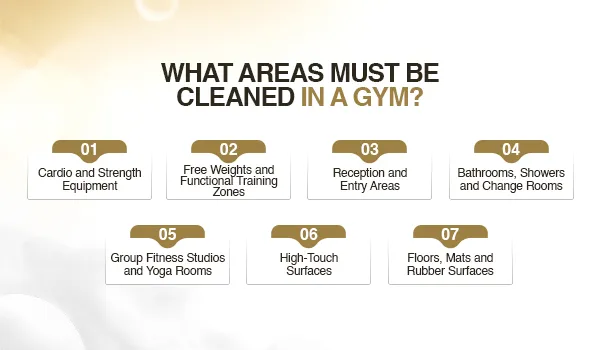
Different parts of the gym require specific cleaning processes because they attract bacteria, sweat and dust at varying levels. Below are the key areas that must be cleaned regularly to keep a gym healthy:
- Cardio and Strength Equipment
- Free Weights and Functional Training Zones
- Reception and Entry Areas
- Bathrooms, Showers and Change Rooms
- Group Fitness Studios and Yoga Rooms
- High-Touch Surfaces (Handles, Screens, Lockers, Benches)
- Floors, Mats and Rubber Surfaces
1. Cardio and Strength Equipment
Cardio machines, weight machines and benches must be disinfected frequently since they are touched by almost every member. These surfaces accumulate sweat, skin cells and oils, which can host harmful germs. Keeping equipment clean improves hygiene and enhances user comfort.
2. Free Weights and Functional Training Zones
Dumbbells, barbells, kettlebells and functional training gear carry high bacteria loads. Studies show free weights often contain more germs than toilet seats due to constant hand contact. Regular sanitisation helps prevent skin infections and ensures safer workouts.
3. Reception and Entry Areas
The reception area is the first point of contact for members, and cleanliness here reflects the overall hygiene standard. Dust-free counters, clean seating and sanitised door handles create a welcoming and safe environment.
4. Bathrooms, Showers and Change Rooms
Washrooms and showers require the highest cleaning frequency. These areas are exposed to water, sweat and humidity, which makes them vulnerable to bacterial and fungal growth. Deep cleaning helps prevent odours, mould and hygiene complaints.
5. Group Fitness Studios and Yoga Rooms
Mats, floors and shared equipment in group fitness spaces collect sweat and moisture after each session. Keeping these rooms clean reduces slip hazards and improves air freshness for the next class.
6. High-Touch Surfaces (Handles, Screens, Lockers, Benches)
High-touch points spread germs faster than any other surface. Cleaning these areas reduces contamination levels and supports a healthier environment. These surfaces require hospital-grade disinfectants due to frequent contact.
7. Floors, Mats and Rubber Surfaces
Gym floors collect dust, chalk, sweat, and moisture. Regular sweeping, mopping, and machine scrubbing keep surfaces clean and reduce slip risks. Commercial floor cleaning also helps maintain cleaner mats, reduce hygiene risks, and support safer floor exercises in busy gym areas.
How Often Should a Gym Be Professionally Cleaned?
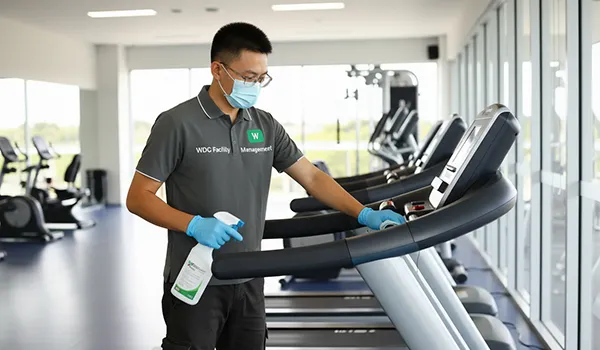
A gym should be professionally cleaned every day, with additional disinfecting sessions throughout operating hours, and scheduled deep cleaning based on usage levels. This frequency helps reduce germs, control odour and maintain a safe training environment for members.
To give gym owners a clear picture, here is a practical breakdown of how often each cleaning task should be done in a typical Australian fitness facility:
| Cleaning Frequency | What Should Be Cleaned | Why It Matters |
| Daily | Equipment disinfecting, bathroom and shower sanitising, emptying bins, wiping high-touch surfaces, mopping floors | Gym equipment can hold bacteria levels up to several hundred times higher than common household surfaces. Daily cleaning reduces infection risk, prevents odour build-up and keeps the space presentable for members. |
| Weekly | Machine scrubbing floors, detailed wipe-down of strength machines, dusting vents, cleaning mirrors, disinfecting mats | Weekly care removes deeper grime that daily cleaning cannot address. It also improves air quality and keeps rubber flooring from deteriorating due to sweat and moisture accumulation. |
| Monthly | Deep cleaning sessions, carpet extraction, steam cleaning, air quality treatment, equipment polish and maintenance checks | Monthly deep cleaning targets hidden bacteria, eliminates long-term odours and extends the lifespan of flooring and equipment. It also supports compliance with hygiene expectations in Australian fitness centres. |
What Is Included in a Professional Gym Cleaning?
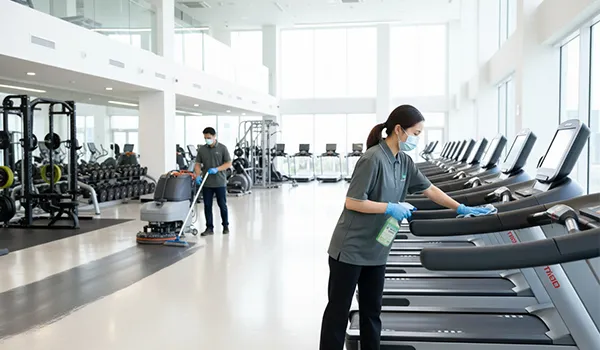
A professional gym cleaning service includes disinfecting equipment, sanitising washrooms, controlling odour, treating floors and maintaining overall hygiene across all workout areas.
These services are designed to reduce germs, improve member comfort and keep the gym safe for daily use.
1. Equipment Disinfection and Sweat Removal
Cleaning teams sanitise all cardio and strength machines using approved disinfectants that remove sweat, oils and bacteria. Research on fitness centres shows common machines can carry high levels of microorganisms due to repeated touch. Removing sweat prevents corrosion and keeps equipment functioning longer. It also reduces the spread of skin and respiratory infections often linked to shared surfaces.
2. Floor Scrubbing and Anti-Slip Treatment
Floors are one of the most used areas and collect dust, moisture and sweat throughout the day. Professional cleaners use specialised scrubbers to remove deep dirt and restore grip. This prevents slip accidents and enhances safety for members. Regular floor treatment also extends the lifespan of rubber tiles and vinyl surfaces, helping gyms save on replacement costs.
3. Odour Control and Air Quality Management
Gyms naturally develop odours due to sweat, humidity and bacteria. Cleaning companies use deodorising agents and air filtration methods to improve freshness. Good air quality reduces discomfort during workouts and helps create a more pleasant atmosphere. It also lowers the presence of airborne particles that can impact people with allergies or asthma.
4. Washroom Sanitisation and Consumable Restocking
Showers, toilets and change rooms require deep cleaning because they are high-moisture environments. Regular sanitisation prevents mould, odour and hygiene complaints. Cleaners also restock essentials like tissues, soaps and paper towels to maintain convenience for members. Well-maintained washrooms are one of the strongest indicators of a professional facility.
5. Waste Removal and Hygiene Compliance
Cleaning teams handle waste disposal safely to prevent contamination. Bins in gyms fill quickly due to used wipes, bottles and general rubbish. Removing waste frequently keeps the environment clean and prevents odour build-up. Proper waste management also supports compliance with local health guidelines.
Cleaning Standards and Compliance for Australian Gyms
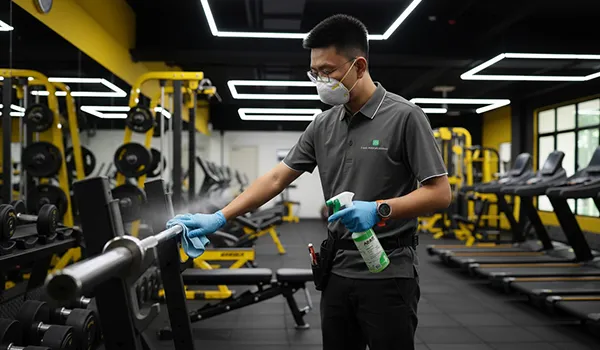
Cleaning standards for Australian gyms focus on hygiene, safety and preventing the spread of illness. These guidelines ensure every fitness facility maintains a clean, healthy and legally compliant environment for members and staff.
Gyms in Australia are expected to follow national health advice, state-based safety regulations and industry-approved cleaning practices. These standards highlight equipment hygiene, proper ventilation, safe washrooms and regular documentation of cleaning tasks.
Key hygiene and compliance requirements for Australian gyms include:
- Using approved hospital-grade disinfectants: Australian guidelines recommend disinfectants that meet TGA requirements because gyms are high-touch spaces. These products reduce bacteria and virus levels on equipment, especially in areas with heavy sweat exposure. Studies from cleaning and hygiene institutes show that using certified disinfectants can lower surface contamination by more than 90 percent when applied correctly.
- Maintaining clean high-touch surfaces throughout the day: Equipment handles, screens, door knobs, lockers and benches collect germs quickly. Health bodies note that viruses can survive on gym surfaces for several hours, which is why routine wipe-downs help reduce transmission risks. Many gyms adopt multiple cleaning cycles daily to keep hygiene consistent during peak sessions.
- Ensuring proper ventilation and air flow: Good ventilation helps reduce airborne particles, odours and humidity. Research in indoor fitness environments shows improved airflow can lower airborne bacteria by up to 60 percent. Australian guidelines encourage fresh air circulation, filtered systems and regular HVAC maintenance to maintain safer indoor air quality.
- Keeping washrooms, showers and change rooms sanitised: These areas must be cleaned frequently because moisture increases the chance of mould and bacterial growth. Regular deep cleaning prevents odours, reduces slip risks and maintains hygiene compliance. Clean washrooms are also one of the strongest contributors to member satisfaction in Australian gyms.
- Monitoring floor safety and surface conditions: Floors must be free from sweat, dust and debris to avoid slip accidents. Rubber gym floors require machine scrubbing and safe anti-slip treatment. WorkSafe data from several states consistently list slippery floors as a common cause of injuries in fitness centres.
- Managing waste correctly and removing bins regularly: Gyms generate high waste volumes because of wipes, bottles and paper products. Frequent waste removal prevents odours and lowers contamination risks. It also supports workplace safety and meets local council hygiene expectations.
In-House Cleaning vs Professional Gym Cleaning Services
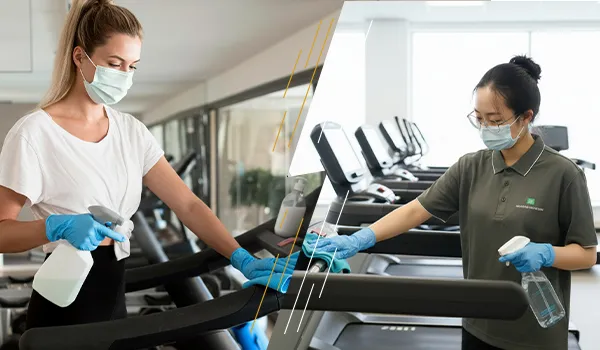
Gym owners often wonder whether to hire in-house cleaners or outsource to professionals.
Both options have advantages, but the difference in quality, cost and consistency becomes clear when comparing them.
Cost Comparison
In-house cleaning may seem cheaper at first, but expenses add up over time. Gyms must pay wages, insurance, training costs and purchase supplies and equipment. When these are combined, in-house cleaning often becomes more expensive. Professional services offer predictable pricing and include all equipment, chemicals and labour. This gives gym owners better cost control. Many facilities report long-term savings after outsourcing due to reduced equipment damage and fewer operational disruptions.
Quality and Consistency Differences
Professional cleaners follow structured systems and checklists to maintain consistent quality every day. Their staff is trained specifically for gym hygiene, which requires more specialised knowledge than general cleaning. In-house teams often struggle with consistency, especially during busy hours or staff shortages. A professional service guarantees a higher standard because they monitor performance and use industry-grade tools.
Risk Exposure and Insurance Considerations
Gyms face risks related to slips, infections and general workplace safety. Professional cleaning companies carry insurance that protects gym owners from liability during cleaning operations. In-house teams require additional insurance coverage from the gym, which adds to expenses. Outsourcing reduces exposure to workplace injury claims and ensures compliance with safety guidelines.
When Outsourcing Becomes the Smarter Option
Outsourcing becomes essential when the gym grows, experiences high foot traffic or receives cleanliness complaints. Members expect spotless equipment, fresh air and hygienic washrooms at all times. Professional cleaners deliver higher reliability and help protect the gym’s reputation. They also free internal staff from cleaning duties, allowing them to focus on customer service and operational tasks.
How Much Does Gym Cleaning Service Cost?
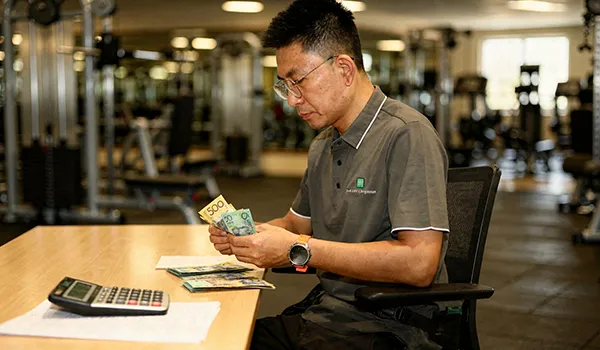
Gym cleaning costs depend on the size of the facility, how many people use it each day and the level of cleaning needed to keep the space healthy. Most gyms choose either a fixed monthly contract or an hourly rate based on their schedule.
Gym Cleaning Cost Breakdown in Australia (Typical Market Rates)
Below is a general pricing table commonly used across Australia. These ranges vary by city, gym layout and cleaning frequency, but they provide a realistic benchmark for planning.
| Gym Size / Cleaning Level | Inclusions | Estimated Cost Range |
| Small Studio Gym (up to 150 sqm) | Basic daily wipe down, vacuuming, equipment sanitising, bathroom touch ups | 150 to 300 AUD per week |
| Medium Gym (150 to 500 sqm) | Full equipment cleaning, floor scrubbing, bathrooms, change rooms, high touch areas | 350 to 650 AUD per week |
| Large Commercial Gym (500 to 1500 sqm) | Daily cleaning, deep scrubs, odour control, waste management, after hours work | 700 to 1,500 AUD per week |
| Premium or 24 hour Gyms | High frequency cleaning, full disinfecting rounds, consumables restocked, advanced reporting | 1,500 to 3,000 AUD per week |
| Hourly Cleaning Rate | Basic cleaning support for small gyms | 35 to 60 AUD per hour |
| Deep Cleaning Add Ons | Machine scrubbing, steam cleaning, air treatment | 250 to 900 AUD per session |
How to Choose the Right Gym Cleaning Company

Selecting the right gym cleaning company requires evaluating experience, reliability and the ability to handle fitness-specific hygiene needs.
A good cleaning partner keeps the gym safe, presentable and compliant with health standards.
Experience With Fitness Facilities
Choose companies that have experience with gyms, sports centres or fitness studios. These companies understand the unique hygiene challenges of sweat, equipment surfaces and high-touch areas. Their staff is trained to clean equipment safely without damaging consoles, straps or padding. Experience ensures fewer mistakes and a smoother cleaning process.
Technology, Checklists and Reporting Systems
Modern cleaning companies use digital checklists, QR tracking and reporting tools that provide transparency. These systems help gym owners monitor performance, track completed tasks and review cleaning frequency. Reliable documentation is valuable during audits and improves accountability.
Flexible After-Hours Scheduling
Gyms operate long hours, so cleaners must work during off-peak times or overnight. Choose a company that offers flexible schedules to avoid disturbing members. After-hours cleaning allows teams to disinfect equipment thoroughly and perform deep cleaning safely without interrupting workouts.
Insurance, Certifications and Staff Training
A reputable cleaning company should have insurance, industry certifications and trained staff. Certifications show the company follows approved hygiene standards, while insurance protects gym owners from liability during cleaning tasks. Trained staff ensures safe handling of chemicals and proper sanitisation techniques.
Questions to Ask Before Signing a Contract
Gym owners should ask about the cleaning checklist, chemicals used, frequency of visits, staff training, emergency support and reporting systems. Clear communication at the start prevents misunderstandings later. Reviewing a sample service agreement helps confirm what tasks are included and how performance will be measured.
Frequently Asked questions
What do gym cleaners do?
Gym cleaners disinfect equipment, wipe high-touch surfaces, sanitise bathrooms and locker rooms, vacuum floors, remove sweat residue, and manage waste to ens
ure a hygienic, odour-free fitness environment that meets health and safety standards.
What is a gym cleaning machine?
A gym cleaning machine is a commercial-grade floor scrubber or steam cleaner used to sanitise gym floors, mats, and equipment. It removes sweat, bacteria, and dirt, ensuring hygiene, safety, and compliance in fitness facilities.
What does it mean to clean in the gym?
Cleaning in a gym means sanitising equipment, disinfecting high-touch surfaces, mopping floors, and maintaining air quality to reduce germs, prevent infections, and ensure a safe, compliant fitness environment for members and staff.
How to clean rubber gym mats?
To clean rubber gym mats, vacuum debris first. Mop with warm water and a pH-neutral cleaner. Avoid harsh chemicals. Rinse lightly, remove excess moisture, and allow mats to air-dry completely to prevent odour and bacteria buildup.
Can you steam clean rubber gym floors?
Yes, we can steam clean rubber gym floors but only with low-moisture steam and proper ventilation. High heat or excess water can weaken adhesives and damage seams. Always follow manufacturer guidelines for commercial gym flooring.
Conclusions
A gym cleaning service is essential for maintaining a healthy, safe and profitable fitness facility. Clean gyms reduce infection risks, protect members, improve equipment lifespan and strengthen business reputation. Each area of the gym requires specialised cleaning to meet hygiene standards, and consistent maintenance supports long-term success. Professional cleaning companies offer better reliability, improved quality and lower operational risks compared to in-house teams.
Understanding cleaning frequency, costs, compliance requirements and selection criteria helps gym owners make informed decisions. A strong cleaning strategy leads to happier members, higher retention and a safer workout environment.