Commercial kitchen cleaning has become a critical operational requirement as food service establishments face rising regulatory oversight, increasing consumer expectations, and documented public health risks.
The World Health Organization estimates that unsafe food causes around 600 million illnesses globally each year, while food service inspections in many countries report sanitation violations among the most common compliance failures.
Fire safety data also shows that cooking equipment is the leading cause of fires in restaurants, often linked to grease buildup in ventilation systems.
With restaurants operating for extended hours and serving high customer volumes, structured cleaning protocols are now essential to maintaining hygiene standards, controlling contamination risks, and ensuring regulatory compliance. Effective commercial kitchen cleaning directly supports public health protection and operational stability.
This guide explains what commercial kitchen cleaning is, which areas it covers, what products and equipment are used, and how the standard procedure works in practice.
What Is Commercial Kitchen Cleaning?
Commercial kitchen cleaning is the structured process of cleaning and sanitising food preparation areas in restaurants, hotels, hospitals, and catering facilities to meet hygiene, food safety, and fire safety standards. It is not just surface cleaning. It follows planned procedures, approved chemicals, and documented schedules.
Commercial kitchens work at high capacity every day. Large volumes of cooking create grease, steam, spills, and food waste in a short time. Without proper cleaning, bacteria can spread quickly across surfaces and equipment.
The World Health Organization estimates that unsafe food causes around 600 million illnesses globally each year. Poor hygiene and cross contamination in food environments are major contributors.
Commercial kitchen cleaning reduces these risks. It removes grease buildup, controls microbial growth, prevents pest activity, and supports compliance with health inspections.
What Areas Are Included in Commercial Kitchen Cleaning?
Commercial kitchen cleaning includes every surface, piece of equipment, and support system involved in food preparation, cooking, storage, ventilation, and waste handling.
It goes far beyond visible countertops and floors and also covers hidden areas such as ductwork, drains, and grease traps.
Here are the areas that must be cleaned:
- Cooking Equipment (Ovens, Grills, Fryers, Steamers)
- Extraction Hoods, Filters, and Duct Systems
- Food Preparation Surfaces and Workstations
- Refrigeration Units and Cold Storage Areas
- Dishwashing and Sink Stations
- Floors, Walls, and Ceilings
- Storage Areas and Dry Goods Shelving
- Waste Disposal and Grease Traps
1. Cooking Equipment (Ovens, Grills, Fryers, Steamers)
Cooking equipment cleaning focuses on removing baked on grease, carbon buildup, and food residue from high heat surfaces. This is essential for hygiene, performance, and fire prevention.
Commercial ovens and grills operate for long hours every day. Over time, grease layers reduce heating efficiency and create uneven cooking.
Maintenance data from commercial appliance manufacturers shows that heavy residue can reduce thermal efficiency by more than 10 percent.
Fryers require special attention. Oil breaks down under constant high temperatures and food particles accelerate this process. Without regular filtration and scheduled boil out cleaning, oil quality drops and bacterial growth becomes more likely.
2. Extraction Hoods, Filters, and Duct Systems
Extraction systems remove heat, smoke, and airborne grease from the kitchen. Over time, grease vapour condenses and sticks to hood interiors, filters, and duct walls.
This buildup is not just a cleanliness issue. It is a fire risk. Fire safety reports consistently show that cooking equipment is the leading cause of restaurant fires. Grease accumulation inside ventilation systems significantly increases fire spread.
3. Food Preparation Surfaces and Workstations
Food preparation surfaces are high risk areas for cross contamination. These include stainless steel counters, prep tables, chopping boards, slicers, and mixing stations.
Bacteria such as Salmonella and E. coli can survive on hard surfaces for extended periods under the right conditions. Proper cleaning follows a wash, rinse, and sanitise process using approved food safe chemicals at controlled concentrations.
4. Refrigeration Units and Cold Storage Areas
Refrigeration units must stay clean to maintain proper airflow and temperature control. Spilled liquids and food residue inside cold storage areas can become contamination points.
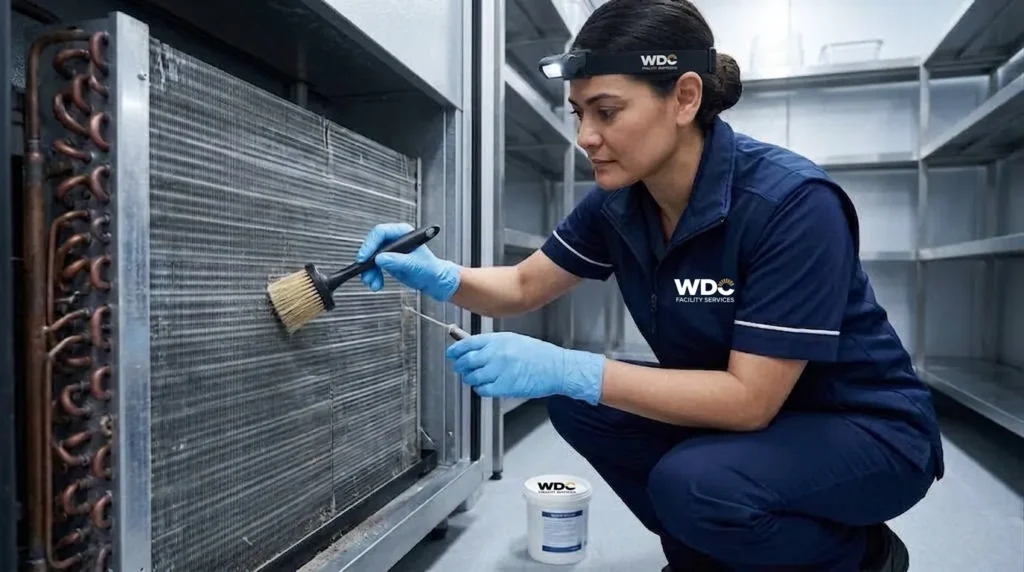
Food safety guidelines generally recommend that refrigerated storage remains at or below 5 degrees Celsius to slow bacterial growth. Dirty condenser coils or blocked vents can affect temperature stability.
Cleaning also involves checking door seals, shelving, and drainage channels. Keeping these areas clean prevents mould growth and ensures that temperature sensors work accurately.
5. Dishwashing and Sink Stations
Dishwashing stations are critical sanitation points in commercial kitchens. If cleaning is incomplete at this stage, bacteria can spread across utensils and cookware.
Commercial dishwashers operate using either high temperature sanitising cycles or chemical sanitising systems. In thermal systems, final rinse temperatures often exceed 82 degrees Celsius to achieve proper microbial reduction.
6. Floors, Walls, and Ceilings
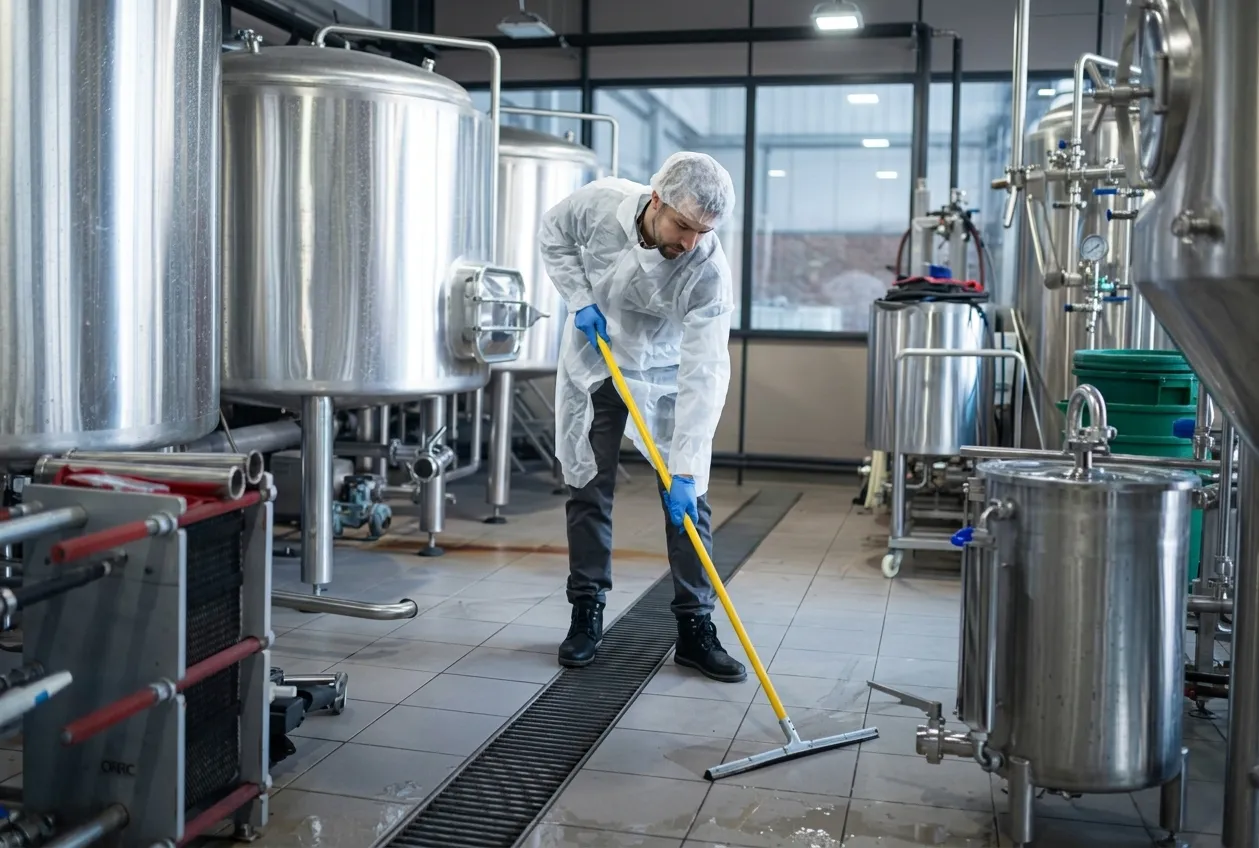
Floors in commercial kitchens are exposed to grease, water, and food debris throughout the day. Without proper cleaning, surfaces become slippery and unsafe.
Workplace safety data shows that slips and falls are among the most common injuries in food service environments. Routine degreasing and proper drainage help reduce these risks.
Walls and ceilings also collect grease vapours over time, especially near cooking lines. Deep cleaning prevents staining, mould growth, and long term structural damage.
7. Storage Areas and Dry Goods Shelving
Storage zones must remain clean, organised, and dry. These areas hold ingredients, packaging, and supplies that must be protected from contamination.
Health inspections often assess shelf cleanliness, proper food container sealing, and floor clearance. Poor storage hygiene increases the risk of pest infestation and product spoilage.
8. Waste Disposal and Grease Traps
Waste disposal zones are high contamination areas. Food scraps and organic waste attract pests and create odours if not removed promptly.
Bins must be cleaned and disinfected regularly. Overflowing waste increases bacterial presence and creates hygiene risks near food preparation areas.
Grease traps are installed to capture fats, oils, and grease before they enter drainage systems. Without scheduled maintenance, grease traps can clog and cause backflow issues.
Many municipalities require documented grease trap cleaning at specific intervals to prevent sewer blockages and environmental contamination. Regular maintenance protects both the kitchen and the surrounding infrastructure.
What Cleaning Products and Equipment Are Used in Commercial Kitchens?
Commercial kitchen cleaning relies on food safe chemicals and professional grade equipment designed to remove grease, kill harmful microorganisms, and protect food contact surfaces. Every product must meet hygiene standards while remaining safe for staff and customers.
Using the wrong chemical can leave residue on prep tables. Using the wrong tool can spread contamination from one zone to another. That is why commercial kitchens follow strict product selection guidelines.
Common tools and systems include:
- Heavy duty degreaser sprayers: Used to apply chemical solutions evenly across greasy surfaces. They improve coverage and reduce chemical waste.
- Food grade sanitiser dispensers: Ensure accurate dilution ratios and consistent application on prep tables and equipment.
- Colour coded mops and cloths: Assigned to specific kitchen zones to prevent cross contamination between raw and cooked food areas.
- Pressure washers: Remove thick grease and debris from floors, walls, and equipment exteriors during deep cleaning.
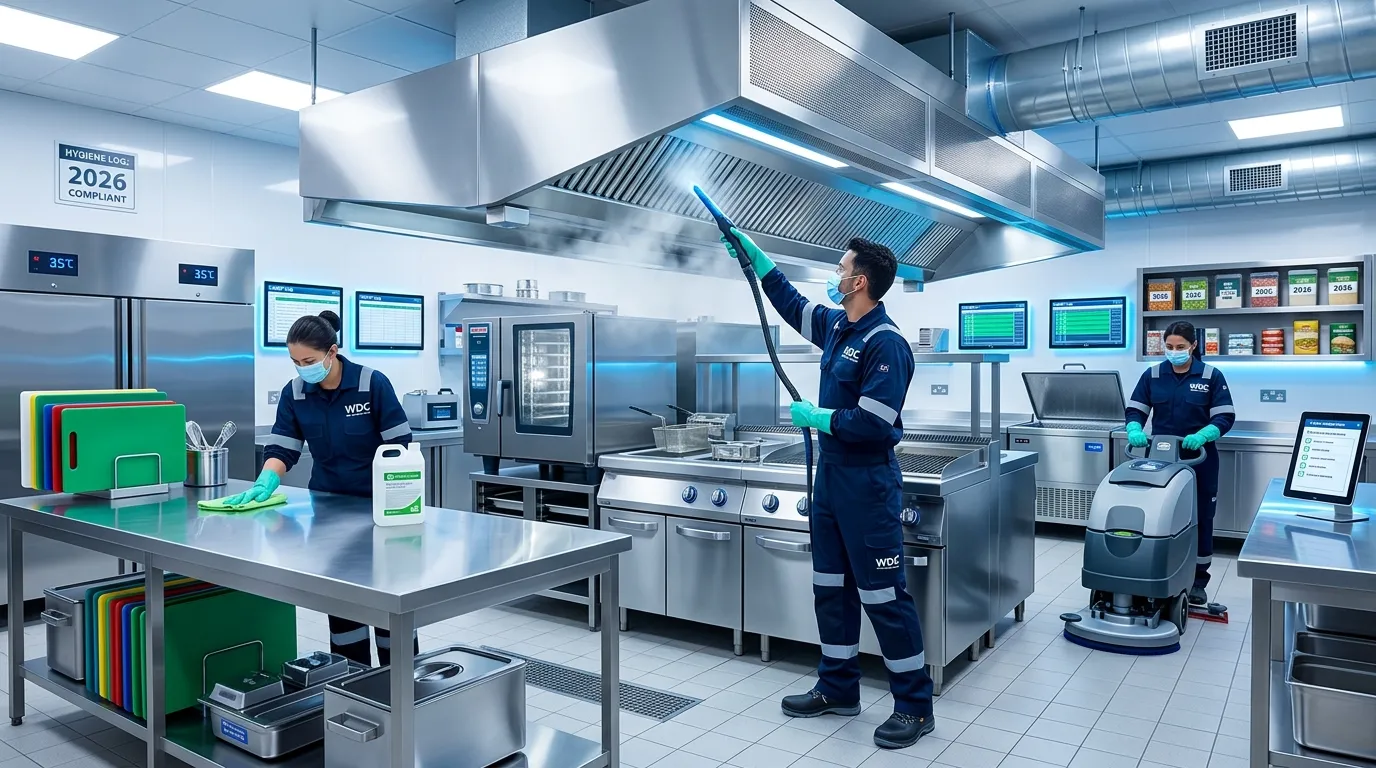
- Steam cleaners: Use high temperature vapour, often above 100 degrees Celsius, to sanitise surfaces and reach tight corners without excessive chemical use.
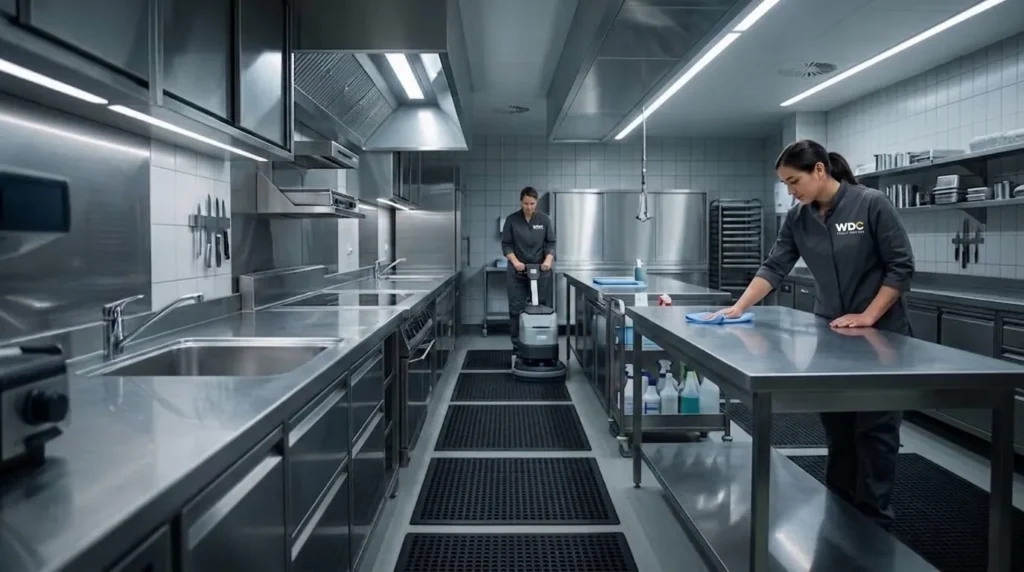
- Commercial scrubbers and floor machines: Provide mechanical action to lift grease from non slip kitchen floors, reducing slip hazards.
- Auto dosing chemical systems: Automatically mix cleaning chemicals at correct concentrations, improving safety and reducing human error.
- Grease trap cleaning tools: Used to remove fats, oils, and solids from drainage systems to prevent blockages and odours.
What Is the Standard Commercial Kitchen Cleaning Procedure?
A standard commercial kitchen cleaning procedure is a step by step sanitation process designed to remove visible dirt, eliminate grease, reduce bacteria, and confirm compliance with food safety regulations. It follows a fixed sequence so that no contamination risk is left behind.
The order of cleaning matters. If steps are skipped or done incorrectly, bacteria can remain on surfaces or grease can continue building inside equipment and ventilation systems. A structured process ensures consistent results and inspection readiness.
Step 1: Pre Cleaning Preparation and Safety Checks
Pre cleaning preparation means securing the kitchen before any chemical or mechanical cleaning begins. Equipment must be switched off, cooled down, and isolated from power or gas supply to prevent accidents.
This step protects workers from burns, electric shock, and chemical exposure. In busy kitchens, appliances can operate for 10 to 14 hours daily, so allowing proper cooling time is critical.
Staff should wear protective gloves, non slip footwear, and eye protection when necessary. Cleaning tools and approved food safe chemicals are gathered in advance to avoid interruptions during the process.
Reviewing the cleaning checklist at this stage ensures that no critical area is missed. Professional kitchens often use documented cleaning schedules to stay aligned with food safety programs.
Step 2: Removal of Food Debris and Waste
Before applying any cleaning chemicals, all loose food particles, packaging waste, and visible debris must be removed. This includes scraping grills, sweeping floors, and clearing workstations.
Applying degreaser over leftover debris reduces its effectiveness. Chemicals cannot properly reach surfaces if solid waste blocks contact.
Waste bins must be emptied and cleaned to prevent odour and pest attraction. According to food safety reports, improper waste handling is a major factor in pest infestation in commercial kitchens.
Removing debris first creates a clean base for effective degreasing and sanitising.
Step 3: Degreasing and Surface Cleaning
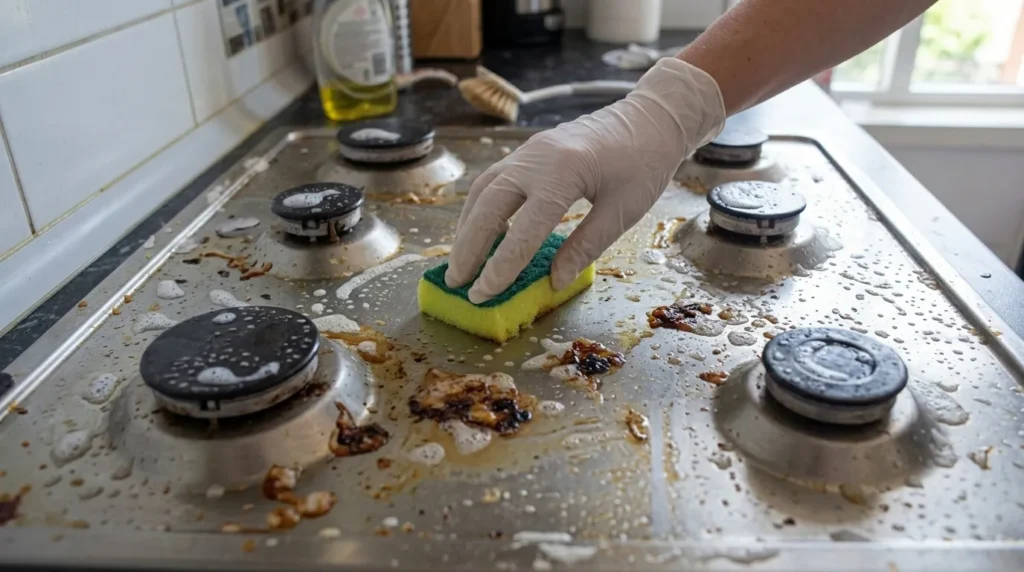
Degreasing is the core stage of commercial kitchen cleaning. It removes built up fats, oils, and carbon deposits from equipment and surfaces.
Heavy duty food safe degreasers are applied to cooking equipment, ventilation hoods, tiles, and floors. These chemicals need sufficient dwell time to break down hardened grease.
Mechanical action such as scrubbing or brushing helps loosen residue. Studies in commercial sanitation show that combining chemical treatment with physical scrubbing significantly improves grease removal compared to chemical use alone.
Proper degreasing improves equipment efficiency. When grease coats heating elements or ventilation systems, performance declines and fire risk increases.
Step 4: Rinsing and Chemical Sanitisation
After degreasing, all surfaces must be rinsed with clean water to remove chemical residue. Leaving cleaning chemicals behind can contaminate food or damage equipment over time.
Once rinsed, a food safe sanitiser is applied at the correct concentration. Sanitiser strength is usually measured in parts per million to ensure microbial reduction without leaving harmful traces.
Contact time is essential. Surfaces must remain wet with sanitiser for the recommended period to reduce bacteria effectively.
In commercial dishwashing systems, high temperature rinsing above 80 degrees Celsius may also be used to achieve sanitisation. This step directly reduces the risk of foodborne illness.
Step 5: Final Inspection and Quality Verification
The final stage confirms that cleaning has been completed correctly and that the kitchen is safe for food preparation.
Visual inspection checks for remaining grease, streaks, or residue. Equipment is restarted to ensure proper functioning after cleaning.
Some commercial kitchens use ATP surface testing to measure cleanliness levels scientifically. ATP testing detects organic residue and helps verify sanitation effectiveness.
Cleaning logs are often updated at this stage. Documentation supports compliance during health inspections and shows that hygiene procedures are followed consistently.
Completing the full sequence without skipping steps ensures that the commercial kitchen meets hygiene standards, reduces contamination risks, and remains ready for daily operation or regulatory inspection.
Daily, Weekly, and Monthly Commercial Kitchen Cleaning Tasks
Commercial kitchen cleaning is not a one time activity. It follows a structured schedule based on risk level, usage frequency, and regulatory standards. Daily, weekly, and monthly tasks work together to maintain hygiene, prevent buildup, and ensure inspection readiness.
The table below outlines a practical and inspection ready cleaning framework used in most professional kitchens.
| Frequency | Area Covered | Key Cleaning Tasks | Why It Matters |
| Daily | Food preparation surfaces | Wash, rinse, and sanitise worktops, chopping boards, prep tables after each use | Prevents cross contamination and reduces bacterial transfer between raw and cooked foods |
| Daily | Cooking equipment exteriors | Wipe and degrease stove tops, grill surfaces, fryer edges, knobs | Controls grease buildup and maintains hygiene standards |
| Daily | Floors and drains | Sweep, mop with degreaser, clear visible debris from drains | Reduces slip hazards and prevents pest attraction |
| Daily | Dishwashing stations | Clean sinks, sanitise spray arms, inspect dishwasher temperature | Ensures utensils are properly disinfected |
| Daily | Waste areas | Empty bins, disinfect bin interiors, replace liners | Prevents odours and pest infestation |
| Weekly | Ovens and fryer interiors | Deep clean interior surfaces, remove carbon deposits | Improves efficiency and reduces fire risk |
| Weekly | Extraction hood filters | Remove, soak, scrub, and dry filters | Maintains airflow and reduces grease fire hazards |
| Weekly | Shelving and storage units | Clean dry storage shelves, check for spills or expired items | Prevents contamination and pest issues |
| Weekly | Wall tiles and splash zones | Degrease tiled areas behind cooking lines | Stops hardened grease buildup |
| Monthly | Ventilation ducts | Inspect and clean duct systems depending on cooking volume | Reduces fire risk and ensures compliance |
| Monthly | Grease traps | Empty and clean grease trap chambers | Prevents drainage blockage and foul odours |
| Monthly | Refrigeration systems | Clean condenser coils, door seals, interior shelving | Maintains temperature control and energy efficiency |
| Periodic | Full kitchen deep clean | Steam clean floors, pressure wash heavy grease areas | Restores hygiene standards beyond routine cleaning |
How Commercial Kitchen Cleaning Differs from Regular Kitchen Cleaning
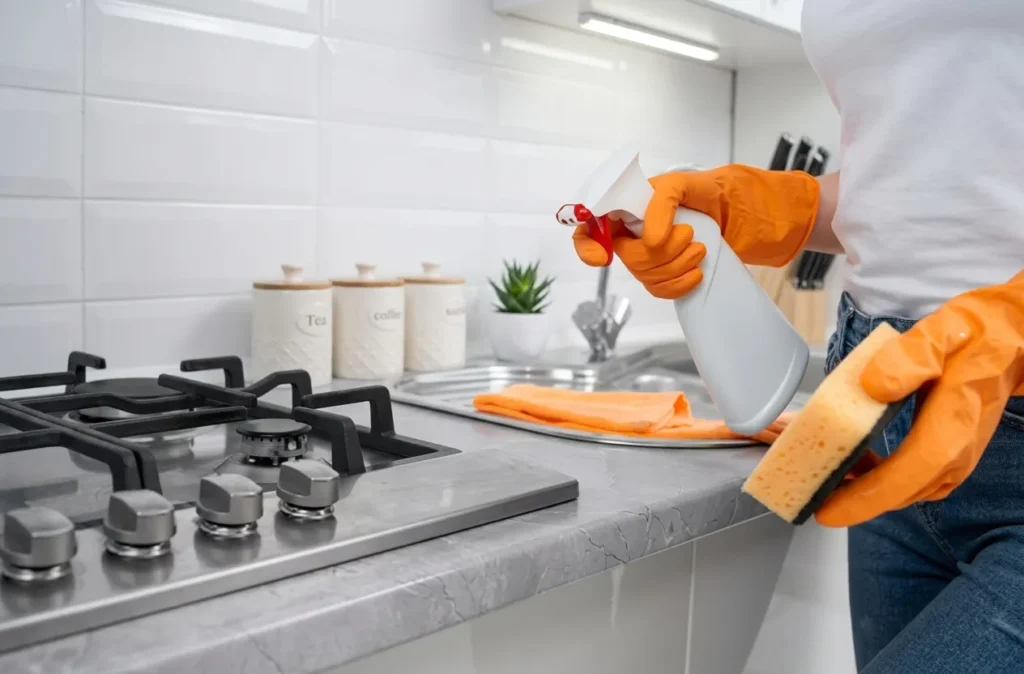
Commercial kitchen cleaning is fundamentally different from residential kitchen cleaning because it is regulated, risk based, and designed to protect public health at scale. It follows documented procedures, uses approved chemicals, and supports legal compliance.
In a home, cleaning is mainly about appearance and comfort. In a commercial kitchen, cleaning is directly linked to food safety, fire prevention, inspection results, and business survival.
Scale and Complexity of Equipment
Commercial kitchens operate with industrial grade equipment that runs for long hours every day. Ovens, chargrills, deep fryers, combi steamers, and high capacity refrigeration units produce constant heat, grease vapour, and food residue.
A busy restaurant may operate 10 to 16 hours daily. That level of output creates heavy grease buildup in ventilation systems and cooking surfaces within days. In contrast, a residential kitchen may only see a few hours of cooking per day.
The cleaning process must match that intensity. Industrial degreasers, steam systems, and specialised tools are required to remove hardened grease layers that would never form in a domestic environment. Equipment is larger, surfaces are wider, and the contamination load is significantly higher.
Legal and Regulatory Requirements
Commercial kitchens are legally required to meet food safety standards set by local health authorities. Inspections are routine, and failure to comply can result in fines, low hygiene ratings, or temporary closure.
Food safety frameworks such as Hazard Analysis and Critical Control Point systems require documented cleaning schedules and preventive controls. These systems are designed to reduce contamination risks before they become incidents.
Public health data shows that improper sanitation in food businesses is a major factor in foodborne illness outbreaks. Because restaurants serve hundreds or thousands of customers weekly, even a small hygiene failure can affect many people.
Residential kitchens are not inspected by authorities. There is no requirement for formal hygiene documentation.
Cleaning Chemicals and Sanitisation Standards
Commercial kitchens must use food safe chemicals that meet regulatory approval. Sanitiser concentrations are measured precisely, often in parts per million, to ensure effective microbial reduction without leaving harmful residues.
If sanitiser is too weak, bacteria may survive. If it is too strong, chemical residue can contaminate food contact surfaces.
Commercial dishwashers also operate at higher sanitising temperatures than domestic models. Many professional machines use high temperature rinse cycles above 80 degrees Celsius to achieve proper sanitisation.
This level of chemical control and temperature monitoring is rarely required in home kitchens.
Documentation and Inspection Readiness
Commercial kitchens maintain cleaning logs, temperature records, pest control reports, and maintenance schedules. These records are reviewed during health inspections.
Documentation proves that cleaning is consistent rather than occasional. It shows that procedures are followed daily, weekly, and monthly.
Inspection readiness is part of normal operations in professional kitchens. Managers must be able to demonstrate compliance at any time.
What Are the Benefits of Professional Commercial Kitchen Cleaning Services?
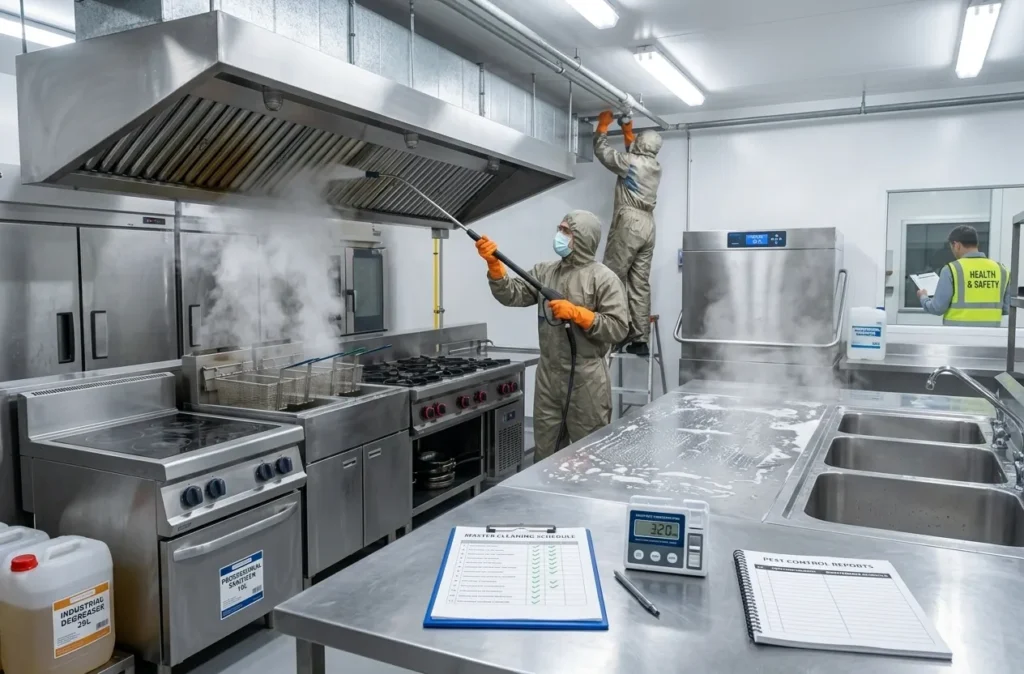
Professional commercial kitchen cleaning services deliver structured, inspection ready sanitation that protects public health, prevents fire hazards, and supports long term business stability. They go beyond surface cleaning and focus on compliance, documentation, and risk reduction.
Restaurants that experience food safety incidents often suffer lasting financial damage. Industry reports show that a single public hygiene failure can reduce customer traffic by more than 25 percent within weeks. Professional cleaning lowers this risk by maintaining consistent sanitation standards aligned with health regulations.
Clean equipment also performs better. Grease free ovens, fryers, and refrigeration systems operate more efficiently and consume less energy. Proper maintenance can extend appliance lifespan by several years and reduce unexpected repair costs.
Professional services provide measurable advantages:
- Improved hygiene and lower contamination risk
- Reduced fire risk from grease buildup
- Higher health inspection scores
- Better staff safety and fewer slip hazards
- Stronger insurance compliance and documentation
They also use calibrated chemical systems and high temperature steam equipment. This ensures accurate sanitiser concentration and deeper grease removal. For busy kitchens, this level of consistency protects reputation and revenue.
Signs Your Commercial Kitchen Needs Immediate Cleaning
A commercial kitchen needs immediate cleaning when hygiene failures become visible, noticeable, or measurable. These warning signs show that grease, bacteria, and waste are building up faster than your cleaning schedule can control.
When early signals are ignored, minor hygiene issues can quickly turn into inspection failures, equipment damage, or fire hazards. Acting at the right time protects both safety and business continuity.
Common warning signs include:
- Visible grease layers on hoods, walls, or equipment surfaces: Thick or sticky grease buildup increases fire risk. Fire safety data consistently shows that grease accumulation in cooking areas is a major cause of restaurant fires.
- Persistent unpleasant odours even after routine cleaning: Lingering smells usually indicate trapped food waste, clogged drains, or hidden grease deposits inside ducts or under equipment. Odours are often the first signal of deeper sanitation problems.
- Sticky or slippery floors: Floors that remain greasy after mopping suggest that degreasing is not effective. Slippery surfaces increase slip and fall incidents, which are among the most common workplace injuries in food service environments.
- Darkened or dripping hood filters: Hood filters that appear blackened or release grease droplets indicate excessive accumulation. This reduces ventilation efficiency and increases heat retention in the kitchen.
- Smoke lingering during cooking: If smoke does not clear quickly, ventilation ducts may be partially blocked. Poor airflow not only affects staff comfort but also raises fire hazards.
- Increased pest activity: The presence of flies, cockroaches, or rodents signals sanitation gaps. Pest control reports consistently link infestations to poor waste handling and food residue buildup.
- Slow draining sinks or grease trap overflow: Drainage problems often point to clogged grease traps. Municipal regulations in many regions require routine grease trap maintenance to prevent sewer blockages.
- Declining inspection scores or internal audit failures: If internal checks show rising contamination levels or documentation gaps, immediate corrective cleaning is necessary before official inspections.
How to Find a Professional Cleaning Company?
Choosing a professional commercial cleaning company means selecting a provider that understands food safety, fire prevention, and compliance standards. The right company should have proven experience in cleaning restaurants, hotels, and institutional kitchens.
Start by checking their background. A reliable provider will have trained staff, proper certifications, and clear knowledge of health department regulations and HACCP based cleaning procedures. They should also carry full public liability insurance and provide documentation of their work.
Ask how they inspect a kitchen before giving a quote. Professional companies usually conduct a site visit to assess grease buildup, ventilation systems, and risk areas. This ensures the cleaning schedule matches your kitchen’s cooking volume.
Companies such as WDC Facility Services follow structured cleaning plans, use food safe chemicals, and provide compliance ready reports. Working with an experienced facility services provider protects your kitchen operations, reduces risk, and supports better inspection outcomes.
Conclusion
Commercial kitchen cleaning is a structured, regulated process designed to protect food safety, prevent fire hazards, and maintain compliance with health and safety standards.
It covers cooking equipment, ventilation systems, preparation surfaces, storage areas, and waste management zones.
Daily, weekly, and monthly schedules work together to prevent grease buildup and contamination. Regulatory frameworks such as HACCP principles, local health department rules, fire safety standards, and occupational guidelines shape cleaning requirements.
Professional cleaning services add consistency, documentation, and expertise. They help improve inspection scores, extend equipment life, and reduce legal and insurance risks.