A commercial cleaning tender specification is a written document that defines the cleaning work required at a site, the standard expected, and the information suppliers must provide when they submit a price. Its purpose is simple: give every tenderer the same brief, so you can compare service capability and cost fairly.
A clear specification protects the facility manager and the cleaning contractor. It reduces assumptions, prevents scope gaps, sets expectations before work begins, and provides a practical reference if service quality drops later.
This guide is an operational framework, not legal advice. Government, education, healthcare, industrial and multi-site facilities may have additional procurement, safety, security or compliance requirements.
What Is a Commercial Cleaning Tender Specification?
A commercial cleaning tender specification explains exactly what needs to be cleaned, how often it must be cleaned, when the work can occur, and how the required standard will be measured.
It sits at the centre of the tender process. Rather than asking suppliers to “quote for office cleaning,” it describes the site, the cleaning zones, routine tasks, periodic work, staffing expectations, consumables, reporting requirements and evaluation criteria.
A strong specification helps you avoid three common problems:
- Suppliers pricing different levels of service.
- Low quotes that exclude necessary labour, consumables or periodic work.
- Disputes after commencement because the scope was never clearly defined.

Before You Write the Specification: Assess Your Site and Cleaning Requirements
Start with the site, not with a generic cleaning package. A cleaning contractor can only price accurately when they understand the real workload, access conditions, risks and operational constraints.
Site Type, Occupancy and Operating Hours
Record the type of facility, the number of sites, approximate occupancy, operating hours and peak-use periods. An office used by 25 staff has different cleaning needs from a medical clinic, school, warehouse, gym, retail centre or strata building.
Include information such as:
- Site address or addresses.
- Building size and number of floors.
- Number of staff, visitors, tenants or students.
- Opening hours and restricted periods.
- Areas that remain occupied overnight or during weekends.
- Events, deliveries, public holidays or seasonal peaks that affect cleaning demand.

Cleanable Areas, Surface Types and High-Traffic Zones
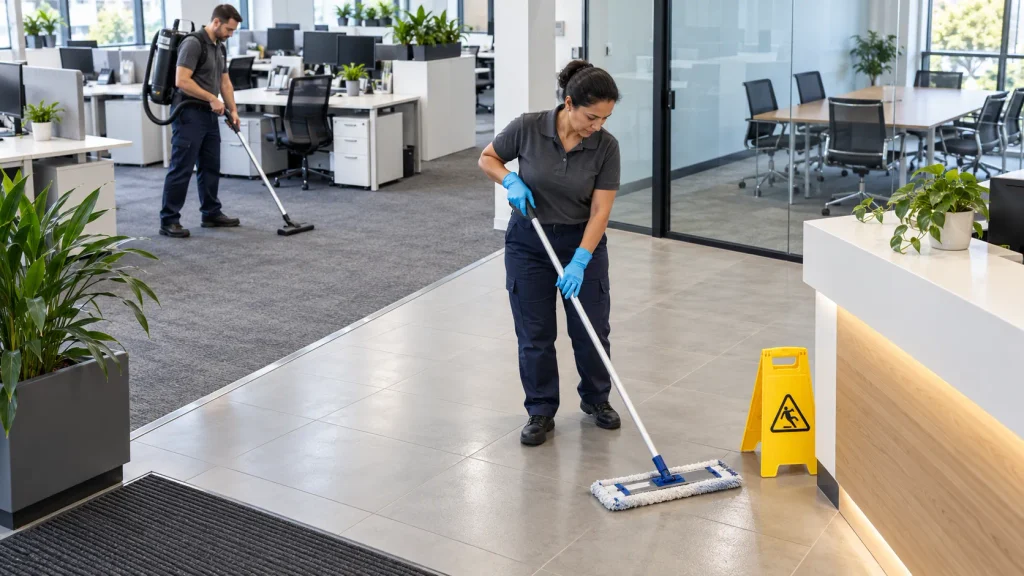
List every area that forms part of the contract, then identify the surfaces and cleaning outcomes required. This gives tenderers a clear basis for labour planning, equipment selection and pricing.
Typical areas include reception spaces, workstations, meeting rooms, kitchens, washrooms, corridors, lifts, stairwells, loading areas, change rooms, warehouse floors and external entry points.
High-traffic or hygiene-sensitive areas should be identified separately. For example, a washroom may require multiple services each day, while a boardroom may only need routine cleaning after use.
Access, Security and After-Hours Constraints
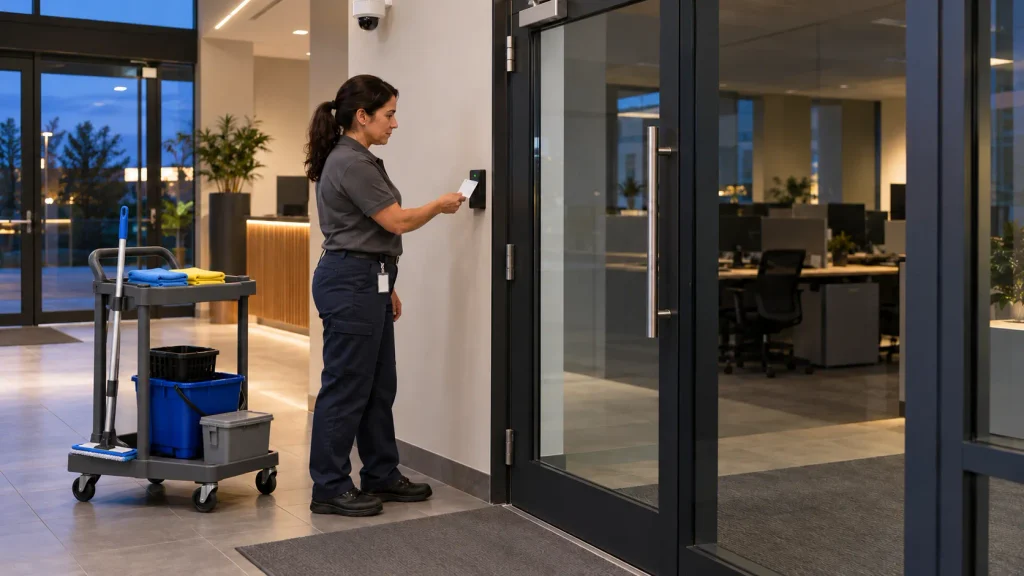
State when cleaners can enter the site and what access procedures apply. This is essential for sites with alarm systems, controlled access, confidential records, valuable stock or public-facing operations.
Your specification should clarify:
- Permitted cleaning hours.
- Sign-in and sign-out requirements.
- Key, swipe-card or alarm procedures.
- Security clearance or screening requirements.
- Areas that are off-limits without supervision.
- Lift, loading dock, parking and waste-room access.
- Restrictions on noise, odour, wet floors or equipment use.
Site Inspection and Tenderer Briefing
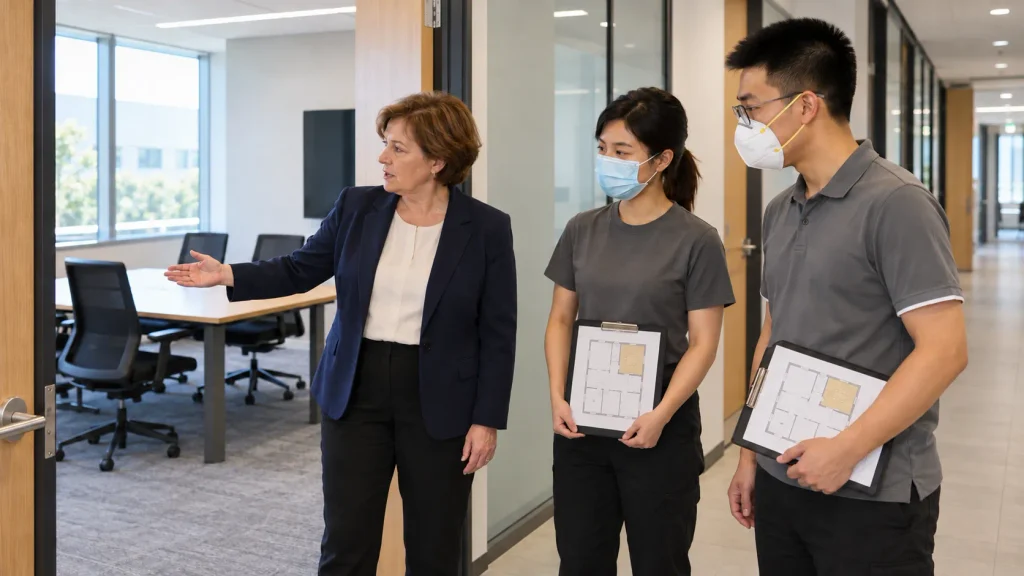
A site inspection gives all tenderers the same opportunity to see the conditions they are pricing. It is particularly valuable for large, complex, multi-level or high-security sites.
Provide a common briefing date where possible. Allow tenderers to ask questions, then issue written responses to all participants so no supplier receives information that others do not have.
For complex facilities, include floor plans, photos, cleanable-area schedules and a record of site-specific constraints. Victorian procurement guidance for school cleaning similarly emphasises documenting the cleanable area, scope and selection criteria before seeking quotes or tenders.
Commercial Cleaning Tender Specification Template: Sections to Include
A usable tender specification should separate the cleaning requirement from the commercial terms and returnable schedules. This makes the document easier to issue, assess and later convert into an operational site file.
1. Contract Overview and Site Details
Begin with a concise summary of the opportunity.
Include the contract term, proposed commencement date, site locations, tender timetable, contact person, required site inspections and submission instructions. State whether the contract covers one property, a portfolio of sites or optional future locations.
Also define the desired service outcome. For example: maintain a clean, safe and presentable workplace for staff, visitors and clients without disrupting normal operations.
2. Cleaning Areas and Required Outcomes
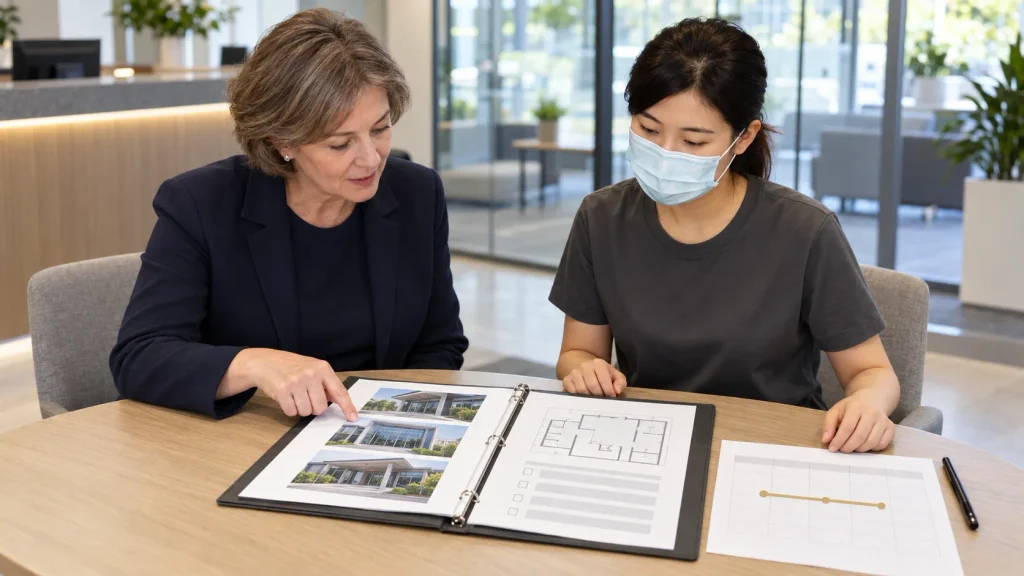
Identify each area to be serviced and describe the expected result. Outcomes are more useful than vague instructions because they show what acceptable service looks like.
For example, instead of writing “clean washrooms,” specify that washrooms must be free of visible soil, litter, odour, overflowing bins and empty soap or paper dispensers at the agreed service times.
3. Cleaning Tasks and Frequency Schedule
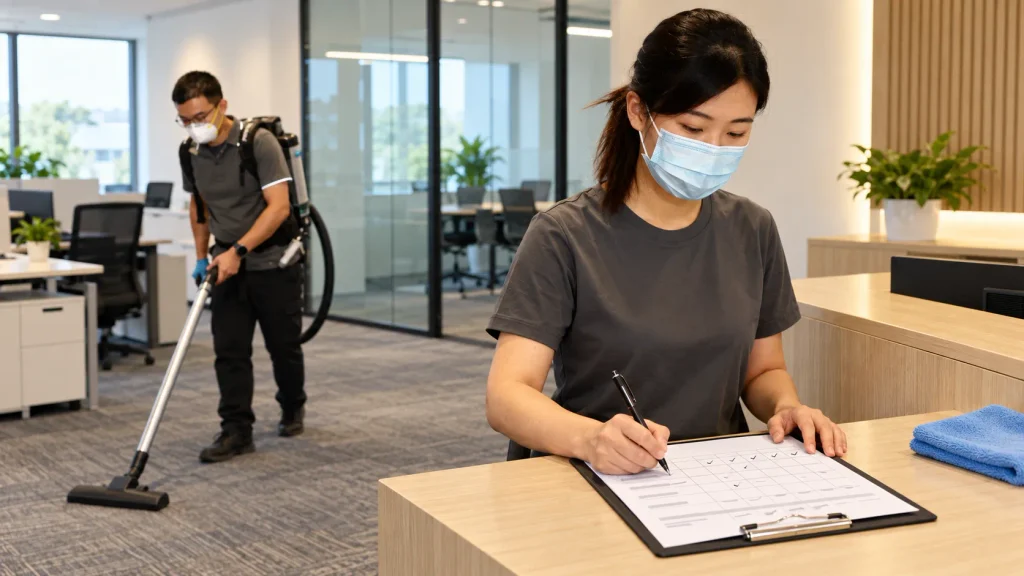
A task-and-frequency schedule is the most important part of the specification. It should show the area, task, frequency, timing and expected result for every recurring activity.
| Area | Task | Frequency | Required outcome |
| Reception | Vacuum or mop floors; remove litter; clean touchpoints | Daily or each service | Clean, presentable and ready for visitors |
| Workstations | Empty bins; remove visible dust from agreed surfaces | Daily or each service | No visible waste or surface dust |
| Kitchen | Clean benches, sinks, tables and appliance exteriors | Daily or each service | Free of food residue, spills and odour |
| Washrooms | Clean toilets, basins, mirrors and floors; replenish consumables | Daily or multiple times daily | Hygienic, stocked and free of visible soil |
| Meeting rooms | Clean tables, floors and bins | Daily or after booked use | Ready for the next users |
| Entry areas | Vacuum, sweep or mop floors; clean glass within the agreed scope | Daily or each service | Clean and professional at first point of entry |
Avoid adding a frequency without considering the actual use of the area. A lightly used office washroom may need a different service level from a public-facing washroom, school amenity block or gym change room.
Daily and Each-Service Tasks
Daily or each-service tasks are the routine activities needed to keep the workplace functional and presentable.
These usually include bin servicing, vacuuming or mopping, washroom cleaning, kitchen cleaning, touchpoint cleaning, removal of visible litter and replenishment of agreed consumables.
Weekly and Monthly Tasks
Weekly and monthly tasks cover work that matters but does not need to be completed at every visit.
Examples include detailed dusting, spot-cleaning walls, cleaning internal glass, wiping skirting boards, polishing stainless steel, cleaning high-touch fixtures, vacuuming upholstered seating and checking low-use storage areas.
Periodic and Specialist Cleaning
Periodic work should be listed separately rather than hidden inside a routine cleaning price. This may include carpet extraction, hard-floor machine scrubbing, strip and seal work, high-level dusting, pressure cleaning, window cleaning or deep kitchen cleaning.
For each item, state the area, frequency, access requirements, expected result and whether it must be included in the fixed contract price or quoted separately.
Optional and Excluded Services
Optional and excluded services prevent misunderstanding. Clearly identify work that is outside the standard contract, such as emergency spill response, pest control, hazardous-waste removal, external window cleaning, post-construction cleaning or event cleaning.
If optional work may be required, ask tenderers to provide hourly rates, call-out rates or unit prices in a separate schedule.
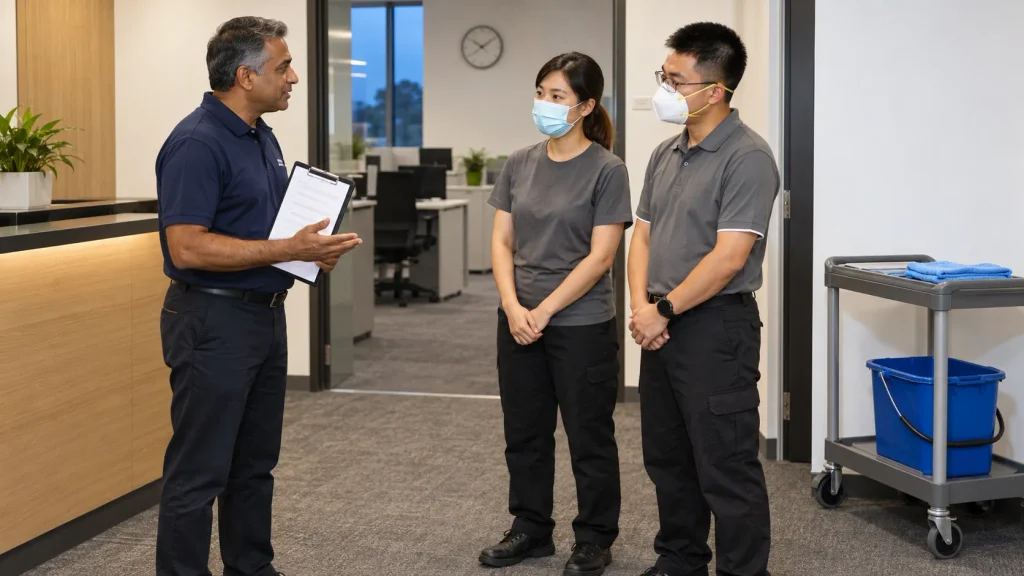
4. Service Hours, Staffing and Supervision
Specify the permitted service windows and any minimum coverage requirements. Do not prescribe cleaner numbers or hours unless you have a clear operational reason to do so; contractors should retain responsibility for proposing a safe and effective staffing model.
Instead, ask tenderers to explain:
- Proposed roster and service hours.
- On-site supervision arrangements.
- Relief-cover process for absences.
- Account-management contact details.
- Escalation process for urgent issues.
- How staff will be inducted before commencing work.
5. Cleaning Equipment, Chemicals and Consumables
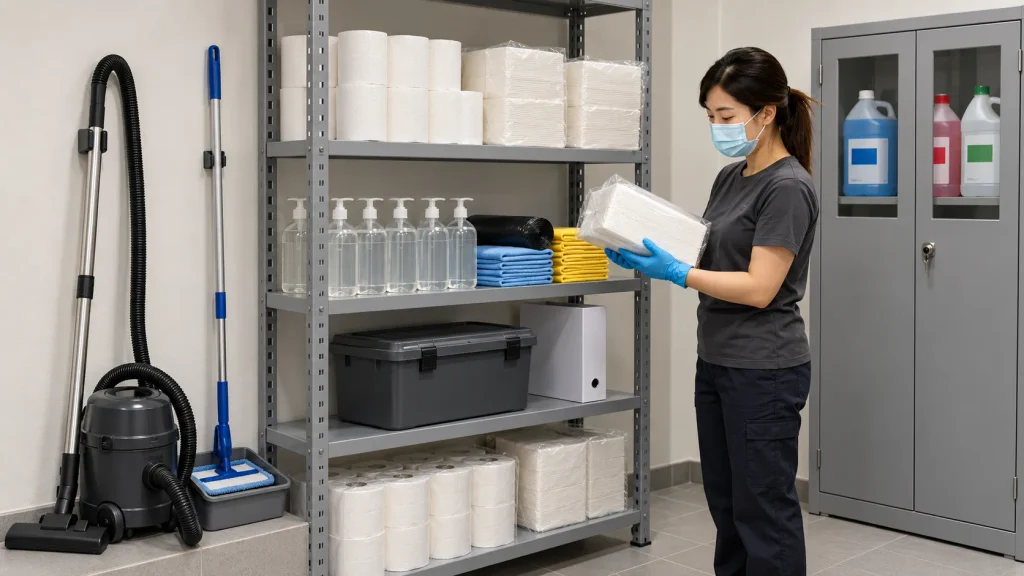
State who supplies the equipment, chemicals and consumables. This includes vacuum cleaners, mop systems, floor machines, bin liners, toilet paper, hand soap, paper towels, dispensers and sanitary bins.
Require contractors to identify the equipment and products they intend to use, particularly where your site has sensitive surfaces, food areas, medical requirements, environmental targets or restrictions on chemical storage.
The specification should also set practical requirements for equipment storage, battery charging, chemical security, safety data sheets and spill-response materials.
6. Workplace Health and Safety Requirements
Cleaning work can involve slips, manual handling, electrical equipment, chemicals, confined spaces, working at heights and interaction with staff or visitors. The tender should require contractors to explain how they will identify and manage risks relevant to the site.
Ask for relevant safety documentation, site induction processes, incident reporting procedures and safe-work information where the work requires it. In Australia, more than one party may hold health and safety duties, so engaging a contractor does not remove the site operator’s responsibility to manage risks at its workplace.
7. Security, Keys, Alarms and Confidentiality
Set out the standards for staff access and conduct. This is particularly important for offices with confidential documents, schools, medical facilities, financial businesses, government premises and sites with controlled stock.
Include requirements for:
- Key and access-card registers.
- Alarm and lock-up procedures.
- Lost-key or security-incident reporting.
- Visitor identification and uniforms.
- Confidentiality obligations.
- Reporting of damaged property, suspicious activity or unsecured areas.
8. Quality Standards, Inspections and Defect Rectification
Define how cleaning quality will be checked and what happens when a service issue is found. A quality standard should be visible, measurable and linked to the task schedule.
For example, the contract may require a supervisor to inspect the site at agreed intervals, record findings, notify the client of issues and rectify missed tasks within an agreed response time.
Do not rely only on broad phrases such as “high-quality cleaning.” Identify the inspection method, reporting format, responsible contacts and rectification process.

9. Reporting, Communication and Escalation Procedures
Require a simple communication process that works after the contract starts. A reliable contractor should not leave the facility manager to repeat the same complaint or chase updates.
Set out:
- Primary and backup contacts.
- Routine reporting frequency.
- Method for logging service issues.
- Response times for urgent and non-urgent requests.
- Escalation path when an issue is not resolved.
- Regular service-review meetings.

10. Environmental and Waste Management Requirements
Environmental requirements should be practical and relevant to the site. They may include waste separation, reduced single-use plastics, concentrated products, microfibre systems, product safety requirements, water-efficient methods or reporting on waste streams.
If your business has sustainability targets, describe them clearly and ask tenderers to explain how their cleaning method, equipment and purchasing practices support those targets.
What Evidence Should Cleaning Contractors Provide?
Request evidence that helps you assess whether a contractor can safely and reliably deliver the contract. Avoid collecting documents that do not relate to the risk, site type or service requirement.

Insurance, Licences and Safety Documentation
Request current certificates and documents appropriate to the contract. These may include public-liability insurance, workers compensation or relevant personal-accident cover, ABN details, safety policies, risk assessments and site-specific safe-work documentation.
Contractors should hold the licences, registrations or qualifications required for their work and location. Liability insurance is commonly used to cover injury or property damage caused while carrying out contracted work.
Staff Screening, Training and Site Inductions
Ask contractors to explain how staff are recruited, trained, inducted and supervised. The exact screening requirements should suit the site.
For example, schools and childcare settings may require specific checks, while high-security, medical or government sites may have their own access requirements. Victorian school guidance refers to verifying applicable documentation such as insurance, WorkCover, references and Working with Children Checks where required.
Relevant Experience, References and Management Structure
Ask for examples of comparable work, relevant industry experience and referees who can comment on reliability, communication and service consistency.
Also request the proposed account manager, supervisor and escalation contact. A supplier’s ability to manage the contract matters as much as the cleaning method.
Relief Cover and Business Continuity Arrangements
Cleaning does not stop when a regular cleaner is unavailable. Ask tenderers how they will cover unplanned absences, staff turnover, supply interruptions, equipment failure and emergency cleaning requirements.
A credible response should explain who provides relief coverage, how replacement staff are inducted and how the client will be informed of any service disruption.
How to Structure a Comparable Commercial Cleaning Pricing Schedule
A comparable pricing schedule separates routine cleaning from variable, optional and periodic work. This prevents a low headline price from hiding exclusions that later become additional charges.

Routine Cleaning Costs
Ask each tenderer to provide a fixed monthly or annual price for the agreed routine schedule. Require them to confirm whether the price includes labour, supervision, standard equipment, chemicals, consumables, administration, reporting and GST.
Periodic and Specialist Cleaning Costs
Request separate pricing for periodic services, including the unit of measurement and frequency. For example, carpet extraction may be priced per square metre, while high-pressure cleaning may be priced per visit or per area.
This makes the ongoing cost visible before the contract is awarded.
Consumables, Equipment and Additional Services
Specify whether consumables are included in the routine price or charged separately. If separately charged, require a clear schedule of product types, quantities, unit prices and delivery arrangements.
Assumptions, Exclusions and Variations
Require tenderers to list all assumptions, exclusions and departures from the specification. Do not allow important qualifications to be buried in a cover letter.
A variation process should state how scope changes will be requested, priced, approved and recorded before recurring additional work begins.
Price Reviews and Contract Term Adjustments
State whether price reviews are permitted, when they can occur and what evidence is required. Multi-year contracts should address foreseeable cost changes rather than leaving the issue unresolved.
Victorian school procurement guidance notes that longer cleaning agreements may need to account for CPI and minimum-wage movements, with price changes documented and agreed in writing.
| Pricing component | What to request from tenderers |
| Routine cleaning | Fixed price, service frequency, inclusions and GST treatment |
| Periodic services | Unit rate, frequency, area or quantity covered |
| Consumables | Included items, exclusions, unit rates and replenishment process |
| Additional work | Hourly rates, call-out fees and approval requirements |
| Price review | Review date, adjustment basis and notice period |
| Assumptions | Site conditions or access requirements relied on in the quote |
How to Set Tender Evaluation Criteria
Tender evaluation criteria should reflect the outcome you need: reliable, safe and consistent cleaning at a fair total cost. Price matters, but it should not be the only factor.
Set the criteria before submissions are opened. Tell tenderers what information they must provide and how their response will be assessed.
Quality and Capability
Assess whether the supplier understands your site, the cleaning outcomes and the task-frequency schedule. Look for a response that addresses the actual facility rather than a generic company profile.
Staffing, Supervision and Service Delivery Method
Assess the proposed roster, supervision, relief cover, induction method, site communication and mobilisation plan. A contractor should explain how it will deliver the service consistently after the first month, not simply how it will win the tender.
Compliance, Safety and Risk Management
Assess relevant insurance, safety systems, training, documentation and the contractor’s ability to work within your site rules. WorkSafe Victoria’s contractor-management checklist recommends that tender specifications identify the work, standards and hazards, and that health and safety performance is assessed as part of the tender process.
Price and Value for Money
Compare total cost against the same scope. Check that labour, supervision, consumables, periodic work and exclusions are visible before selecting a preferred supplier.
An unusually low price is not automatically good value if it depends on insufficient labour, unclear consumables, omitted periodic work or unrealistic service assumptions.
Communication, Reporting and Responsiveness
Assess whether the contractor provides a named contact, clear escalation path, regular reporting and a practical process for correcting missed work.
For a private-sector tender, an indicative evaluation matrix may look like this:
| Criterion | Example weighting |
| Cleaning quality and capability | 30% |
| Staffing, supervision and service model | 25% |
| Safety, compliance and risk management | 20% |
| Price and whole-of-contract value | 20% |
| Communication and reporting | 5% |
Adjust the weighting to suit your procurement policy, site risk and operational priorities.
From Tender Award to Service Commencement
Awarding the tender is not the end of the process. The final scope, service levels and communication procedures must be transferred into a working site plan that cleaners, supervisors and client contacts can use.
Mobilisation Plan and Transition Timeline
Require the successful contractor to provide a mobilisation plan before the start date. It should cover staff induction, access arrangements, equipment delivery, chemical storage, consumable setup, initial deep-clean requirements, communication contacts and the first service date.
For a change of contractor, the plan should also cover handover risks, continuity of cleaning and the transfer of site knowledge.
Final Scope, Service Levels and KPIs
Turn the successful tender response into the final scope of work. Confirm every area, task, frequency, service window, inclusion, exclusion and approved variation.
Useful KPIs may include completed services, inspection scores, issue response times, defect-rectification times, consumable availability and attendance at scheduled review meetings.
Contract Variations and Change Control
Cleaning requirements change when occupancy, floor space, operating hours, site use or hygiene needs change. A documented change-control process prevents informal requests from becoming permanent unpaid or unbudgeted work.
Every variation should identify the change, effective date, cost impact, approver and revised service schedule.
Review Meetings and Ongoing Performance Management
Hold regular review meetings, particularly during the first three months of a new contract. Use the agreed schedule, inspection results and issue log to discuss performance.
The aim is not to create unnecessary administration. It is to identify recurring problems early and keep the cleaning standard aligned with the site’s real needs.
Common Commercial Cleaning Tender Specification Mistakes

Using Vague Tasks Instead of Measurable Requirements
“Clean all areas as required” leaves too much open to interpretation. List the area, task, frequency and required outcome instead.
Comparing Prices Without Comparing Inclusions
A cheap quote cannot be assessed fairly if it excludes consumables, supervision, periodic work, GST, equipment or relief cover. Compare total scope, not just the monthly figure.
Leaving Periodic Work and Consumables Unclear
Carpet cleaning, floor maintenance, consumables and specialist work can create unexpected costs when they are not addressed in the tender. State whether they are included, optional or excluded.
Failing to Define Quality Checks and Response Times
Without agreed inspections, reporting and rectification timeframes, service disputes become subjective. Define how quality will be checked and what happens when an issue is identified.
Selecting the Lowest Price Without Testing Delivery Capacity
A tender should assess whether the contractor has enough labour, supervision, systems and financial capacity to deliver the service consistently. The lowest price is only good value when it meets the required scope and standard.
Commercial Cleaning Tender Specification FAQs
Should Every Tenderer Attend a Site Inspection?
For complex, multi-site, high-security or high-use facilities, a common site inspection is strongly recommended. It gives all tenderers the same information and reduces pricing assumptions.
What Should Be Included in a Commercial Cleaning Scope of Work?
A scope of work should include site details, cleaning areas, tasks, frequencies, service hours, access requirements, consumables, equipment, quality standards, reporting requirements, exclusions and variation procedures.
How Do You Make Cleaning Quotes Fair to Compare?
Use one task-and-frequency schedule for every tenderer, require separate pricing for periodic work and consumables, and ask suppliers to declare assumptions, exclusions and departures from the specification.
Who Should Supply Cleaning Equipment and Consumables?
The tender specification should state this clearly. The contractor often supplies routine equipment and cleaning products, but the client may supply selected consumables, specialist equipment or site-specific products.
How Often Should a Commercial Cleaning Contract Be Reviewed?
Review service performance monthly during mobilisation and then at an agreed regular interval, such as quarterly. Review sooner when there is a major scope change, repeated issue or change in occupancy.
Is a Tender Specification the Same as a Cleaning Contract?
No. The tender specification defines the required service and how suppliers must respond. The final contract records the agreed commercial, legal and operational terms with the successful supplier.
If you need help turning your site information into a clear, workable cleaning scope, WDC Facility Services can help Melbourne and Sydney businesses prepare a site-specific commercial cleaning plan and transparent proposal.