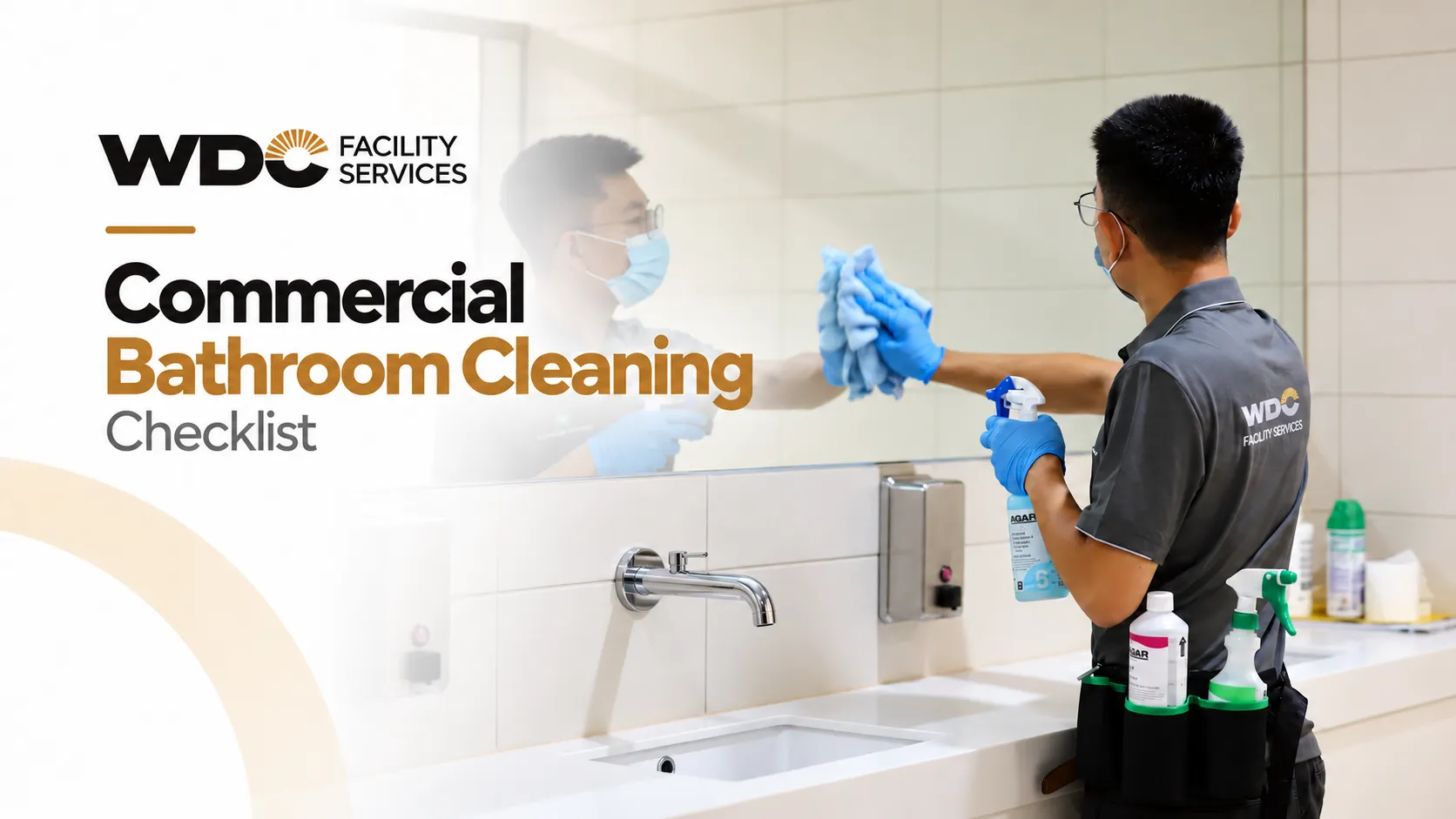
Commercial bathrooms need more than a quick wipe-down. A reliable checklist helps cleaners maintain hygiene, keep supplies available, identify maintenance issues early, and leave a bathroom that staff, customers and visitors can use with confidence.
Use this checklist as a site-specific cleaning scope. Adjust the frequency, products and procedures for foot traffic, opening hours, fixture numbers and industry requirements.
Before Cleaning: Safety, PPE and Equipment
Start by preparing the bathroom and the cleaning equipment. This reduces safety risks and helps prevent contamination from being transferred between surfaces.
1. Display Wet-Floor Signage and Check for Hazards
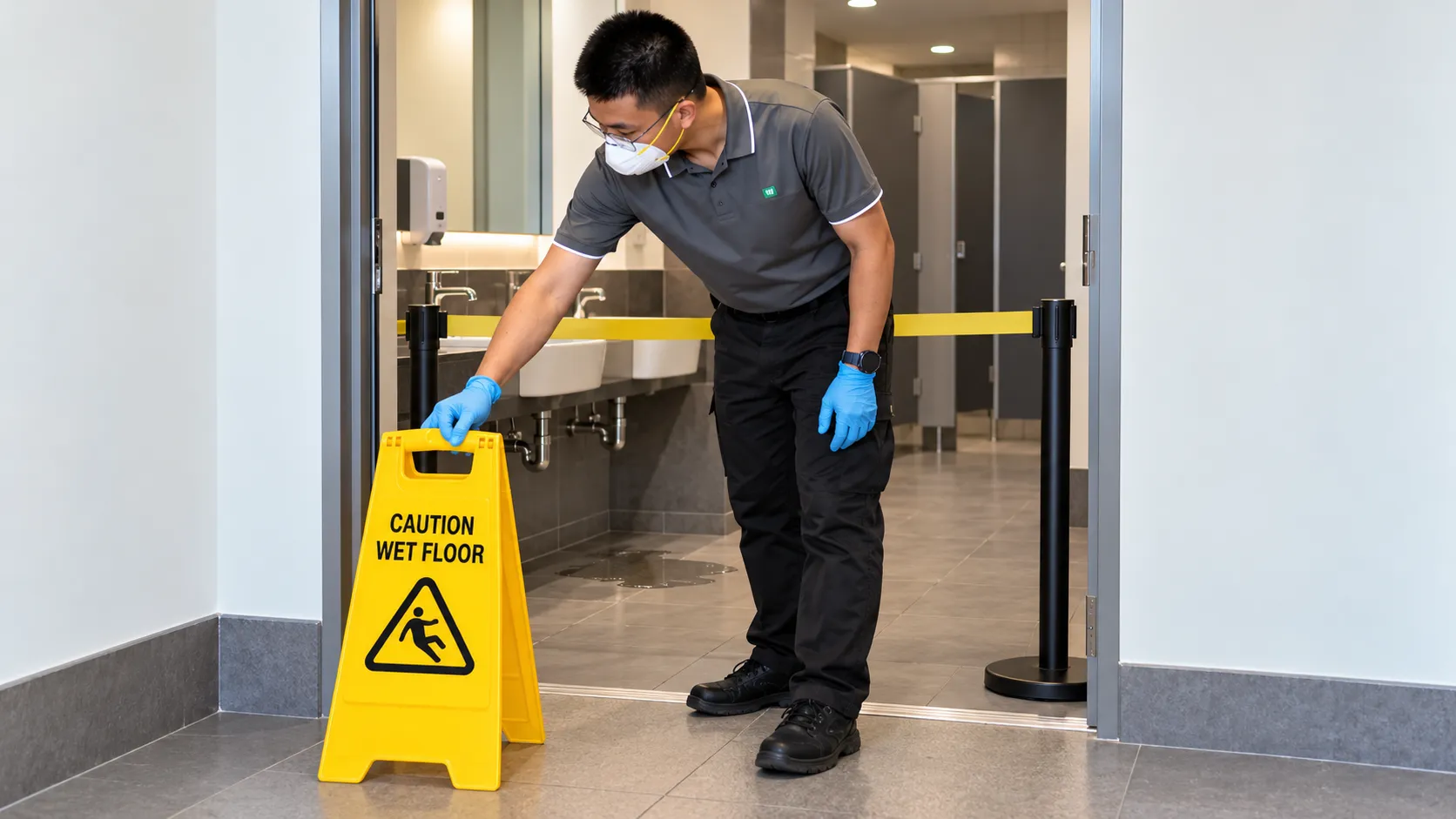
Place wet-floor signs at the entrance before cleaning begins. Check for hazards such as pooled water, broken tiles, damaged locks, leaking taps, blocked drains, loose fittings or sharps.
Report hazards that cannot be safely resolved during the service. Do not leave a bathroom open if a spill, leak or damaged fixture creates a risk for users.
2. Use Colour-Coded Tools to Prevent Cross-Contamination
Use separate, clearly identified cloths, brushes and mop heads for toilets and urinals, basins and benches, mirrors, and floors. Follow the site’s colour-coding system consistently.
Never use a cloth or brush that has cleaned a toilet or urinal on basins, dispensers, door handles or other hand-contact surfaces. Clean, disinfect and dry reusable equipment after use according to the site procedure and product instructions.
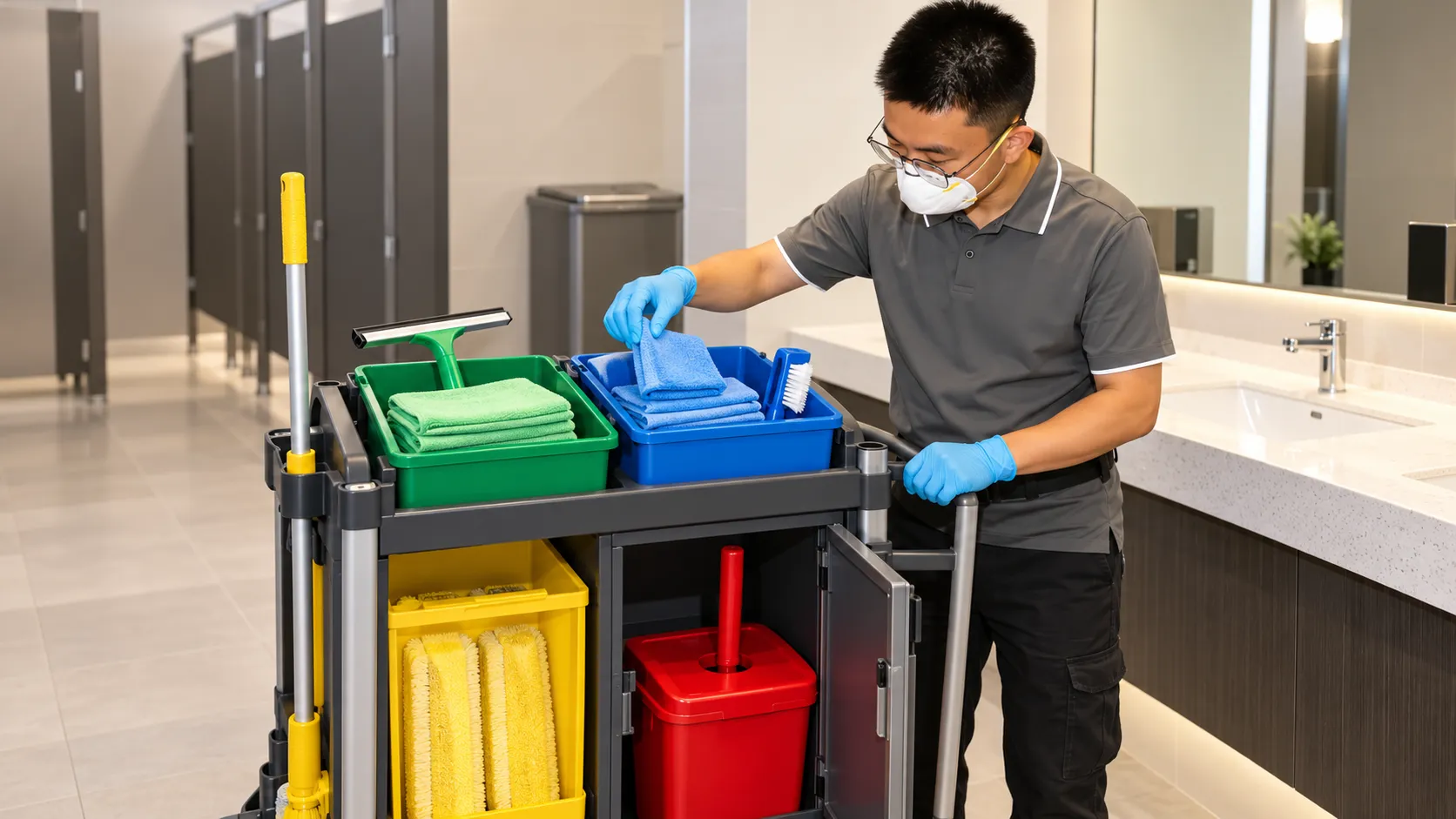
3. Apply Products According to Their Label Directions and Required Contact Time
Read the product label and Safety Data Sheet before use. Wear the PPE specified for the product, such as gloves or eye protection.
Clean visible soil before applying a disinfectant where disinfection is required. Use the correct dilution, allow the stated contact time, and never mix cleaning chemicals. Keep products in labelled containers and use them only on surfaces approved by the manufacturer.
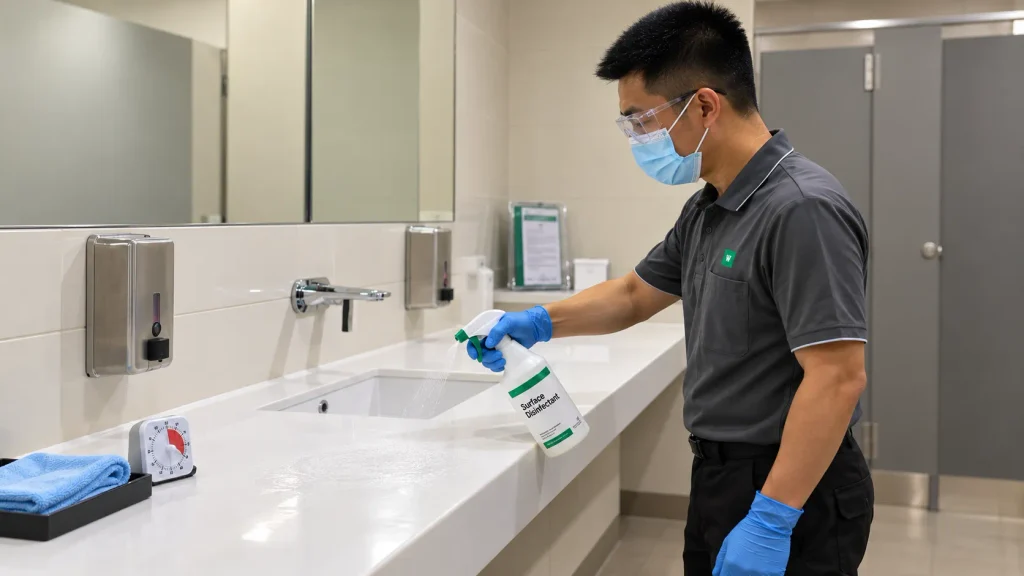
Daily or Each-Service Commercial Bathroom Cleaning Checklist
Complete these tasks during every scheduled service. High-traffic bathrooms may also need additional inspections and restocking during operating hours.
1. Inspect Supplies, Fixtures, Odour and Visible Soiling
Inspect the bathroom before starting work.
- Check toilet paper, hand soap, paper towels and sanitary products.
- Look for overflowing bins, spills, marks, stains and visible soil.
- Check for persistent urine, sewage or damp odours.
- Identify blocked drains, leaks, faulty dispensers, damaged locks and broken fittings.
- Note any graffiti, vandalism or safety concerns.
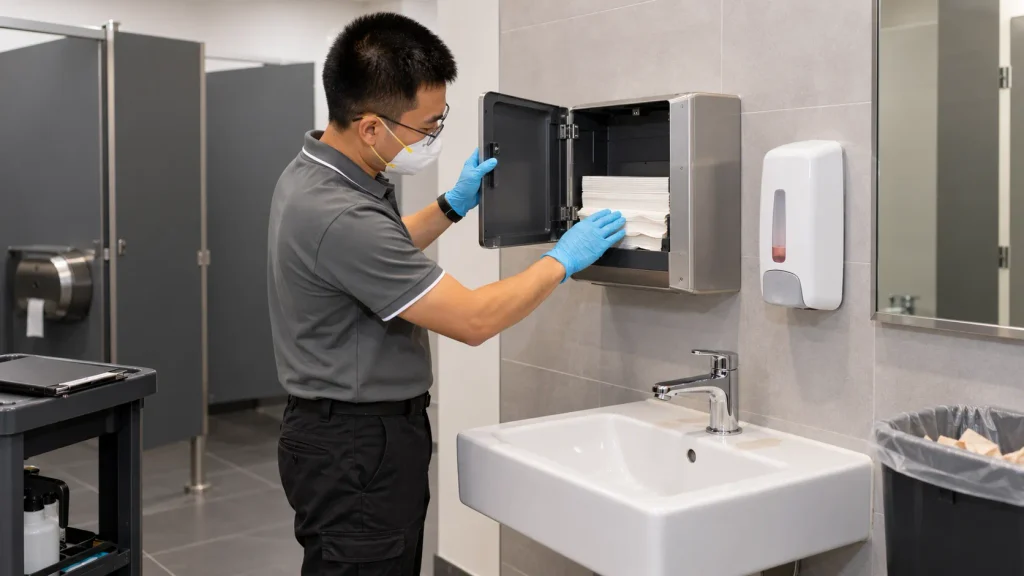
2. Refill Toilet Paper, Hand Soap, Paper Towels and Other Consumables
Refill all agreed consumables before the bathroom is reopened.
- Toilet paper and spare rolls
- Hand soap
- Paper towels
- Hand sanitiser, where supplied
- Toilet seat covers, where supplied
- Feminine hygiene products, where supplied
- Air freshener refills, where included in the site scope
Check that dispensers release products correctly. A full dispenser is not useful if it is jammed, leaking or difficult to operate.
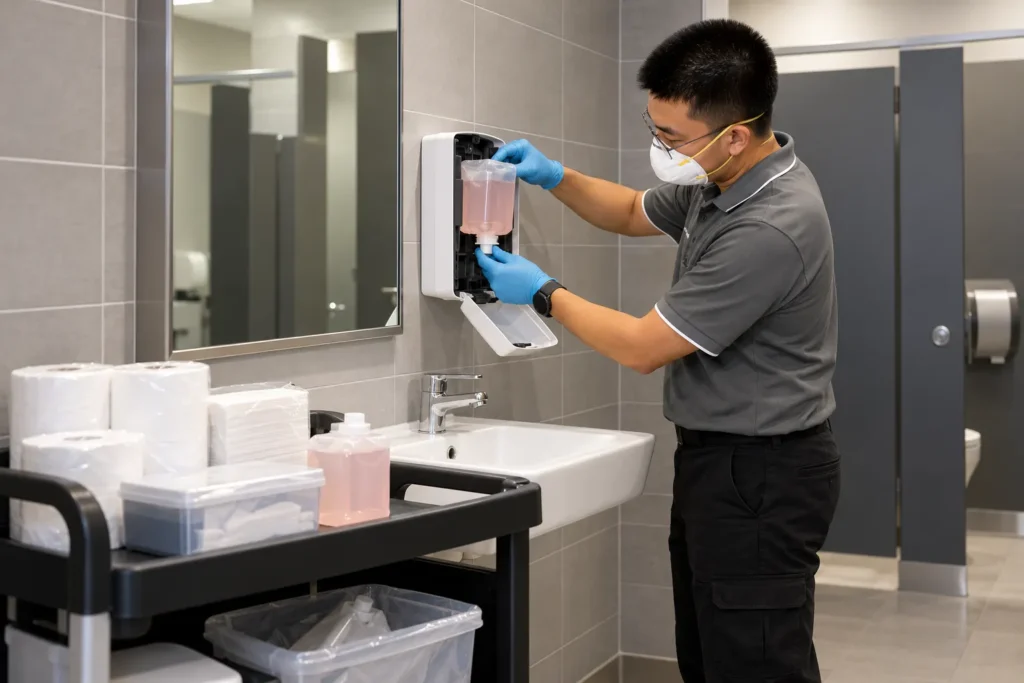
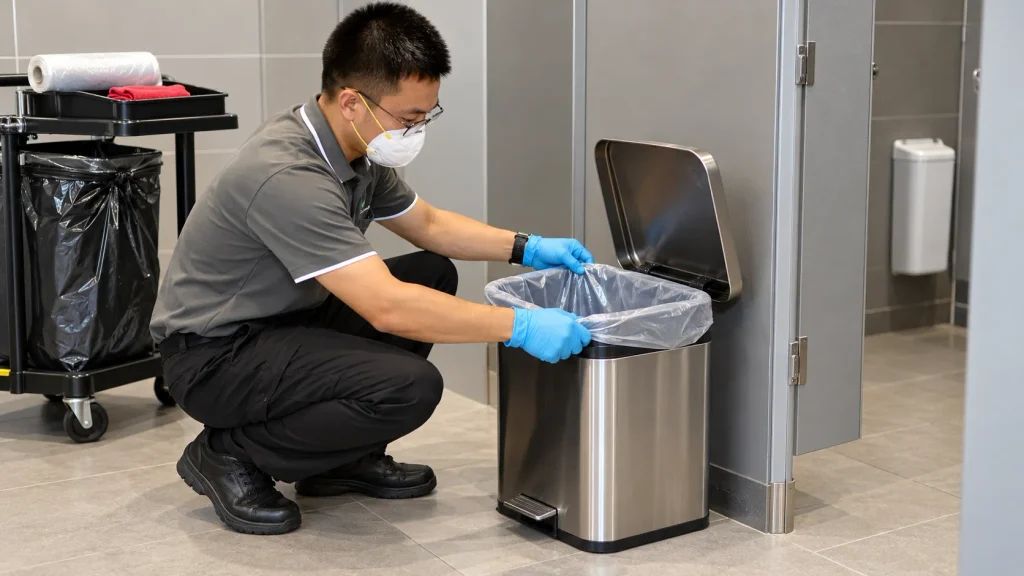
3. Empty, Clean and Re-Line General Waste and Sanitary Bins
Empty all general waste, paper-towel and sanitary bins according to the site’s waste procedure.
- Remove waste safely.
- Replace liners.
- Wipe bin lids, pedals, handles and exterior surfaces.
- Clean visible residue from the bin interior.
- Report damaged bins, missing lids or recurring overflow.
4. Clean and Disinfect High-Touch Points
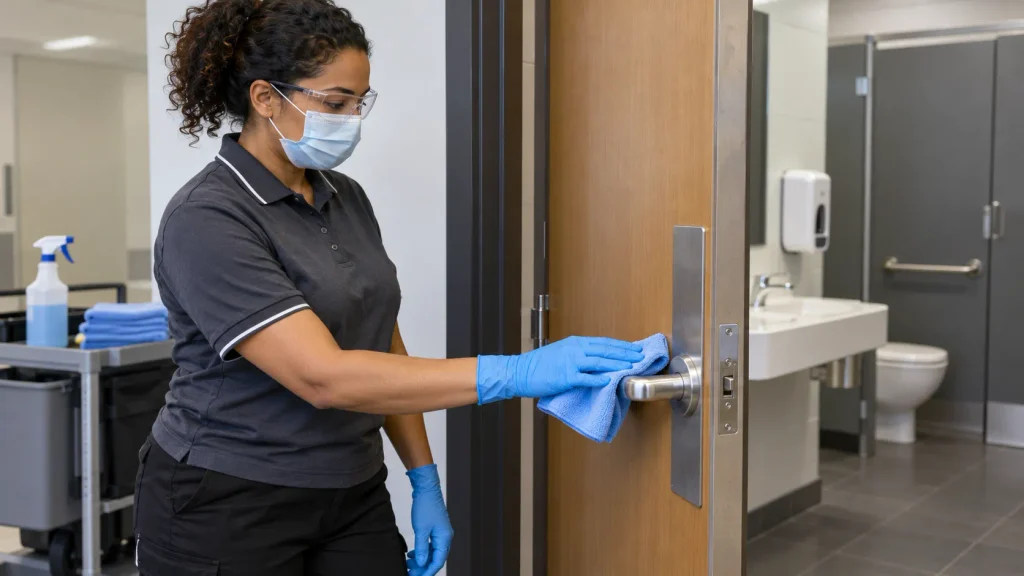
Clean high-touch surfaces that bathroom users contact frequently. Disinfect them when required by the site’s risk assessment or cleaning procedure.
Include:
- Entry and exit door handles
- Push plates
- Light switches
- Flush buttons, handles and valves
- Tap handles and sensor surrounds
- Soap, towel and sanitiser dispensers
- Stall locks and latches
- Grab rails
- Hand-dryer controls
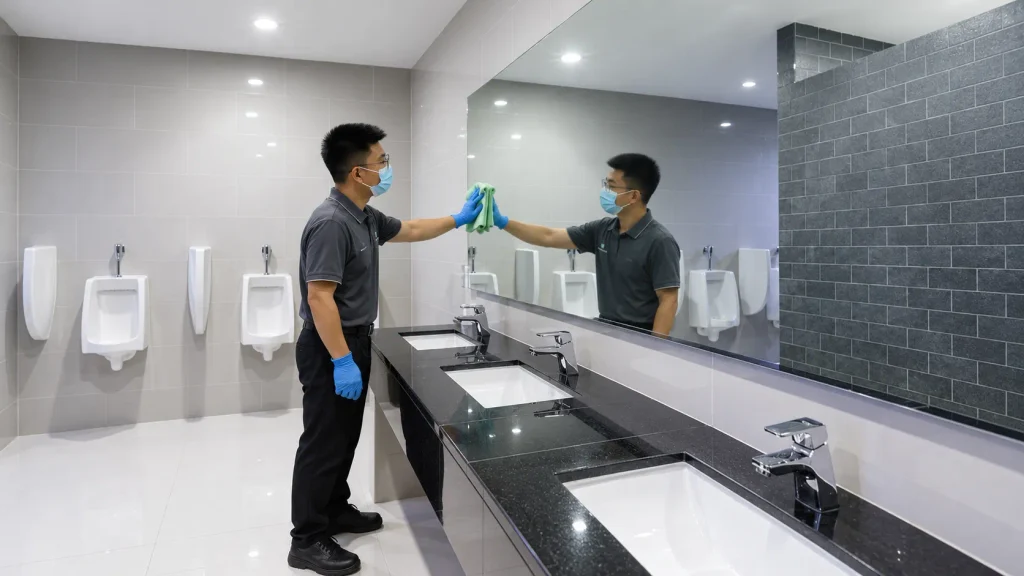
5. Clean Mirrors, Dispensers, Hand Dryers and Wall Surfaces
Clean mirrors until they are free from streaks, fingerprints and splash marks. Wipe dispenser covers, hand dryers, wall-mounted fittings and visible wall surfaces.
Check mirror edges, dispenser undersides and the top of hand dryers. These areas are often missed during rushed cleaning.
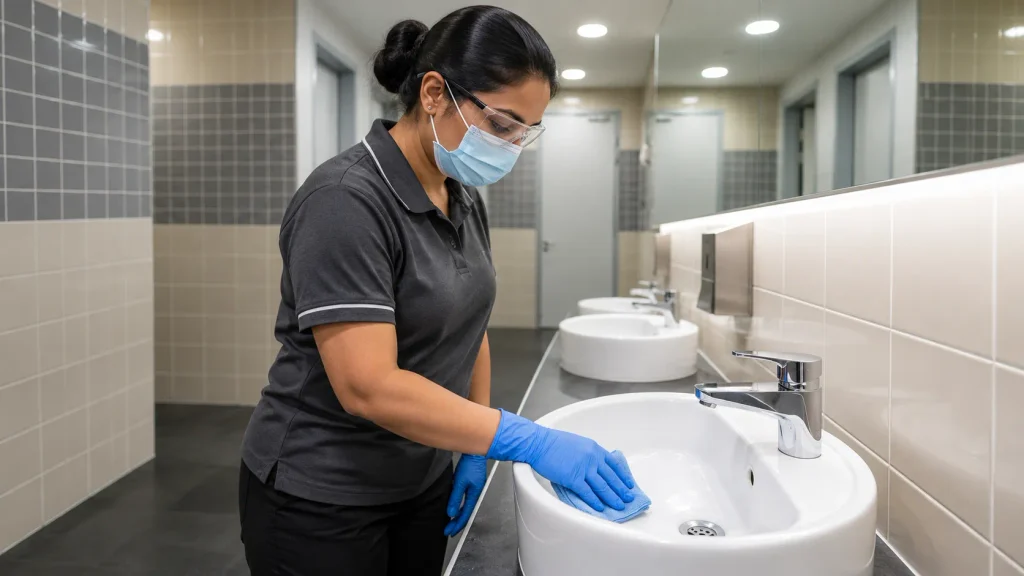
6. Clean Basins, Tapware, Benchtops and Splashbacks
Clean basins, tapware, counters and splashbacks from cleaner areas toward dirtier areas.
- Remove soap residue, toothpaste, hair and standing water.
- Clean basin bowls, overflows and plugholes.
- Wipe tap bases, handles and aerators.
- Clean benchtop edges and undersides.
- Dry tapware and counters where required to reduce water marks.
Report slow drainage, loose taps, leaks or cracked basins.
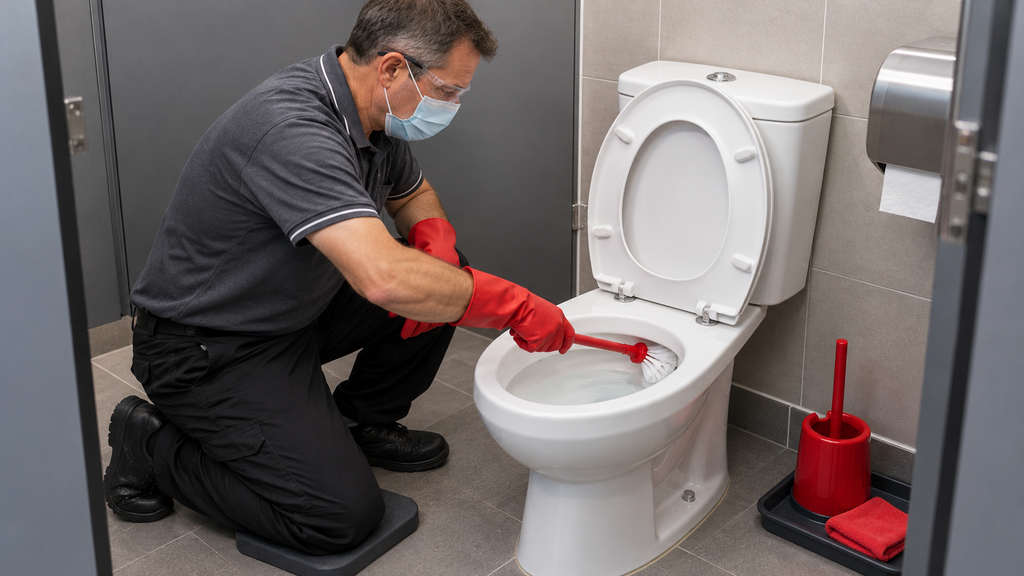
7. Clean and Disinfect Toilets, Urinals and Flush Controls
Clean toilets and urinals thoroughly, including areas that are easy to overlook.
For toilets, clean:
- Bowl interior and under the rim
- Seat top and underside
- Seat hinges
- Lid, where fitted
- Flush button or handle
- Cistern top and front
- Pedestal, base and floor junction
- Wall area behind the toilet
For urinals, clean:
- Bowl interior
- Rim and flush control
- Screens or deodorising blocks, where used
- Surrounding wall surfaces
- Floor area directly below and around the fixture
Use dedicated toilet-cleaning tools only. Replace or clean tools when they are soiled or worn.
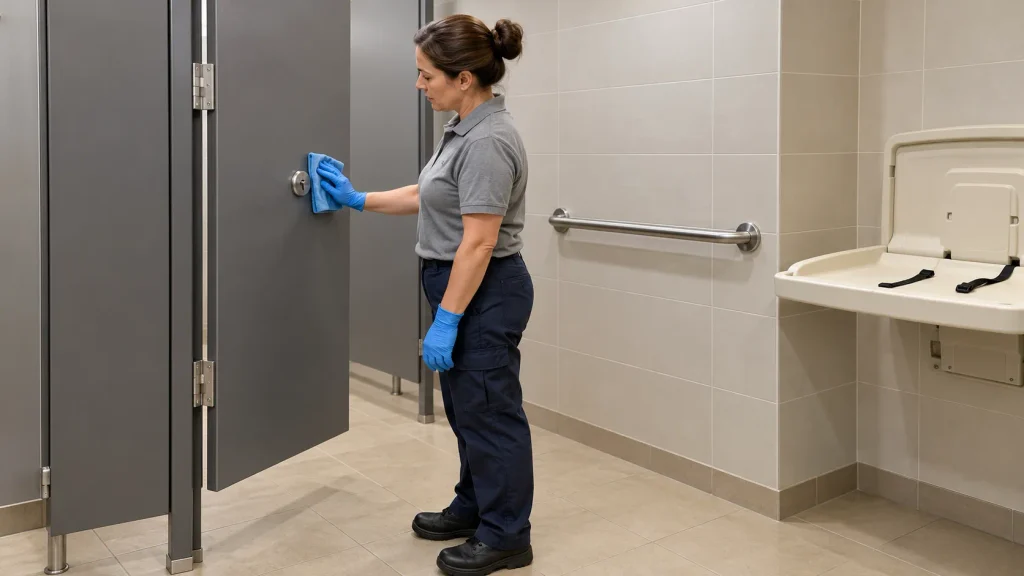
8. Clean Partitions, Doors, Locks, Grab Rails and Baby Change Tables
Wipe partitions, stall doors, handles, locks, hooks and grab rails. Clean both sides of doors where accessible.
For baby change tables, clean the upper surface, hinges, straps, underside and surrounding wall area. Check for damage, sharp edges or faulty restraints and report them immediately.
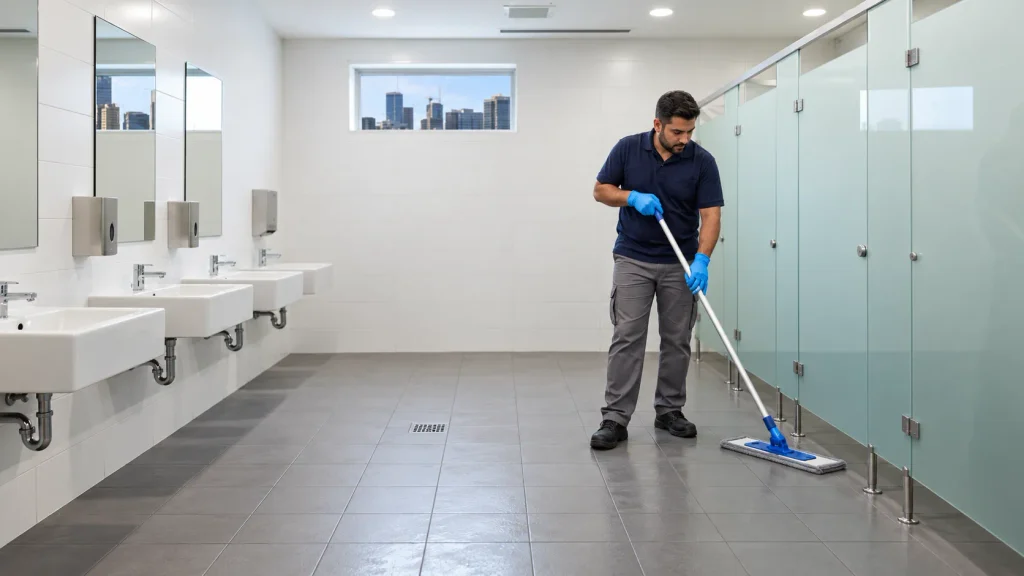
9. Sweep and Mop Floors, Corners, Edges and Behind Fixtures
Remove dry debris before mopping. Mop the floor from the furthest point toward the exit, using a clean mop head and solution.
Pay attention to:
- Corners and edges
- Behind toilet pedestals
- Under vanity units
- Around partition feet
- Door thresholds
- Floor drains
- Areas around urinals and bins
Leave the floor as dry as practical before removing wet-floor signage.
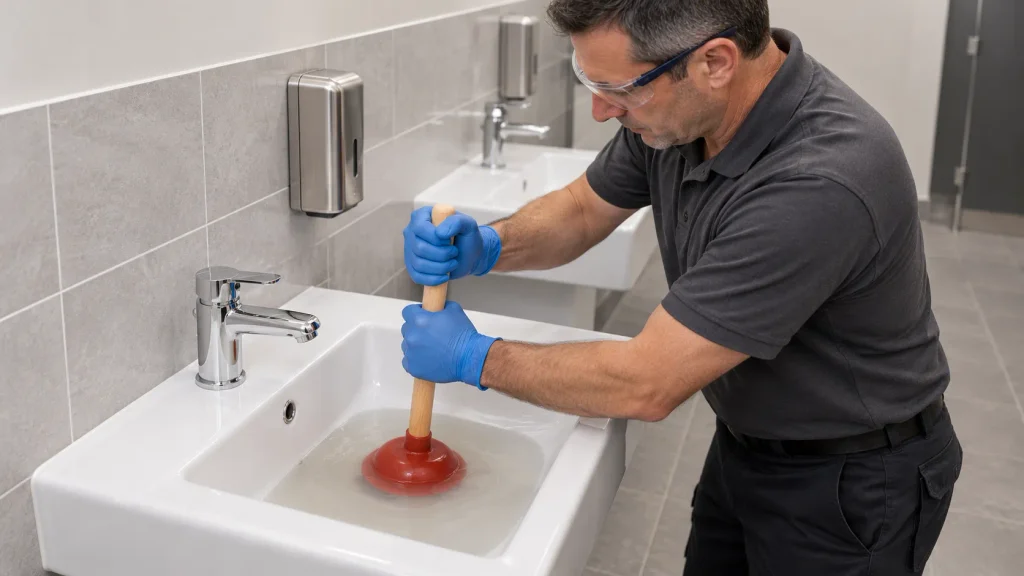
10. Check Drains, Leaks, Faulty Dispensers and Other Maintenance Issues
Cleaning staff should identify problems early, even when repairs are outside the cleaning scope.
Report:
- Blocked or slow drains
- Persistent odours
- Running toilets
- Leaking taps or pipes
- Damaged tiles or grout
- Faulty locks, lights and exhaust fans
- Empty or broken dispensers
- Mould growth or water damage
Record the issue, location and time reported so it can be followed up.
Weekly Commercial Bathroom Deep-Cleaning Checklist
Weekly tasks address buildup that may not be visible during routine cleaning.
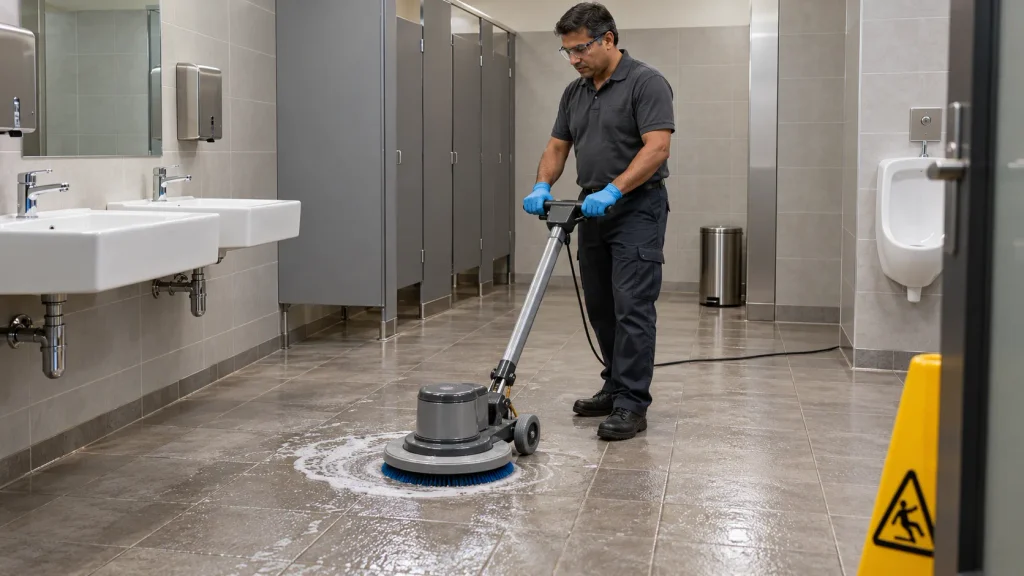
1. Scrub Tiles, Grout, Partitions, Skirting Boards and Door Frames
Clean wall tiles, floor tiles, grout lines, skirting boards, partition panels and door frames. Remove marks, soap buildup and visible residue using products suitable for the surface.
Focus on lower wall areas, partition feet and behind doors, where splash marks and dust often accumulate.
2. Remove Scale from Tapware, Fixtures and Shower Fittings
Inspect taps, shower fittings and other fixtures for mineral scale. Use a product suitable for the fixture finish and follow the manufacturer’s instructions.
Do not use abrasive pads or harsh chemicals on surfaces that may scratch or corrode.
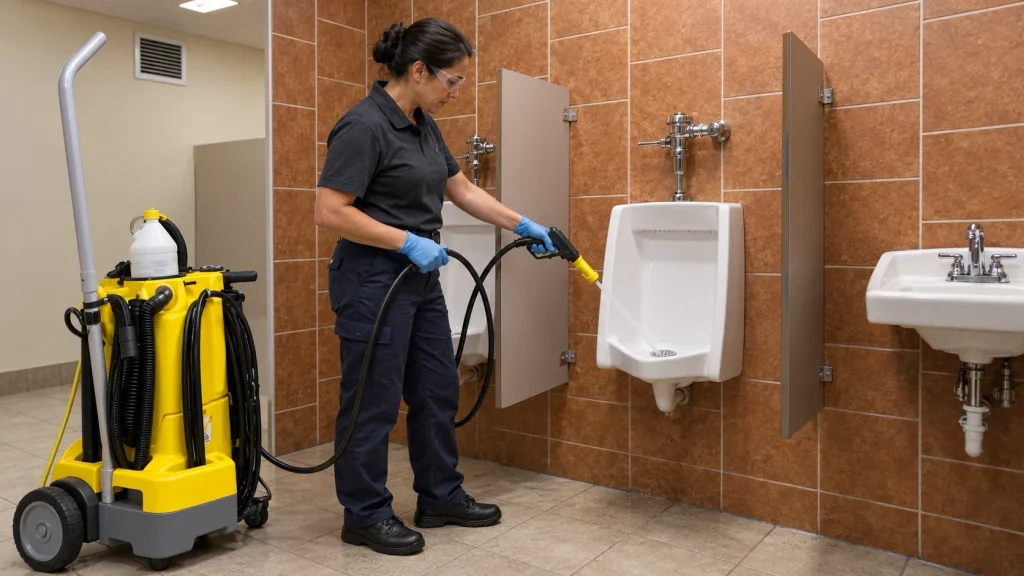
3. Clean Under and Behind Vanities, Toilets and Urinals
Move only what can be moved safely. Clean beneath vanity units, behind toilets, around pipework and behind accessible urinals.
These areas can hold dust, hair, residue and odours even when visible surfaces appear clean.
4. Wash Bins, Dispensers and Reusable Cleaning Equipment
Wash and dry bins, dispenser exteriors and reusable cleaning equipment as required by the site procedure.
Inspect brushes, mop heads, cloths and handles for wear. Replace damaged or heavily stained equipment rather than carrying contamination into the next bathroom.
Monthly Commercial Bathroom Maintenance Checklist
Monthly checks support presentation, odour control and early maintenance reporting.
1. Clean Exhaust Vents, Ceiling Fixtures and Light Diffusers
Dust and clean exhaust grilles, ceiling vents, light fittings and accessible ledges. Built-up dust can affect presentation and contribute to stale odours.
Report non-functioning lights, noisy exhaust fans or vents with excessive buildup.
2. Deep-Clean Drains and Address Persistent Odours
Inspect floor drains, basin drains and urinal drainage areas. Remove visible debris where safe to do so and use approved drain-treatment products only when included in the site scope.
Persistent odours may indicate a blocked drain, dry trap, leak or plumbing issue. Report the problem rather than masking it with fragrance.
3. Inspect Silicone, Grout, Fixtures and Fittings for Damage or Mould
Check silicone seals, grout, tiles, partition fittings, taps and bathroom hardware for deterioration.
Report cracked grout, loose tiles, damaged silicone, water stains and mould. Cleaning alone will not resolve the underlying moisture issue.
How to Set the Cleaning Frequency
The right bathroom-cleaning schedule depends on use, not just the size of the room. A small bathroom used by customers all day may need more attention than a larger staff-only bathroom.
Match Checks to Foot Traffic, Operating Hours and Facility Type
Use this table as a starting point when planning a commercial bathroom cleaning schedule.
| Bathroom type | Suggested service approach | What to monitor |
| High-traffic public bathroom | Multiple checks during operating hours, plus scheduled full cleaning | Supplies, bins, floors, odour and visible soil |
| Standard office bathroom | Daily scheduled cleaning, with additional checks when required | Consumables, touchpoints, basins, toilets and floors |
| Retail, hospitality or event venue bathroom | Cleaning before opening, during busy periods and after closing | Presentation, bins, spills, odour and stock levels |
| Gym or change-room bathroom | Frequent checks, especially during peak periods | Floors, showers, touchpoints, odour and wet areas |
| Medical or childcare bathroom | Site-specific cleaning plan based on risk and internal procedures | Approved products, touchpoints, waste and documented cleaning |
Increase cleaning frequency after events, shift changes, high visitor volumes, spills, outbreaks or repeated complaints.
Record the Site, Date, Time, Cleaner and Supervisor
Use a cleaning log to create accountability and make missed tasks easier to identify.
A bathroom cleaning record should include:
- Site name and bathroom location
- Date and service time
- Cleaner’s name or initials
- Tasks completed
- Consumables replenished
- Maintenance issues found
- Supervisor inspection, where required
- Corrective actions and completion date
A checklist is most useful when it supports follow-up, not when it becomes paperwork that nobody reviews.
Final Quality Check Before Reopening the Bathroom
Complete a final inspection from the perspective of a bathroom user. This is the point where small misses become obvious.
Check the Most Commonly Missed Areas
Inspect:
- Toilet seat hinges
- Flush buttons and handles
- Behind toilet pedestals
- Urinal surrounds
- Tap bases and aerators
- Basin overflows and plugholes
- Partition feet
- Door handles and locks
- Mirror edges
- Floor corners
- Under vanity units
- Bin lids and pedals
Confirm the Bathroom Is Dry, Stocked, Presentable and Safe
Before removing wet-floor signage, confirm that:
- Floors are dry enough for safe use.
- Toilets, urinals and basins are visibly clean.
- Mirrors are streak-free.
- Bins are empty and lined.
- Toilet paper, soap and hand towels are available.
- There are no obvious odours.
- Fixtures and dispensers are working.
- No hazards remain for users.
Complete the Cleaning Log and Escalate Maintenance Issues
Sign off the cleaning log only after the inspection is complete. Record unresolved issues clearly and send them to the responsible manager, maintenance team or cleaning supervisor.
A cleaner should not be expected to repair plumbing, electrical faults or damaged fixtures. The important step is documenting the issue early and ensuring it is followed up.
How to Adapt the Checklist for High-Traffic and Specialist Facilities
The same core checklist applies to most commercial bathrooms, but the cleaning plan should reflect how the space is used.
Offices, Retail Spaces and Shared Commercial Buildings
Prioritise presentation, reliable stock levels, bins, touchpoints and floors. Shared bathrooms need clear cleaning logs and responsive reporting because complaints can come from multiple tenants or departments.
Medical Clinics, Schools, Childcare Centres and Gyms
Medical clinics should follow their infection-control procedures, approved-product requirements and risk-based cleaning schedules.
Schools and childcare centres need safe product storage, child-safe access controls and prompt spill response. Gyms need closer attention to change rooms, showers, wet floors, high-touch fittings and odour control.
For Melbourne businesses that need a site-specific bathroom cleaning scope, WDC Facility Services can assess the space and provide a clear commercial cleaning plan built around your schedule, traffic levels and industry requirements.