Commercial floor cleaning is not one task. The right method depends on the floor material, the amount and type of soil, foot traffic, safety requirements, and how quickly the area must return to service.
For most workplaces, the most effective approach is layered: remove dry soil every day, clean spills promptly, use machine cleaning where it improves results, and schedule restorative work before the floor looks worn.
This protects the surface, maintains presentation, and helps reduce slip risks without disrupting normal operations.
How Do You Choose the Right Commercial Floor Cleaning Method?
Start with the floor itself. A method that works well on vinyl can damage natural stone, while a mop-and-bucket routine may not be enough for a warehouse aisle or a busy school corridor.
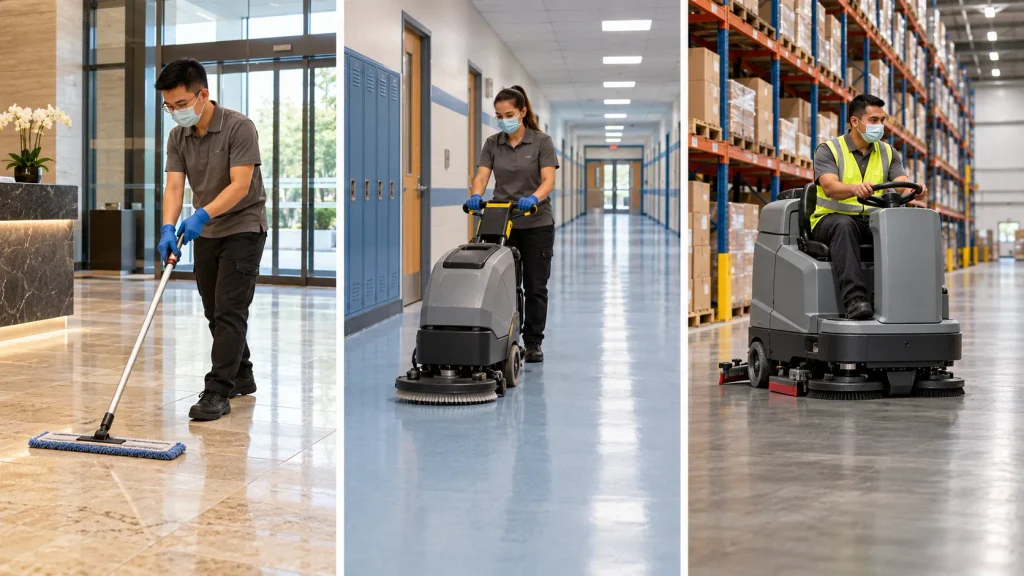
Consider these factors before choosing a cleaning process:
- Floor material and finish: Vinyl, tile, carpet, concrete, stone, rubber, epoxy, and timber all have different care requirements.
- Soil type: Loose dust, grit, grease, spills, scuff marks, and embedded grime need different treatments.
- Traffic level: Entrances, corridors, kitchens, bathrooms, reception areas, and warehouse walkways usually need more frequent attention.
- Operational hours: Offices, clinics, schools, and retail sites may need cleaning after hours or in short low-traffic windows.
- Safety requirements: Wet floors, chemical residues, and poor drying practices can create avoidable hazards.
- Manufacturer guidance: Cleaning chemicals, pads, brushes, and moisture levels should suit the flooring system and its finish.
A useful rule is simple: remove loose grit first, use the mildest effective cleaning method, and only move to restorative cleaning when routine maintenance no longer produces an acceptable result.
Commercial Floor Cleaning Methods
Dry Soil Removal: Sweeping, Vacuuming and Microfibre Dust Mopping
Dry soil removal is the foundation of commercial floor care. Sand, dust, and tracked-in grit can scratch finishes and become harder to remove once they are wet.
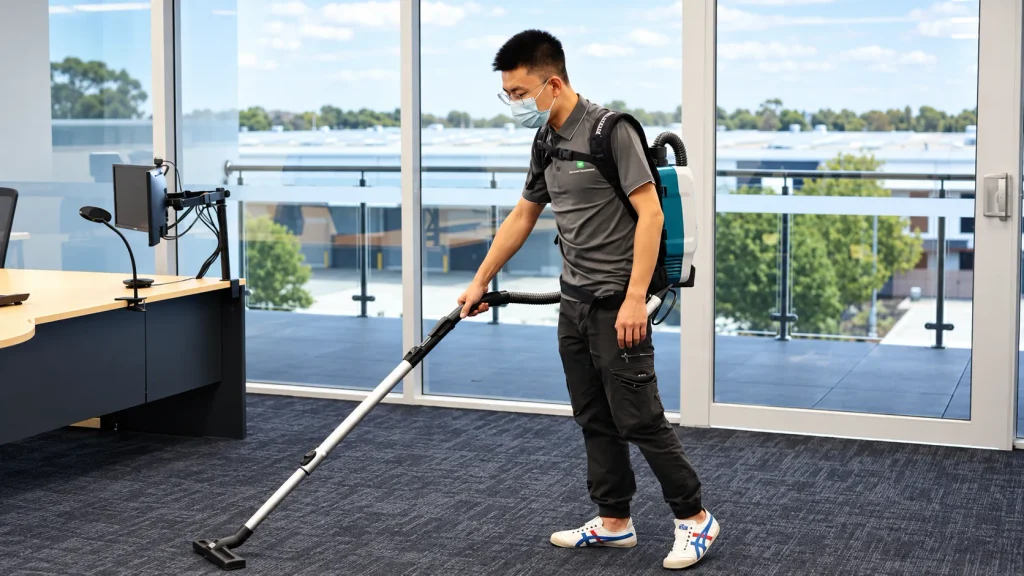
Microfibre dust mopping is effective for smooth hard floors, while commercial vacuuming is better suited to carpets, mats, edges, and textured flooring. In high-traffic areas, dry soil removal may be needed more than once a day.
Damp Mopping for Light Surface Soil
Damp mopping removes light marks and surface soil from smaller hard-floor areas. The mop should be clean, well maintained, and only damp enough to clean the surface without leaving excessive water behind.
This method works best for low-traffic offices, staff rooms, small retail spaces, and touch-up cleaning. It is less effective for large areas with heavy soil because dirty water can be spread across the floor if it is not changed regularly.
Auto-Scrubbing for Large Hard-Floor Areas
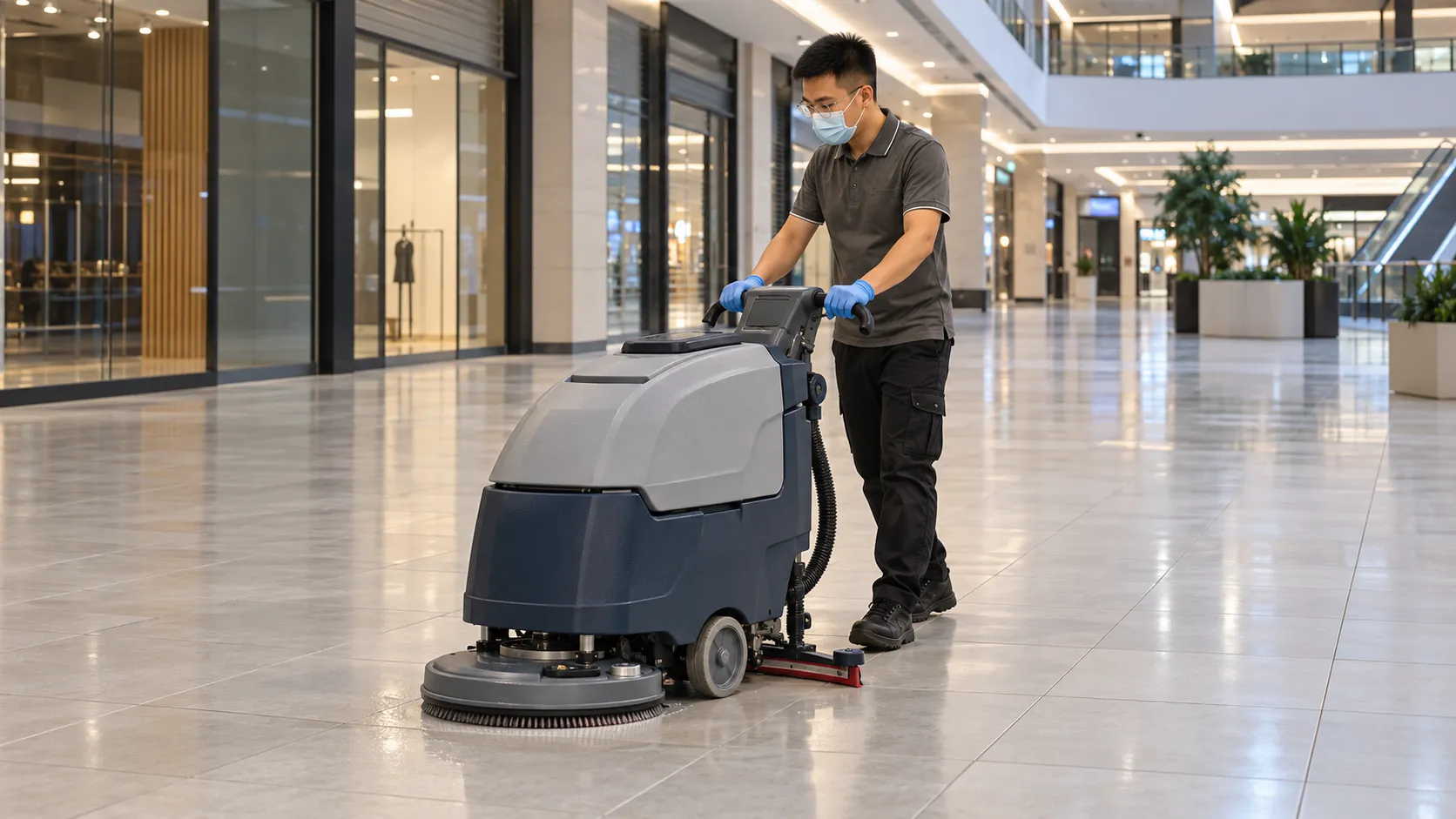
An automatic scrubber applies cleaning solution, agitates the floor with a pad or brush, and recovers dirty water in the same pass. This makes it a practical option for medium to large areas such as schools, warehouses, shopping centres, gyms, medical facilities, and office corridors.
Auto-scrubbing is often more consistent than manual mopping because it removes dirty water instead of redistributing it. It can also reduce drying time when the machine is correctly set up and maintained.
Deep Scrubbing for Embedded Soil and Grout
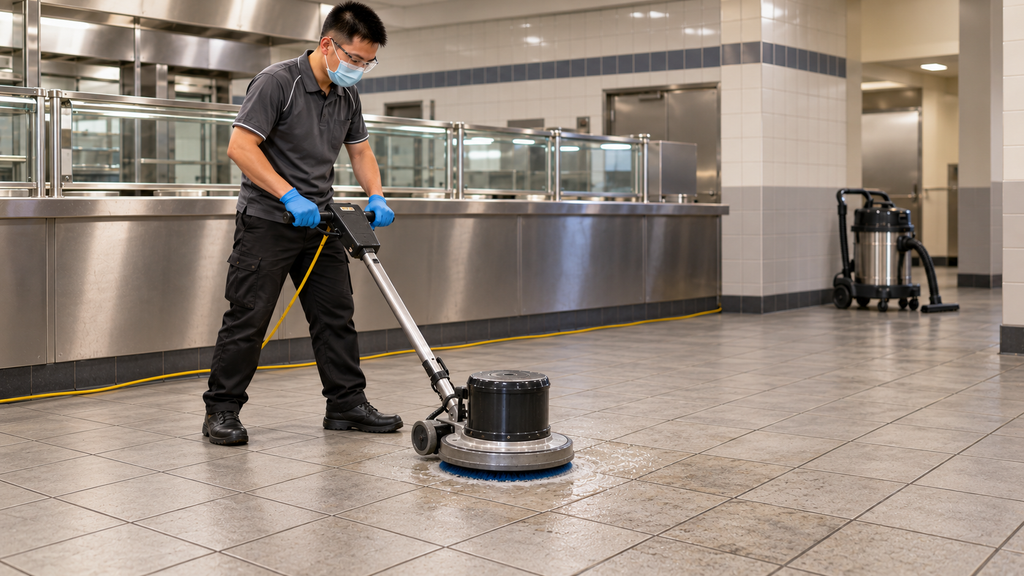
Deep scrubbing is used when routine cleaning no longer lifts built-up soil, scuffing, or grime from textured flooring, tile, grout lines, and older floor finishes.
The process may use a rotary machine, orbital scrubber, grout brush, or suitable floor machine with the right pad and cleaning solution. It should be followed by thorough recovery or rinsing so residue does not remain on the surface.
High-Speed Burnishing for Finished Floors
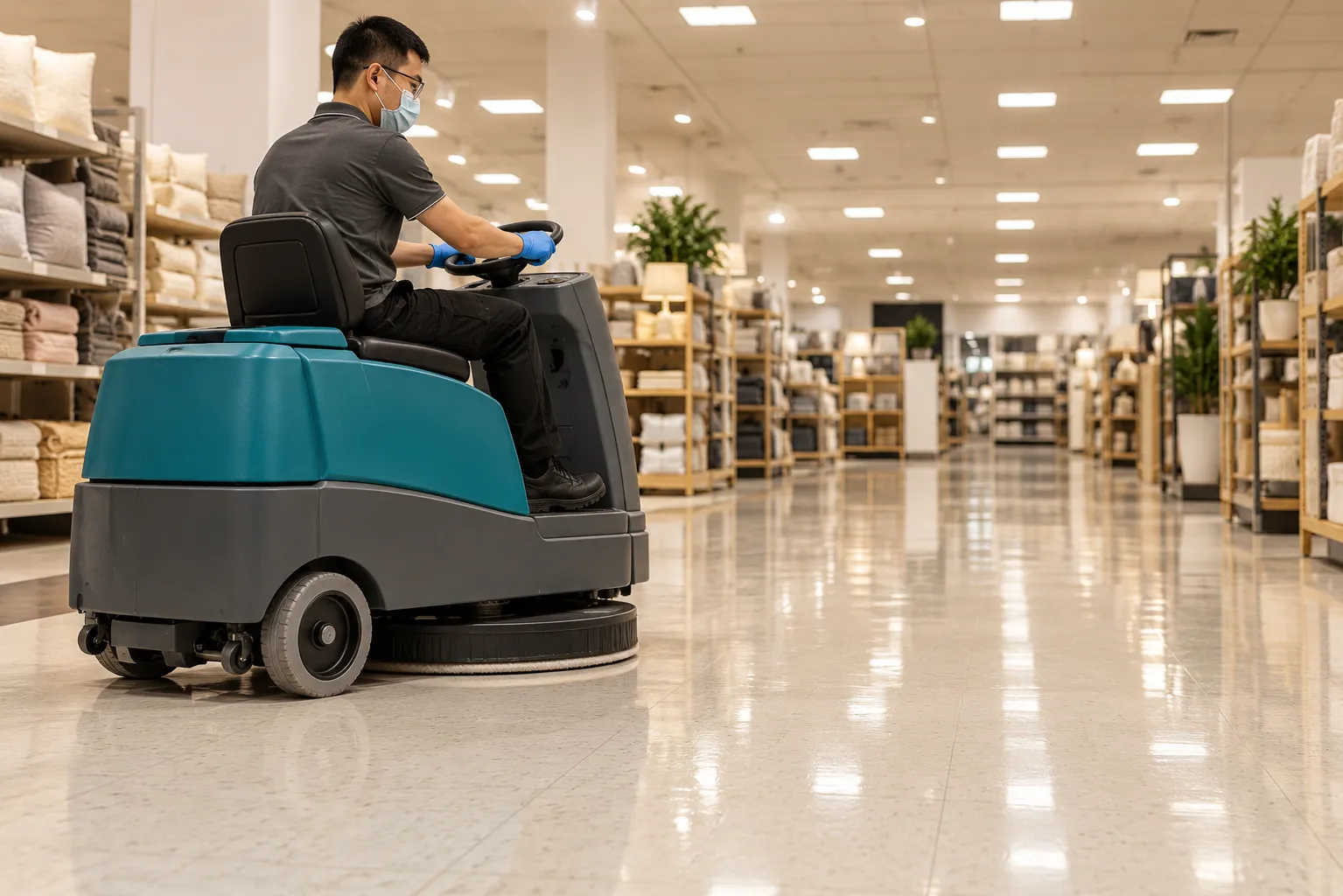
Burnishing restores shine to suitable finished floors, particularly vinyl composition tile and similar resilient flooring. It uses a high-speed machine and burnishing pad to improve the appearance of the existing finish.
Burnishing is a presentation-maintenance method, not a substitute for cleaning. It will not fix a finish that is heavily scratched, yellowed, worn through, or carrying layers of embedded soil.
Stripping, Recoating and Waxing Vinyl Floors
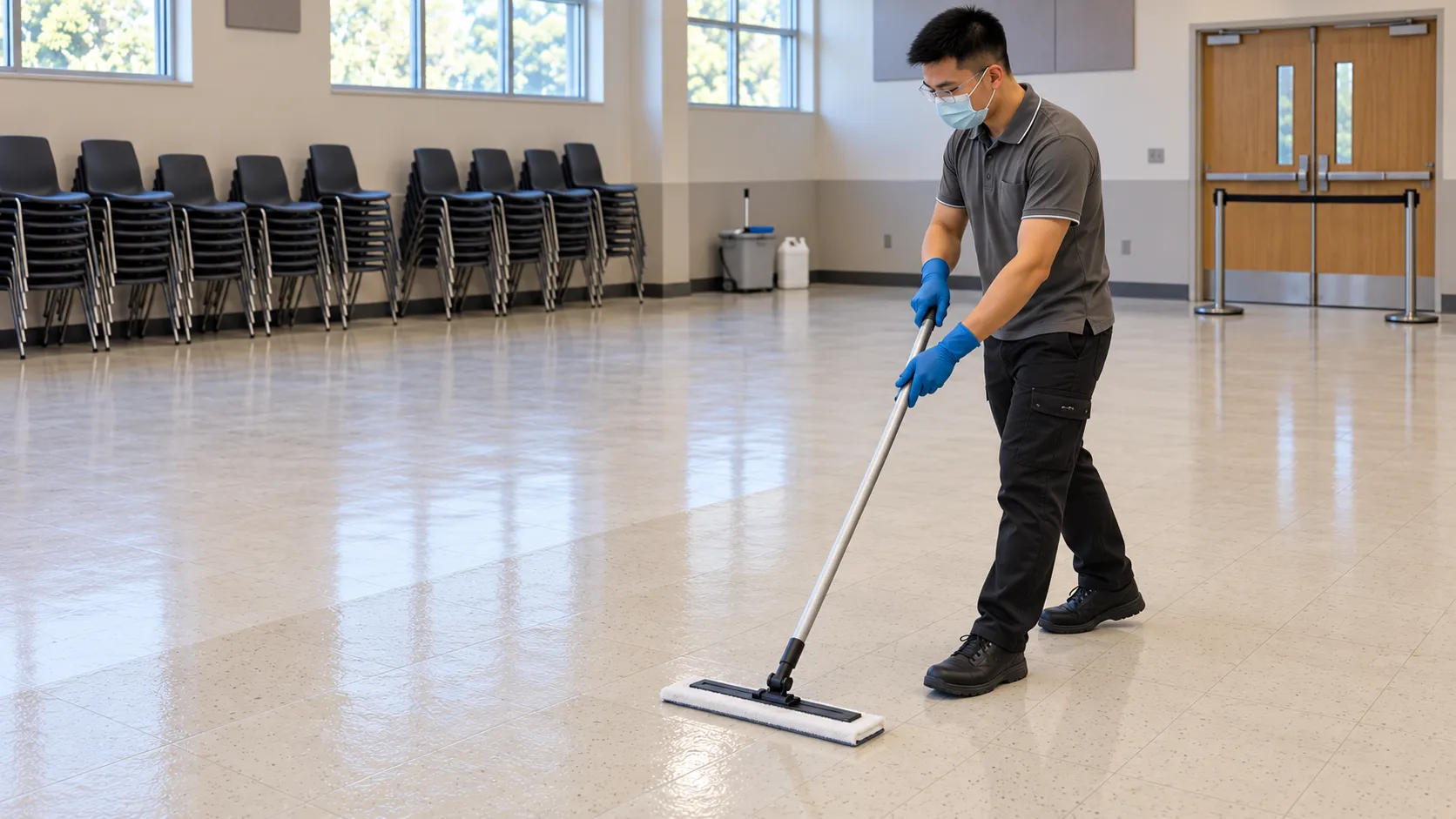
Vinyl floors may need periodic stripping and refinishing when the protective coating becomes dull, damaged, or difficult to clean. The old finish is removed, the floor is rinsed and dried, and new coats of finish are applied.
This process can restore appearance and make ongoing cleaning easier. It should be planned carefully because it requires downtime, correct chemical use, and enough drying time between coats.
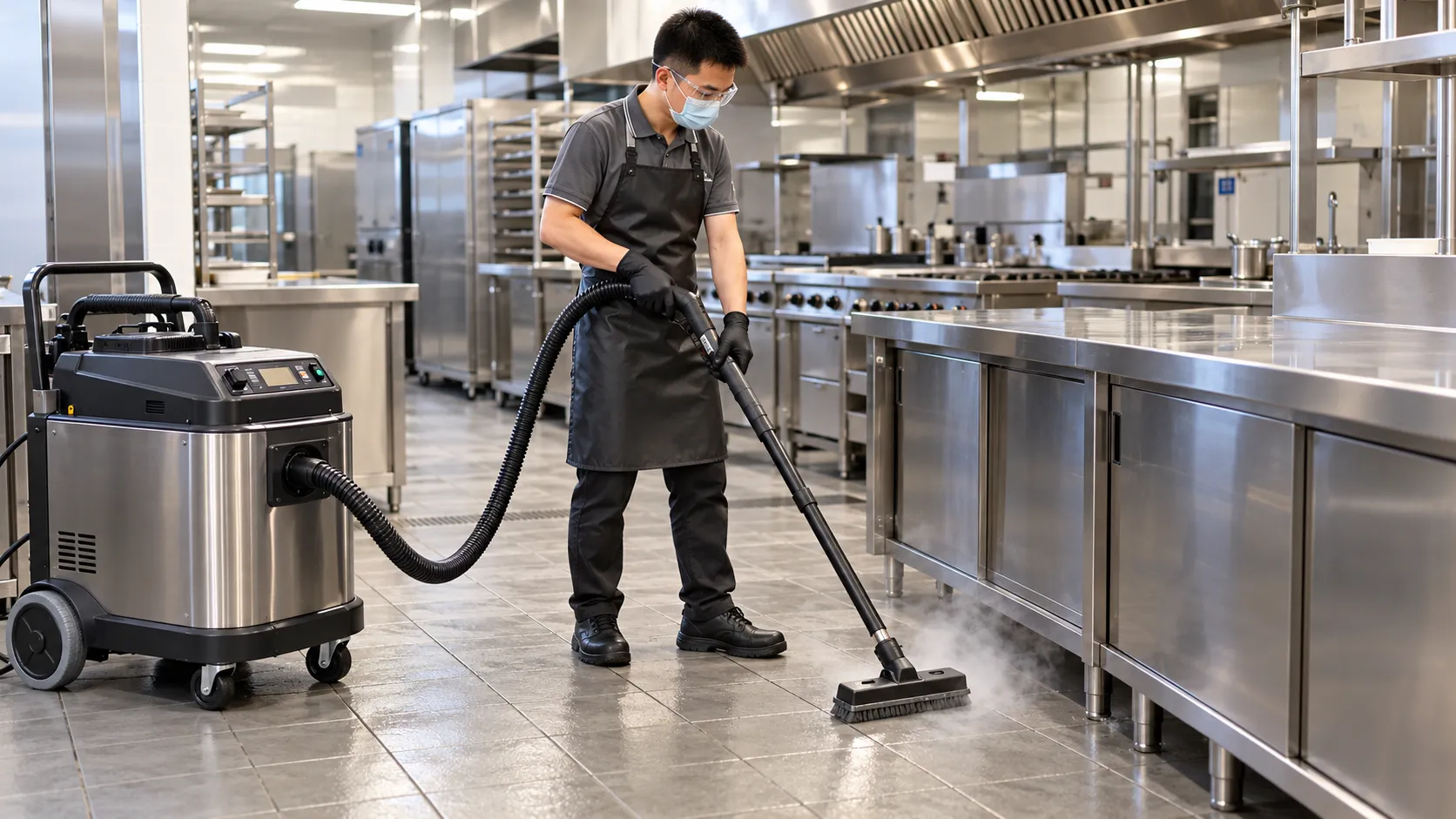
Steam Cleaning for Tile, Grout and Hygiene-Sensitive Areas
Steam cleaning can help loosen soil from tile, grout, and some sealed hard surfaces with limited chemical use. It is most useful in smaller detailed areas, washrooms, food-preparation surroundings, and spaces where grout lines need extra attention.
Steam is not suitable for every floor. Excess heat or moisture can damage some finishes, adhesives, unsealed surfaces, and sensitive flooring materials.
Carpet Hot Water Extraction and Low-Moisture Encapsulation
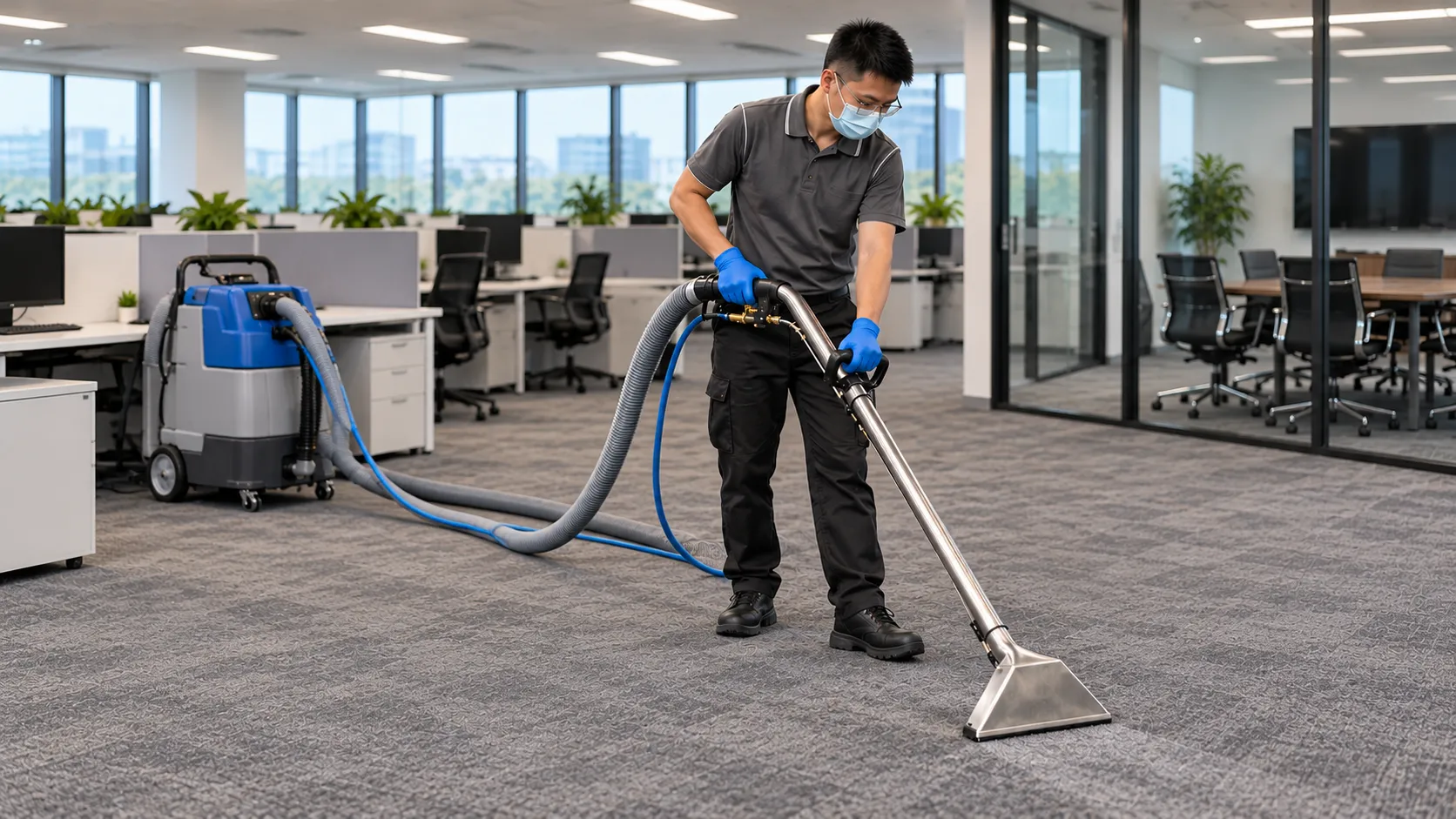
Commercial carpet maintenance usually combines daily vacuuming with periodic deep cleaning.
Hot water extraction uses water, cleaning solution, agitation, and recovery to remove embedded soil from carpet fibres. It is useful for restorative cleaning but needs adequate drying time.
Low-moisture encapsulation uses cleaning polymers that surround soil particles so they can be removed through vacuuming after drying. It is often suited to regular carpet maintenance in busy workplaces because drying time is generally shorter.
Diamond Polishing and Restoration for Concrete, Terrazzo and Stone
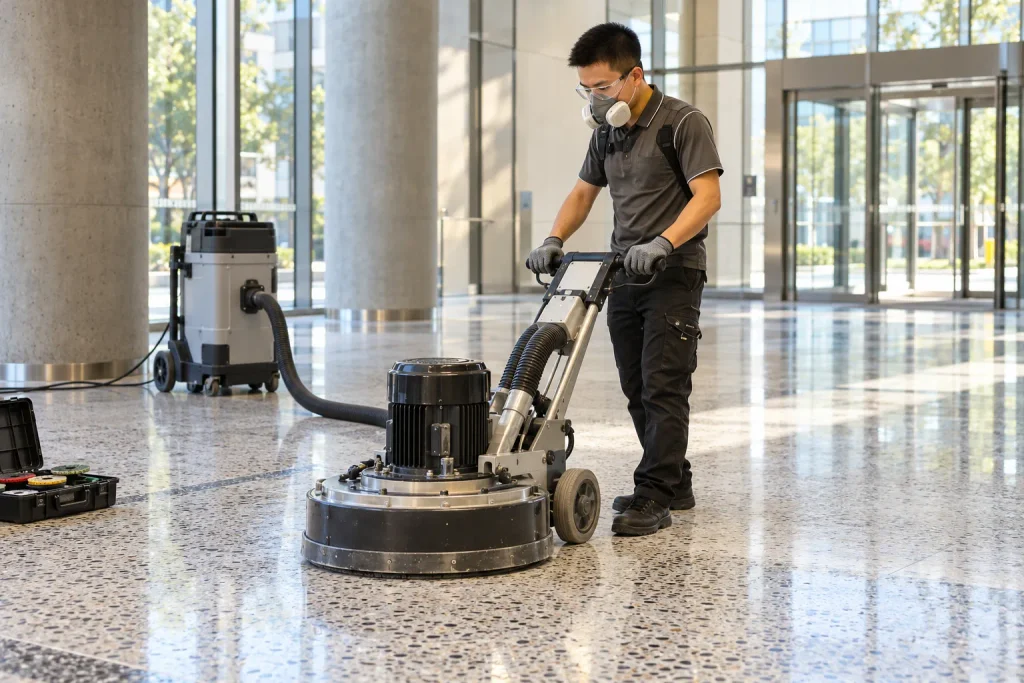
Polished concrete, terrazzo, and some natural stone floors may need specialised restoration when they lose clarity, gloss, or evenness. Diamond pads or abrasives can refine the surface, while sealing or polishing systems may be used to protect the finish.
This work should be matched to the exact floor type. Natural stone, terrazzo, concrete, and coated floors can look similar but require different products and techniques.
Recommended Cleaning Methods by Commercial Floor Type
| Floor type | Routine maintenance | Periodic maintenance | Avoid |
| Vinyl composition tile and vinyl | Dust mop, damp mop, auto-scrub with suitable cleaner | Deep scrub, recoat, strip and refinish when required | Excess water, harsh abrasives, unsuitable solvents |
| Ceramic and porcelain tile | Sweep or vacuum, damp mop, auto-scrub | Deep scrub and grout-line cleaning | Dirty mop water, residue buildup |
| Grout lines | Routine cleaning with tile care program | Detail scrubbing or extraction for visible buildup | Strong products that may affect surrounding surfaces |
| Sealed concrete | Dust mop, auto-scrub with low-residue cleaner | Deep scrub, resealing where required | Acidic products or aggressive pads without testing |
| Polished concrete | Dust mop, clean with approved neutral products | Burnishing or diamond maintenance as needed | Harsh chemicals, abrasive pads, film-forming residue |
| Natural stone and terrazzo | Dust mop, use pH-neutral stone-safe cleaner | Professional honing, polishing, or resealing | Acidic cleaners, strong alkaline cleaners, abrasive tools |
| Epoxy and resin-coated floors | Sweep, vacuum, or auto-scrub | Deep scrub and coating inspection | Aggressive solvents and pads that damage the coating |
| Commercial carpet | Vacuum, spot-clean spills, maintain entrance mats | Encapsulation or hot water extraction | Over-wetting, delayed spill treatment |
| Rubber and safety flooring | Vacuum or dust mop, damp mop with compatible product | Machine scrub where approved | Solvents, high-pH products, excessive water |
How Often Should Commercial Floors Be Cleaned?
There is no single schedule for every facility. A quiet office with sealed concrete flooring needs a different program from a gym entrance, medical waiting room, warehouse, or school corridor.
Use this as a starting point, then adjust it according to traffic, visible soil, seasonal weather, spills, and site requirements.
| Frequency | Recommended tasks |
| Daily | Remove loose dirt, vacuum carpets and mats, clean spills, spot mop marks, inspect entrances and bathrooms |
| Weekly | Auto-scrub high-traffic hard floors, detail edges, clean grout-prone areas, inspect floor condition |
| Monthly | Deep clean traffic lanes, review scuffing and finish wear, clean under movable furniture where practical |
| Quarterly | Schedule deeper carpet care, grout cleaning, machine scrubbing, and targeted restoration work |
| Every 6–12 months or as needed | Recoat or refinish vinyl, restore polished surfaces, deep extract carpet, reseal suitable floors |
High-traffic areas should drive the schedule. If a reception path looks dull two months after a deep clean, it needs more frequent maintenance than a low-use meeting room, regardless of the calendar.
A Practical Commercial Floor Maintenance Plan
A reliable maintenance plan separates routine care from restorative work.
Daily Floor Care Tasks
Daily tasks should prevent grit and spills from becoming larger problems:
- Vacuum entrance mats, carpets, and edge areas.
- Dust mop or sweep hard floors before wet cleaning.
- Clean spills as soon as practical.
- Spot-clean scuff marks and visible stains.
- Inspect bathrooms, kitchens, entrances, and walkways.
- Use wet-floor signage whenever a surface may remain damp.
Weekly and Monthly Maintenance
Weekly and monthly work should address the areas that receive the most wear:
- Auto-scrub hard floors in busy traffic zones.
- Clean corners, edges, and areas around furniture.
- Remove built-up marks from doors, lifts, and reception paths.
- Detail clean tile and grout in bathrooms and kitchens.
- Inspect floor finishes for scratches, peeling, dullness, or loss of slip resistance.
- Review mats, as worn or saturated matting allows more dirt to reach internal floors.
Periodic Deep Cleaning and Restoration
Restorative work is needed when normal maintenance no longer returns the floor to an acceptable standard. Signs include:
- Vinyl floors that remain dull after cleaning.
- Grout that looks dark despite regular washing.
- Carpet traffic lanes that look flattened or stained.
- Concrete or terrazzo that has lost its intended finish.
- Coatings that appear scratched, worn, or patchy.
- Floors that feel sticky or attract dirt soon after cleaning.
Addressing these issues early is usually more manageable than waiting until the floor requires major restoration or replacement.
How Can Businesses Prevent Floor Damage and Slip Risks?
Floor maintenance should improve both appearance and safety. Most avoidable damage comes from poor product selection, excessive moisture, delayed spill response, or inconsistent cleaning routines.
Follow these practices:
- Remove dry soil before mopping. Grit can scratch finishes and turn into abrasive slurry when wet.
- Use chemicals at the correct dilution. More product does not always mean a cleaner floor. Excess chemical can leave residue that attracts soil or affects traction.
- Match the product to the surface. Acidic cleaners can damage acid-sensitive stone, while harsh products can dull coatings, vinyl, and rubber.
- Use suitable pads and brushes. Abrasive equipment may permanently mark or strip a floor finish.
- Keep entrances under control. Clean, well-maintained matting reduces the amount of moisture and soil carried into the building.
- Recover dirty water. For large hard-floor areas, machine recovery can be more effective than repeatedly mopping with the same water.
- Allow floors to dry. Use wet-floor signs and plan cleaning around foot traffic where possible.
- Check safety data and manufacturer guidance. Cleaning products, coatings, and flooring systems should be used according to their instructions.
When Should You Use a Professional Commercial Floor Cleaning Service?
Professional support is useful when a floor needs more than daily cleaning, especially where equipment, chemical knowledge, access, and timing affect the result.
Consider professional commercial floor cleaning when you need:
- Machine scrubbing for large floor areas.
- Strip and refinish work for vinyl floors.
- Deep carpet extraction or low-moisture carpet maintenance.
- Tile and grout restoration.
- Concrete, terrazzo, or natural stone restoration.
- After-hours cleaning that does not interrupt staff, customers, patients, or students.
- A documented cleaning scope, inspections, and a consistent maintenance plan across one or more sites.
The right provider should assess the floor material, traffic patterns, site requirements, access times, and current condition before recommending a method. A clear scope of work makes it easier to understand what will be cleaned, how often it will be maintained, and when deeper restoration is likely to be required.
Keep Floor Care Consistent, Not Reactive
Commercial floors last longer and look better when cleaning is planned around the floor type and the way the space is used. Daily dry soil removal, prompt spill response, regular machine cleaning, and timely restorative work are usually more effective than waiting for visible damage.
For Melbourne and Sydney facilities that need a practical floor-care program, WDC Facility Services can help assess the site, build a clear cleaning scope, and schedule work around your operations.