A commercial cleaning checklist is useful only when it removes assumptions. It should show what is cleaned, where it is cleaned, how often it is cleaned, what an acceptable result looks like, and what happens when a room is inaccessible or a problem is found.
For a facility manager, that clarity makes it easier to brief a cleaning team, compare quotes and check whether the agreed service has been delivered.
For a cleaning contractor, it prevents a vague instruction such as “clean the kitchen” from becoming an ongoing source of missed expectations.
The checklist below is a practical starting point. It should be adjusted after a site walk-through, because occupancy, trading hours, floor finishes, security requirements and hygiene risks vary from one facility to another.
Commercial Cleaning Checklist by Area
Start by listing areas before listing tasks. This makes shared spaces, storage rooms, back-of-house zones and low-visibility edges less likely to be missed.
1. Entrance, Reception and Customer-Facing Areas
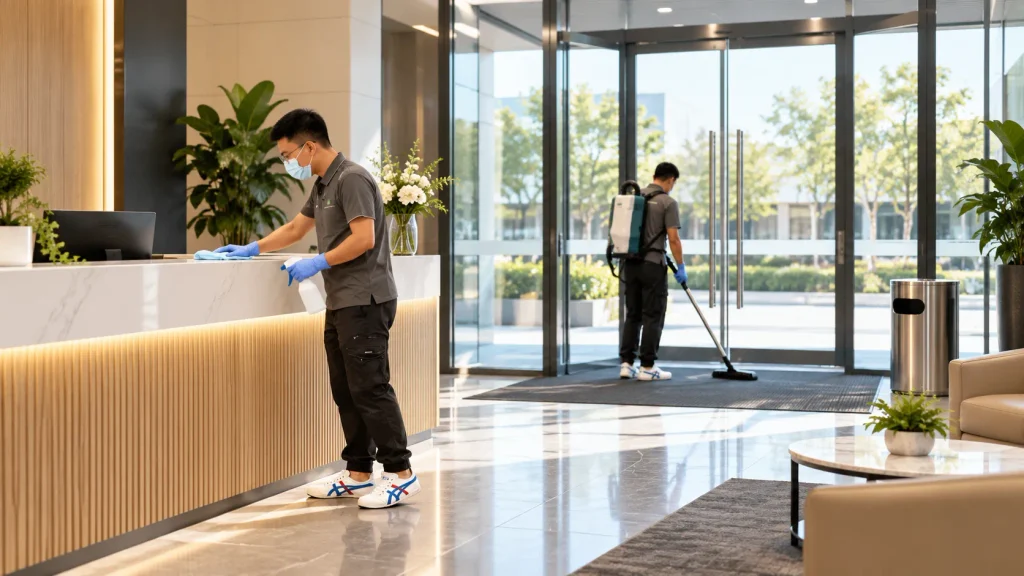
These areas set the first impression, so the standard should be easy to see rather than open to interpretation.
- Clean entry glass, door handles, push plates and accessible frames.
- Vacuum or sweep entrance mats and remove tracked-in soil around their edges.
- Wipe reception counters, visitor seating, tables and accessible ledges.
- Empty bins, replace liners and remove waste from the immediate service area.
- Vacuum carpets or sweep and mop hard floors, including accessible corners and edges.
- Remove visible litter from the external entrance only when it is included in the scope.
2. Offices, Workstations and Meeting Rooms
Office cleaning should protect privacy and define exactly which surfaces are accessible. A cleaner should not move confidential papers, personal belongings or computer equipment unless this has been agreed.
- Empty desk-side and shared bins, then replace liners where required.
- Vacuum or mop accessible floor areas around desks, chairs and meeting tables.
- Dust accessible horizontal surfaces, cabinet fronts and shared furniture.
- Wipe shared tables, chair arms, door handles, light switches and other nominated touchpoints.
- Remove visible marks from internal doors and glass partitions.
- Return meeting rooms to their agreed presentation standard, such as chairs positioned neatly and whiteboards cleared only where authorised.
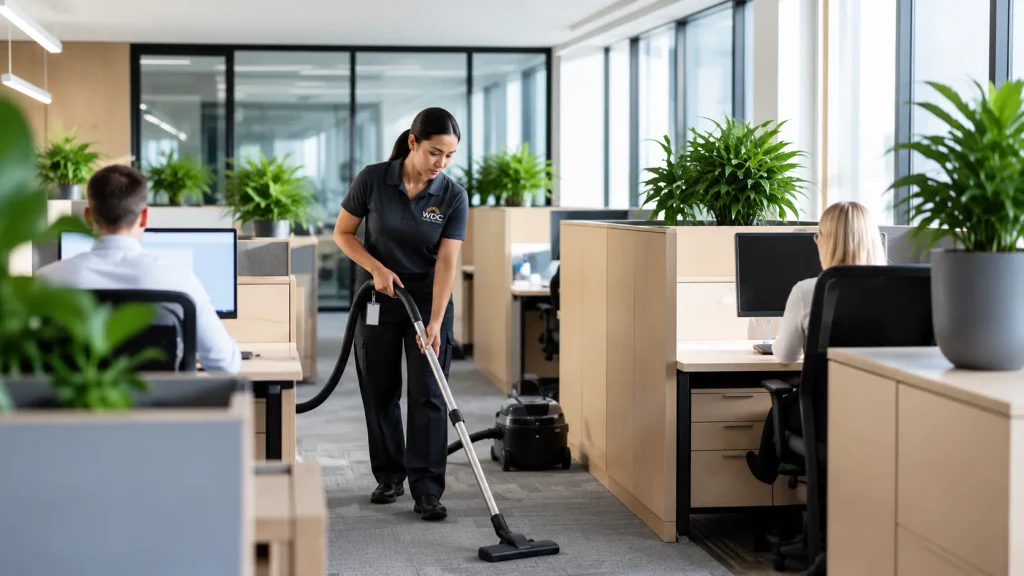
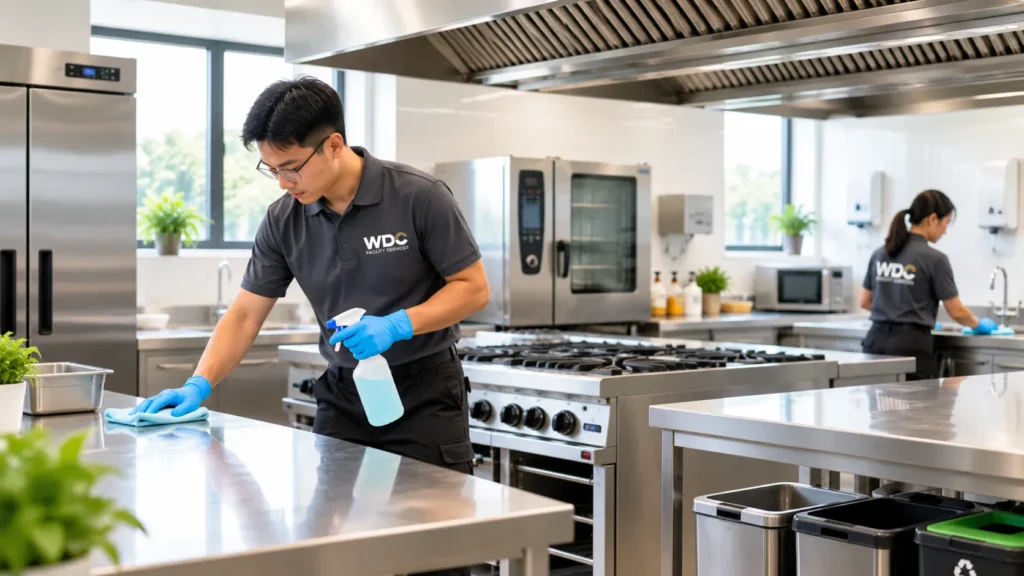
3. Kitchens, Tea Rooms and Break Areas
Kitchen scopes need detail. “Clean kitchen” can mean a quick bench wipe to one person and an appliance deep clean to another.
- Wipe benches, tables, sinks, splashbacks and accessible appliance exteriors.
- Clean microwave interiors, refrigerator handles and coffee stations when included.
- Remove food waste, replace bin liners and clean bin exteriors.
- Restock agreed consumables, such as paper towel, dishwashing liquid, hand soap or bin liners.
- Sweep and mop flooring, including accessible edges and areas beneath movable furniture.
- Report spoiled food, leaks, pest evidence or damaged appliances instead of treating them as routine cleaning tasks.
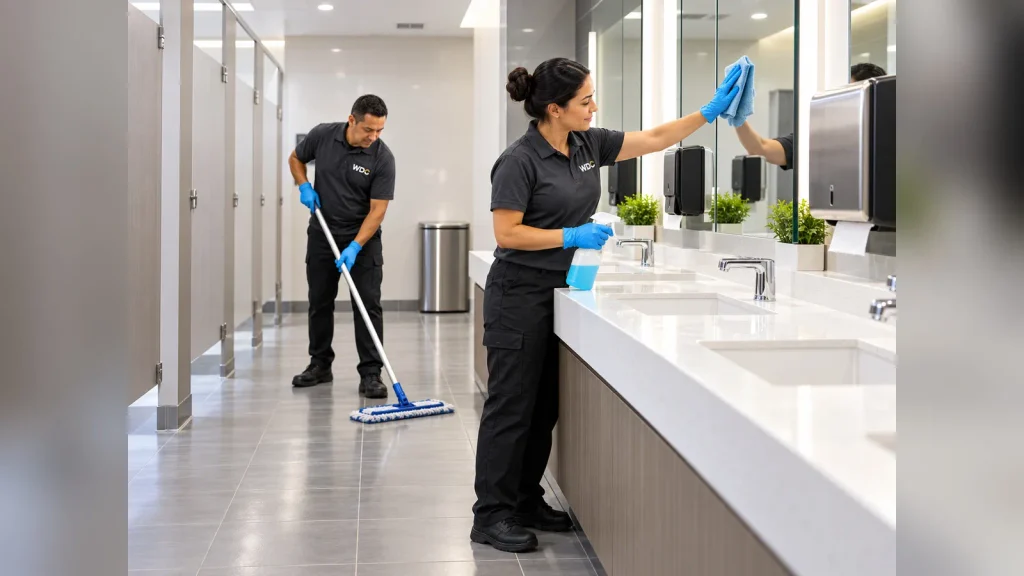
4. Bathrooms and Amenities
Amenities should be cleaned to a defined hygiene and presentation standard at a frequency that reflects usage. High-use washrooms usually need more attention than a low-occupancy office bathroom.
- Clean and sanitise toilets, urinals, basins, taps, mirrors and dispensers.
- Wipe partitions, door handles, flush buttons and other nominated touchpoints.
- Empty sanitary, general-waste and recycling bins according to the agreed waste process.
- Refill soap, toilet paper, hand towel and other listed consumables.
- Sweep and mop floors, including behind doors and accessible edges.
- Report leaks, damaged fittings, empty dispensers that cannot be refilled, odours that persist after cleaning, or safety hazards.
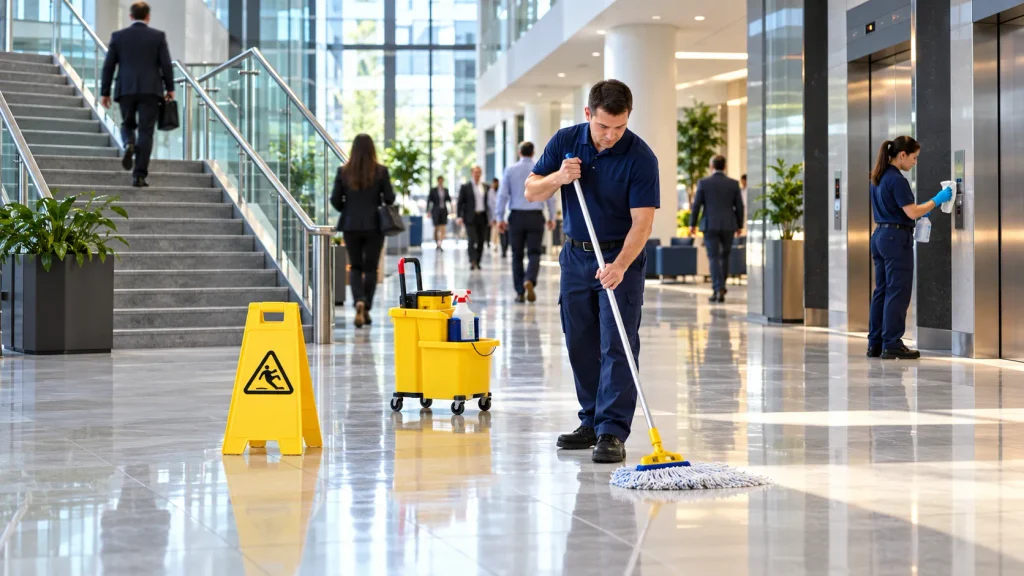
5. Floors, Stairs, Lifts and High-Traffic Areas
Floor care should name the surface and method. A product or process suitable for sealed vinyl may not be suitable for stone, timber, carpet tiles or safety flooring.
- Vacuum carpeted floors, edges and accessible areas beneath furniture.
- Sweep and damp-mop hard floors using the approved product and dilution.
- Spot-clean spills and stains where this is part of the routine service.
- Clean lift buttons, handrails, stair rails and other agreed touchpoints.
- Check stairs, corridors and walkways for loose debris, wet-floor risks and obstructions.
- Use warning signs and report slip, trip or floor-damage risks promptly.
6. Waste, Recycling and External Entry Areas
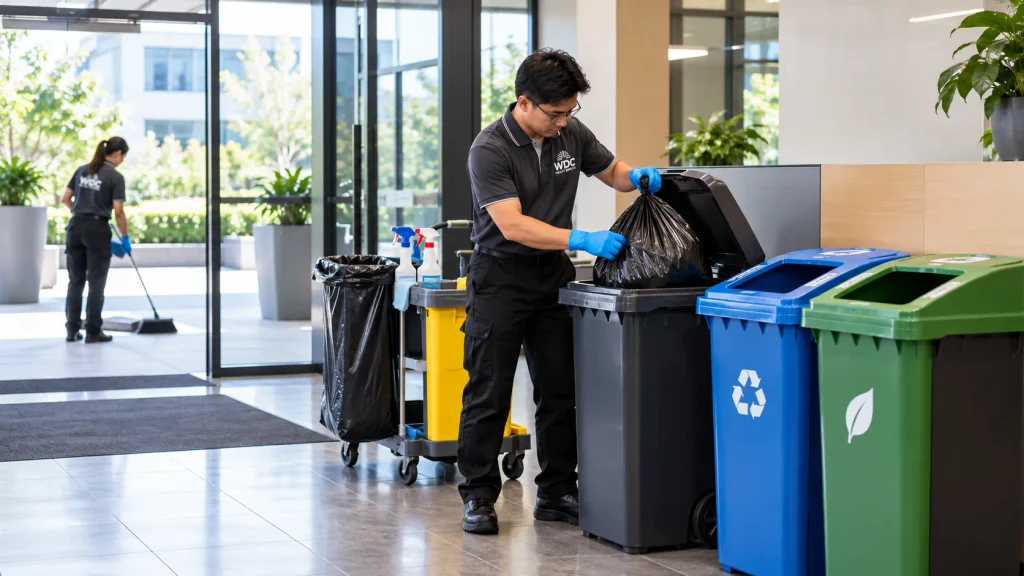
Waste removal needs a clear chain of responsibility. The scope should state which bins are serviced, where waste is taken, whether waste separation is required and who supplies liners.
- Empty nominated internal bins and replace liners.
- Keep general waste, recycling, confidential waste and regulated waste separate where the site requires it.
- Clean visible spills and residue around bin stations.
- Transfer waste to the agreed collection point without blocking exits, corridors or loading areas.
- Check external entry areas for litter, leaves and obvious debris when they are included in the service.
7. Internal Glass, Touchpoints and Shared Equipment
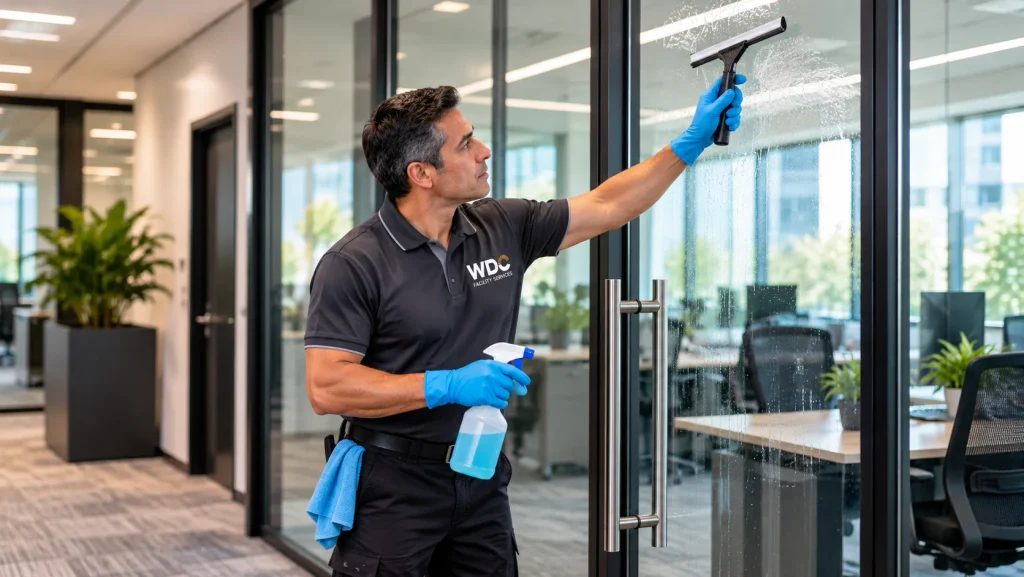
This category works best when it is specific. “Disinfect all surfaces” is too broad for a recurring contract and can create unnecessary handling of sensitive equipment.
- Clean internal glass doors, partitions and accessible glazing to remove visible fingerprints, smears and marks.
- Wipe nominated touchpoints, including handles, switches, handrails, lift buttons and shared counters.
- Clean shared equipment exteriors, such as printers, phones or kitchen appliances, only where authorised.
- Follow site instructions for electronic equipment, sensitive surfaces and restricted areas.
Commercial Cleaning Schedule: Daily, Weekly and Periodic Tasks
Cleaning frequency should follow use, not habit. Busy entrances, washrooms and kitchens may need attention at every visit, while high dusting or carpet extraction belongs on a less frequent schedule. The table below is a planning guide, not a fixed schedule for every site.
| Frequency | Typical tasks | What to define in the scope |
| Every service visit | Empty bins, clean amenities, wipe nominated touchpoints, clean kitchens, vacuum or mop traffic areas | Service days, visit time, rooms included and consumables to be restocked |
| Weekly | Detailed dusting, internal glass, chair bases, cabinet fronts, low-level ledges and less-used rooms | Which items are accessible, how far furniture may be moved and the required outcome |
| Monthly or periodic | High dusting, detailed floor care, internal appliance cleaning, skirting boards, spot treatment and detailed upholstery care | Frequency, approved methods, equipment requirements and whether the work is priced separately |
| On demand | Carpet extraction, external window cleaning, pressure washing, spill response and post-event cleaning | Authorisation process, response time, cost basis and any specialist contractor requirement |
Tasks for Every Service Visit
Every-visit tasks should focus on visible presentation, hygiene-sensitive areas and the work that affects the next business day. For many offices, this includes waste removal, washrooms, kitchen benches, entry points and high-traffic floors.
A busy medical waiting room, retail store or school may need a different frequency.
Record the rooms completed and any exceptions. A locked boardroom or a delivery blocking a corridor is not a missed task if it is documented and followed up.
Weekly Cleaning Tasks
Weekly tasks address gradual build-up that does not always show during a quick nightly clean. Typical items include detailed dusting, internal glass, furniture surfaces, cabinet fronts, chair bases and accessible low-level ledges.
Keep weekly work visible on the checklist. If it is not allocated to a day or crew member, it is likely to become an assumed task rather than a completed one.
Monthly and Periodic Deep-Cleaning Tasks
Periodic work should be scheduled separately from routine cleaning. Examples include high dusting, carpet extraction, machine scrubbing, floor polishing, detailed skirting-board cleaning, internal refrigerator cleaning and cleaning behind equipment that can be safely moved.
Confirm whether the work is included in the contract rate or quoted as an additional service. It may also need a different access window, equipment or staffing level.
On-Demand and Specialist Cleaning Tasks
On-demand work covers tasks that are not predictable enough for a standard recurring checklist. Examples include post-event cleaning, a flood or spill response, graffiti removal, external window cleaning, pressure washing and urgent stain treatment.
Specialist work should not be folded into general cleaning without a clear method, authority and price. Hazardous materials, sharps, biological contamination, significant mould and regulated waste require an appropriate specialist assessment and procedure.
How to Create a Cleaning Checklist for Your Facility
Create a checklist after a site walk-through. Divide the property into zones, note the surface types and usage patterns, then decide which tasks are required at each frequency. A standard office template is a useful starting point, but it is not a complete scope for every facility.
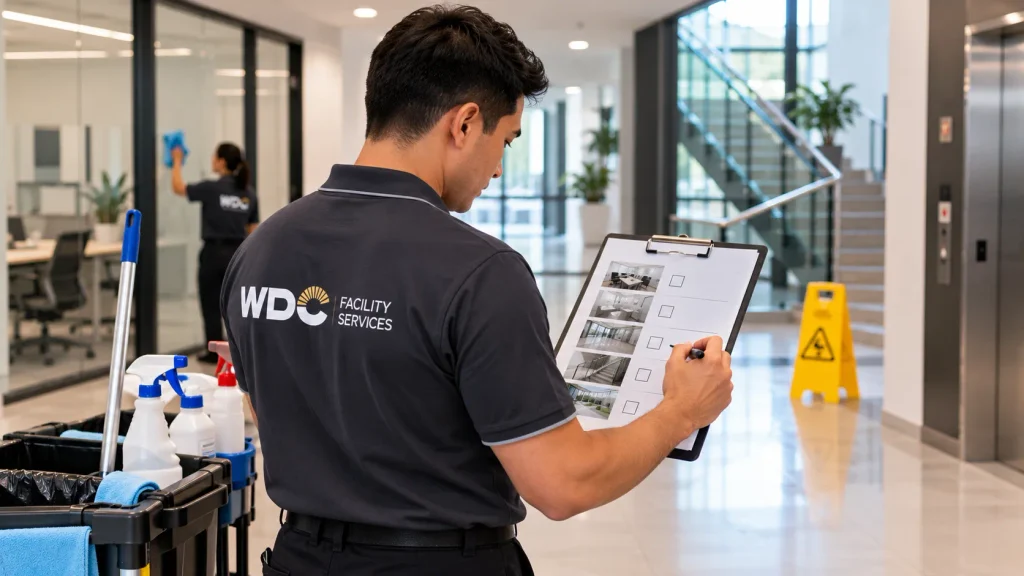
Use this sequence to build a workable site checklist:
- List every included area, including back-of-house spaces, stairwells, storage rooms and external entry points.
- Identify the task, frequency and required finished condition for each area.
- Record access hours, alarm or key procedures, restricted rooms and parking or loading instructions.
- Confirm supplies, equipment, waste streams and any site-owned items the cleaning team may use.
- State exclusions and the approval process for extra work.
- Test the checklist during the first few services, then update it when the site, occupancy or expectations change.
Office and Multi-Tenant Buildings
Office scopes usually centre on reception, workstations, meeting rooms, kitchens, amenities and shared circulation areas. Separate tenant areas from common areas, especially where access, responsibility and cleaning hours differ. Include after-hours access instructions and specify whether cleaners may handle papers, personal items or shared IT equipment.
Medical, Dental and Healthcare Facilities
Healthcare facilities need a cleaning plan that follows the facility’s infection-prevention requirements. Identify clinical and non-clinical zones, approved products, required contact times, waste handling rules and equipment segregation. Routine commercial cleaning is not a substitute for a clinical cleaning protocol where one is required.
Schools, Childcare Centres and Education Sites
Education sites need a checklist that reflects high occupancy, shared surfaces and the timing of classes or care programs. Identify classrooms, staff rooms, amenities, entry points, playground-adjacent areas and shared equipment. Cleaning chemicals, storage and access procedures should align with the site’s child-safety and safety requirements.
Retail, Hospitality and Customer-Facing Spaces
Retail and hospitality scopes should prioritise customer areas, fitting rooms or dining spaces, amenities, entry glass, floors and waste. Schedule work around trading, delivery and peak periods. Grease-prone kitchens, food-preparation areas and equipment may require a separate, more specialised scope.
Warehouses, Factories and Industrial Sites
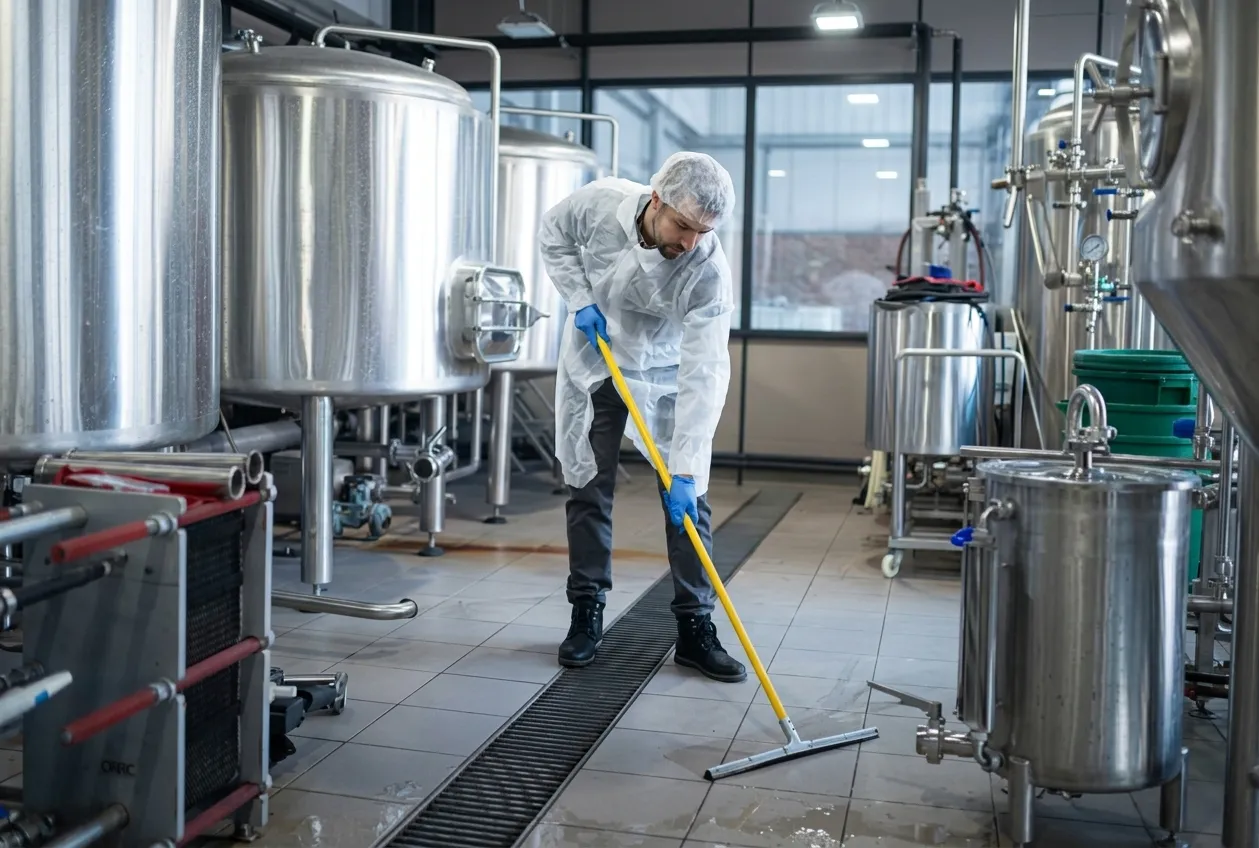
Industrial sites require a clear distinction between general cleaning and production, maintenance or hazardous-cleaning work. Map pedestrian walkways, welfare facilities, offices, loading areas, dust-prone zones and restricted areas.
Confirm vehicle movements, inductions, required personal protective equipment and the process for reporting spills or damaged flooring.
How to Make the Scope Measurable and Easy to Manage
A measurable scope replaces subjective instructions with observable results. It is the difference between “mop the bathroom floor” and “the bathroom floor is visibly clean and dry, including accessible edges and the area behind the door.”
Write Outcome-Based Cleaning Standards
Each task should say what a supervisor or client can reasonably check after the service. Avoid terms such as “clean as needed” unless the trigger is defined.
| Vague instruction | Measurable standard |
| Clean entrance glass | Entrance glass is free from visible fingerprints, smears and splash marks at normal viewing height. |
| Empty bins | Nominated bins are emptied, relined where required and free from visible waste around the bin station. |
| Clean washroom floor | The washroom floor is visibly clean and dry, including accessible edges and the area behind doors. |
| Clean kitchen | Benches, sink and table surfaces are free from visible food residue, spills and crumbs. |
The standard should stay realistic. It should account for the condition of the area before cleaning, normal wear and factors outside the cleaner’s control, such as a damaged floor finish or a leak.
Record Missed Areas, Access Issues and Maintenance Concerns
The checklist should provide a simple place to record exceptions. This protects both the client and the contractor because a missed room, blocked access or damaged fixture does not disappear once the shift ends.
Record:
- Areas that were inaccessible, locked or occupied.
- Tasks not completed and the reason they were deferred.
- Low consumables, leaks, damage, stains, odours or safety hazards.
- Client requests that fall outside the agreed scope.
- Follow-up actions, the person responsible and the required completion date.
Keep sensitive credentials, alarm codes and keys out of a general checklist. Use the organisation’s approved secure process for those details.
Use Supervisor Checks, Client Feedback and Regular Scope Reviews
A completed task list shows what the team says it did. A quality check shows whether the finished result met the agreed standard. Use both.
A practical review process includes a supervisor inspection of priority areas, a clear channel for client feedback, and documented follow-up for unresolved items. Review the scope at least when the site changes, such as after a fit-out, tenancy change, staffing increase, altered trading hours or a recurring complaint. A checklist written for last year’s layout will not reliably manage this year’s service.
Common Commercial Cleaning Scope Gaps to Clarify Before Signing
Most cleaning disputes are not about effort. They are about work that one party assumed was included and the other party priced as additional or specialist work. Clarify the following before the contract begins.
Deep Cleaning, Carpet Extraction and High-Access Work
Routine vacuuming does not include carpet extraction. Routine dusting does not include high dusting above safe working height.
Confirm whether periodic deep cleaning, stain treatment, machine floor work, upholstery cleaning, ceiling vents and high-access tasks are included, how often they occur and who supplies the equipment.
External Windows, Pressure Washing and Outdoor Areas
External glass, façade cleaning, pressure washing, car parks, loading areas and landscaping debris often require different access, equipment, water management or safety controls.
List these areas separately and state the limit of the external area covered by the routine service.
Clinical, Hazardous or Specialist Waste
General waste removal does not automatically include clinical waste, sharps, chemicals, biological contamination, asbestos-containing material or other regulated waste.
Identify the waste stream and use an appropriate approved process. Do not ask a general cleaning crew to manage material outside its training, equipment or authority.
Changes in Occupancy, Layout or Site Requirements
Cleaning needs change when staff numbers rise, a new tenant moves in, a facility adds amenities, a layout changes or business hours extend. Agree how the scope will be reviewed, how extra work will be authorised and when revised pricing applies.
A clear commercial cleaning checklist gives everyone the same reference point: the client knows what has been agreed, the cleaning team knows what to deliver, and the supervisor has a fair way to check the result. For a site-specific scope and clear commercial cleaning quote, WDC Facility Services can assess your premises, access requirements and cleaning priorities before service begins.