GMP cleaning is a controlled system for preventing contamination, cross-contamination and mix-ups in regulated manufacturing environments. It covers more than making a facility look clean.
The program must define what is cleaned, how it is cleaned, who performs the work, how completion is verified and what records demonstrate that the process was followed.
For Australian medicinal-product manufacturers, the applicable GMP framework is the PIC/S Guide to GMP adopted by the TGA. The exact controls must always be tailored to the product, process, facility, contamination risks and site quality system.
What GMP Cleaning Must Control
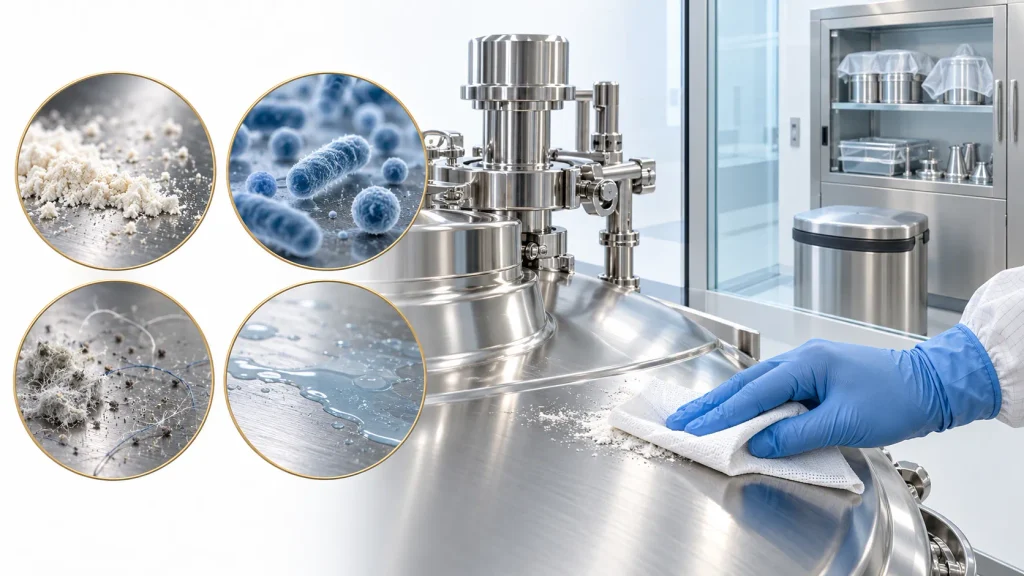
A GMP cleaning program should control residues, microorganisms, particulates, cleaning-agent residues and any other contamination that could affect product quality. It should also prevent materials, tools or people from transferring contamination between areas.
Cleaning, Sanitising, Disinfection and Sterilisation
These terms are related, but they do not mean the same thing.
| Activity | Primary purpose | Typical application |
| Cleaning | Removes visible soil, product residues and other contaminants | Equipment, floors, walls, benches and utensils |
| Sanitising | Reduces microorganisms to an appropriate level | Equipment or surfaces where microbial control is required |
| Disinfection | Uses a validated chemical or physical method to reduce or destroy microorganisms | Controlled rooms, cleanrooms and high-risk surfaces |
| Sterilisation | Eliminates viable microorganisms to a defined sterility assurance level | Sterile product equipment, components and aseptic processes |
Cleaning is normally the first step. A disinfectant may not work reliably if soil, residue or biofilm remains on the surface. Equally, a surface can look clean but still require sanitisation or disinfection based on the process risk.
Preventing Product Contamination, Cross-Contamination and Mix-Ups
A GMP cleaning program should prevent:
- Product residue carrying over into the next batch or product
- Detergent, disinfectant or rinse-water residues remaining on equipment
- Microbial contamination in controlled or sterile manufacturing areas
- Dust and particulates moving between production zones
- Mix-ups caused by uncleaned equipment, containers, labels or status identification
- Contamination transferred by cleaning tools, personnel or poor material flow
The focus is not “absolute cleanliness.” It is a documented, scientifically justified state of control that protects product safety, identity, strength, quality and purity.
Defining the Scope of a GMP Cleaning Program
The scope should be based on a documented risk assessment. A high-potency product, sterile fill-finish suite or shared manufacturing line requires more stringent controls than a low-risk, dedicated process area.
Premises, Controlled Areas and Non-Product-Contact Surfaces
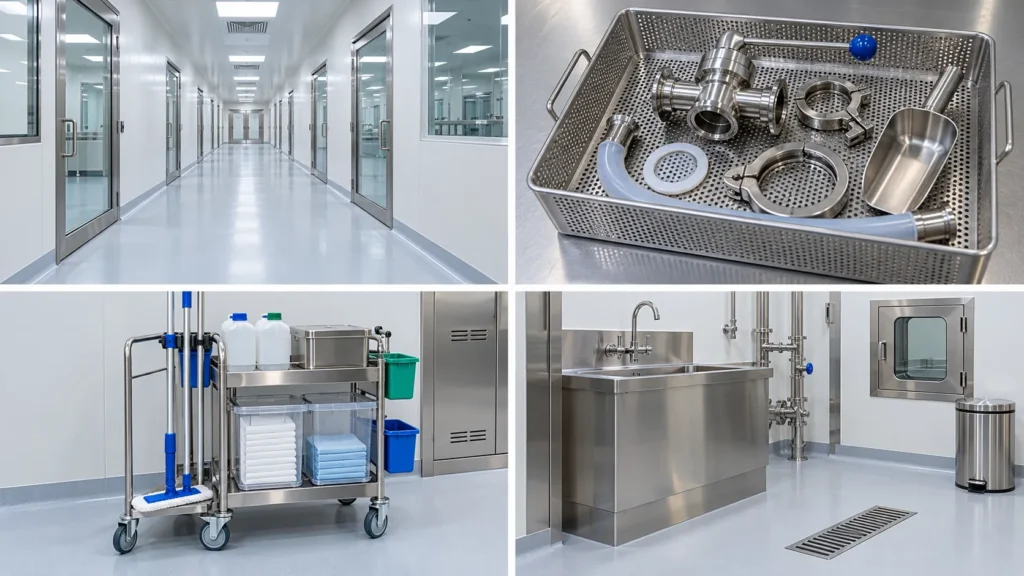
Premises cleaning may include floors, walls, ceilings, doors, windows, drains, change rooms, corridors, airlocks, pass-throughs and waste areas. These surfaces may not contact the product directly, but poor cleaning can introduce dust, microorganisms or other contaminants into the manufacturing environment.
The scope should specify:
- Areas covered by each procedure
- Required cleaning frequency
- Approved cleaning and disinfecting agents
- Contact times and dilution instructions
- Cleaning method, including manual, mechanical or clean-in-place methods
- Required personal protective equipment
- Inspection and record requirements
Production Equipment, Utensils and Product-Contact Surfaces
Product-contact equipment requires the most rigorous assessment. Procedures should address the exact equipment design, material of construction, residues, inaccessible locations and cleaning method.
For shared equipment, the cleaning process must control carryover from the previous product, including active ingredients, excipients, degradants and cleaning-agent residues.
FDA guidance notes that cleaning procedures should be documented, consistent and supported by methods that demonstrate their effectiveness.
Cleaning Tools, Equipment and Consumables
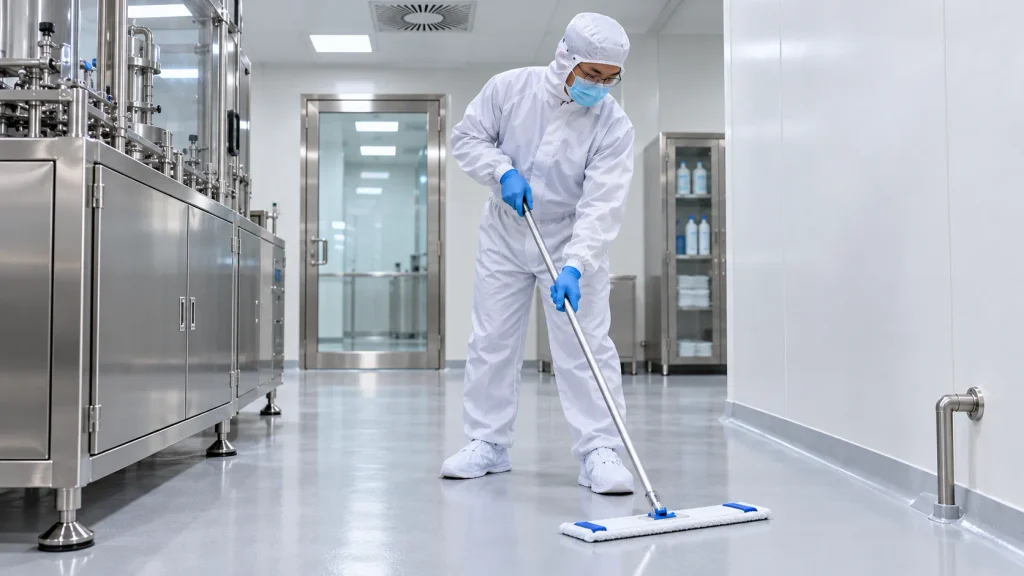
Cleaning tools can become a contamination source if they are not controlled. Mops, buckets, wipes, brushes, vacuum cleaners and reusable cloths should be suitable for the area in which they are used.
A practical control system may include:
- Colour-coding tools by zone or cleanliness grade
- Dedicated tools for specific rooms or process areas
- Defined cleaning, storage and replacement instructions
- Controlled laundering for reusable textiles
- Inspection of tools before use
- Segregated storage for clean and used equipment
Utilities, Drains, Waste Areas and Material-Transfer Points
Drains, wash bays, waste rooms and material-transfer points are common contamination-risk areas.
The cleaning plan should address standing water, splash risk, waste handling, drain maintenance and the movement of materials between clean and less-controlled areas.
Utilities also need consideration. For example, cleaning processes that use purified water, compressed air or vacuum systems should not introduce contamination into the equipment or room.
Set Cleaning Requirements Through Risk Assessment
A risk assessment turns general GMP expectations into site-specific cleaning requirements. It should be reviewed when products, equipment, layouts, cleaning agents or manufacturing processes change.
Product, Process and Residue Risks
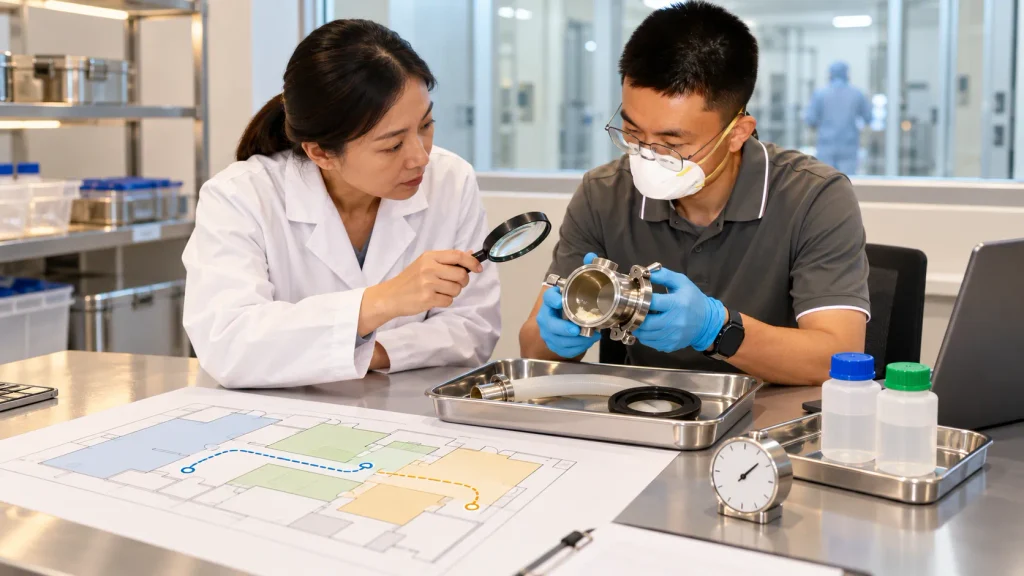
Assess the hazards associated with each product and process, including:
- Potency, toxicity and pharmacological activity
- Solubility and cleanability of residues
- Microbial risk
- Batch size and campaign length
- Shared versus dedicated equipment
- Product-contact surface area
- Likelihood of residue becoming trapped in valves, seals, hoses or dead legs
The worst-case product is not always the product with the highest dose. It may be the least soluble, most potent, most difficult to detect or hardest to remove from the equipment.
Facility Zoning, Personnel Flow and Material Flow
The facility layout should support the cleaning strategy. Separate high-risk, low-risk, clean and dirty activities where possible. Personnel, waste, cleaning tools and materials should not move in ways that undermine contamination controls.
A zoning review should consider:
- Entry and exit routes
- Gowning and de-gowning areas
- Raw-material and waste movement
- Equipment transfer routes
- Pressure differentials and airflow direction
- Cleaning-equipment storage locations
- Separation of clean and used tools
Cleaning Frequencies, Campaigns and Hold Times
Cleaning frequency should be justified by risk, not chosen solely because it is daily, weekly or monthly. Some surfaces require cleaning after every batch, product changeover or shift. Others may be cleaned according to a documented routine.
The program should define:
- Maximum dirty hold time: the time between processing and cleaning
- Maximum clean hold time: the time cleaned equipment may remain stored before use
- Cleaning intervals during campaigns
- Conditions that trigger additional cleaning
- Requirements after maintenance, spills, deviations or prolonged shutdowns
Selecting Cleaning Agents and Disinfectants
Cleaning agents and disinfectants should be selected for their intended use, compatibility and residue profile. The selection process should consider the type of soil or residue, surface material, water quality, required contact time and potential effect on product quality.
An approved chemical program should define:
- Product name, concentration and expiry or in-use period
- Preparation method and required water quality
- Contact time and application method
- Surface compatibility
- Storage conditions
- Safety data and personal protective equipment
- Rinsing requirements
- Rotation strategy where disinfectant rotation is justified
Facility Design Features That Support Effective GMP Cleaning
A cleaning procedure cannot fully compensate for a facility that is difficult to clean. Premises and equipment should be designed, located and maintained to minimise contamination risks and permit effective cleaning.
Cleanable Surfaces, Seals, Joints and Equipment Access
Surfaces should be smooth, intact and accessible. Cracked coatings, damaged seals, exposed insulation, corroded metal and unsealed joints can trap soil and microorganisms.
Review whether the facility has:
- Smooth, cleanable walls, ceilings and floors
- Coved junctions where appropriate
- Sealed penetrations around pipes and services
- Accessible equipment components
- Hygienic valves, fittings and drain points
- Minimal ledges, open seams and hard-to-reach areas
- Sufficient clearance around equipment for cleaning and inspection
Segregation, Airflow and Pressure Cascades
Airflow and pressure relationships should protect cleaner areas from contamination entering from less-controlled areas. Cleaning activities can disturb dust and aerosols, so timing and methods should be planned carefully.
For sterile facilities, cleaning and disinfection form part of the wider contamination control strategy required under EU GMP Annex 1.
Drainage, Water Control and Waste Removal
Water is useful for cleaning, but uncontrolled water creates microbial risk. Floors should drain effectively, drains should be maintained and spill-response procedures should prevent water from spreading into controlled areas.
Waste routes should avoid crossing clean material flows. Waste containers should be suitable, clearly identified and cleaned at a defined frequency.
Storage and Control of Cleaning Chemicals and Equipment
Store cleaning chemicals and tools in designated areas that prevent mix-ups and contamination. Chemicals should remain identifiable, within expiry and protected from unauthorised dilution or substitution.
Never store used cleaning equipment in clean manufacturing areas unless the procedure specifically permits it and controls the risk.
Written GMP Cleaning Procedures
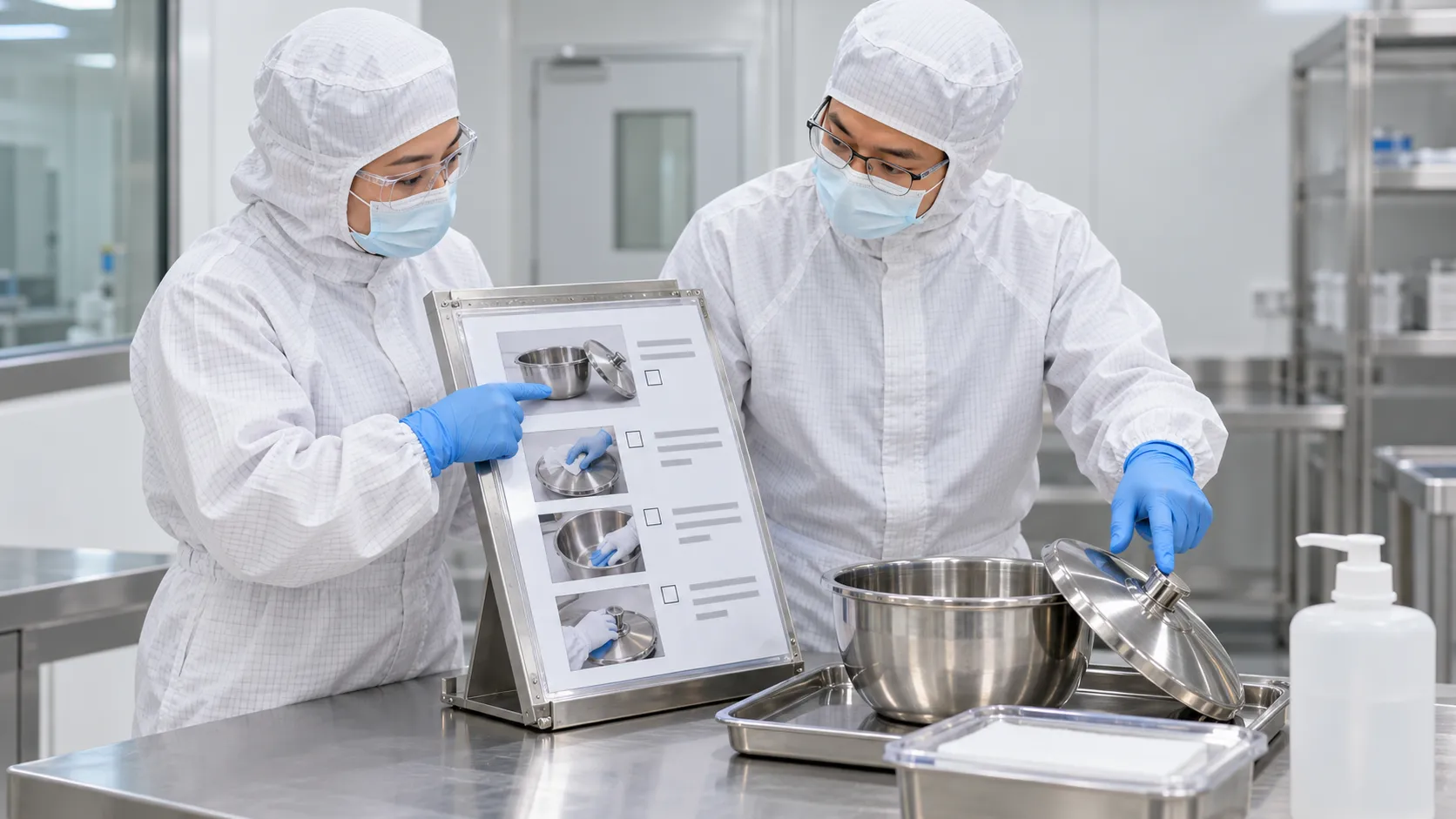
Written procedures convert the cleaning strategy into repeatable work. A procedure should be specific enough that trained personnel can complete the task consistently, without relying on memory or personal preference.
Area- and Equipment-Specific SOPs
Avoid generic procedures that say only “clean the area thoroughly.” Each SOP should identify the room, equipment or surface covered and explain the approved method.
Where equipment differs meaningfully in design, residue risk or cleanability, it may require an equipment-specific instruction rather than a broad site procedure.
Step-by-Step Cleaning Instructions and Critical Parameters
A robust cleaning procedure should state:
- Pre-cleaning checks, including equipment status and line clearance
- Required personal protective equipment
- Approved tools, chemicals and water quality
- Cleaning sequence from cleaner to less-clean areas
- Chemical concentration, application method and contact time
- Rinsing, drying and disposal requirements
- Inspection points and acceptance criteria
- Required documentation and escalation steps
Critical parameters, such as detergent concentration, wash temperature, flow rate, contact time or clean-in-place cycle sequence, should be clearly identified.
Visual Inspection, Verification and Release for Use
Visual inspection is an important control because it can identify visible residue, damage, pooled water or missed areas. It should be performed at the right stage by personnel trained to recognise unacceptable conditions.
For product-contact equipment, visual inspection may be supported by analytical verification or validation data. A “visually clean” result alone is not automatically sufficient for all processes.
Roles, Responsibilities and Operator Training
The procedure should make ownership clear. Operators may clean production equipment, while trained cleaning personnel manage premises. Quality Assurance should approve procedures and assess deviations. Engineering may own maintenance-related cleaning tasks.
Training should cover the reason for each control, not only the task sequence. Training records should show that personnel are qualified for the specific work they perform.
GMP Cleaning Documentation Requirements
If an activity is not documented when required, it cannot be readily demonstrated during an inspection. Cleaning records provide traceability, confirm completion and help identify recurring failures.
The TGA lists undocumented cleaning procedures, missing cleaning records and non-validated equipment cleaning as GMP deficiencies.
Cleaning Schedules and Area Matrices
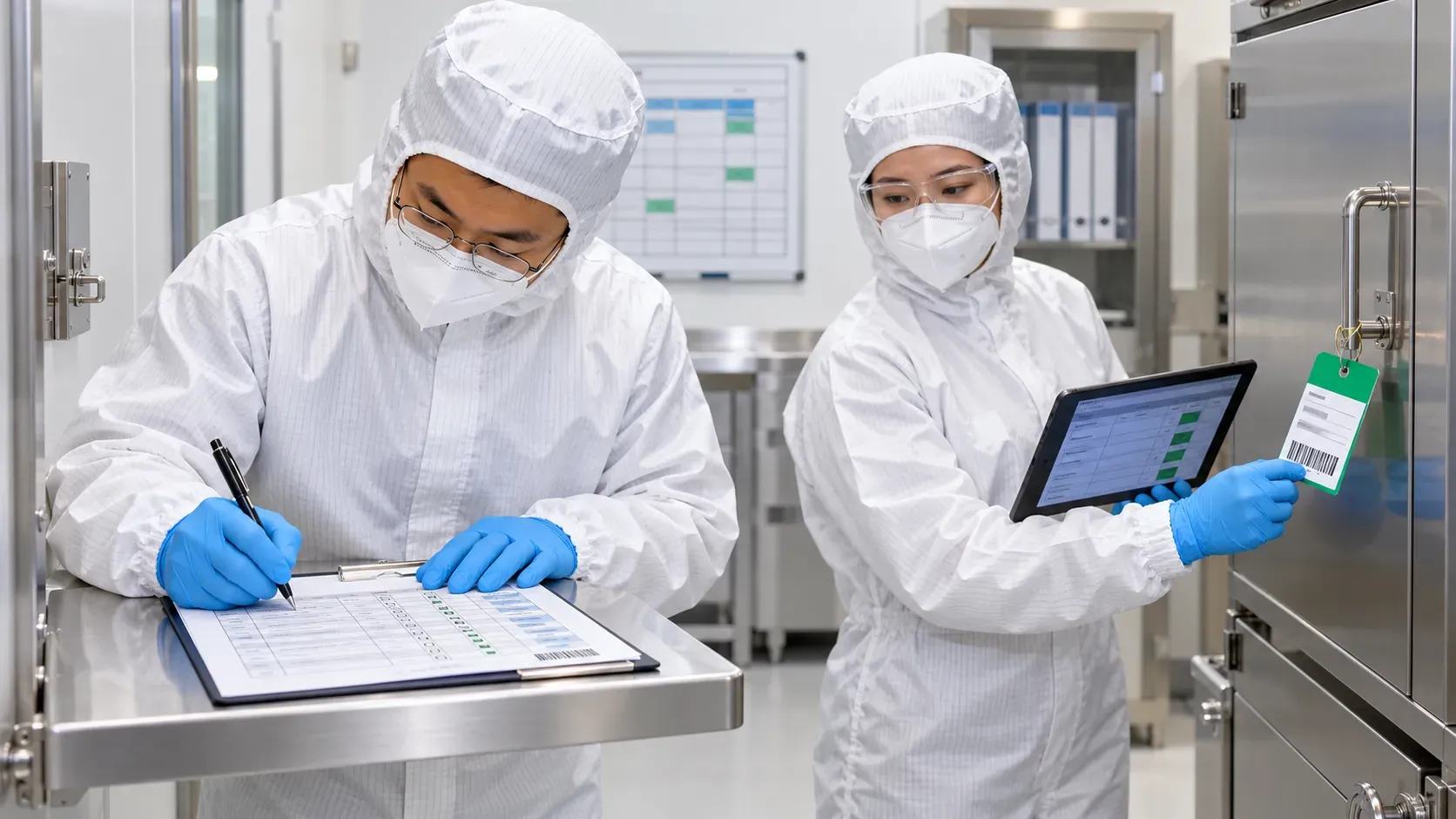
A master cleaning schedule or area matrix should show what must be cleaned, by whom and how often. It should distinguish routine tasks from event-driven tasks, such as spill response, post-maintenance cleaning or pre-use cleaning.
| Document | Purpose | Typical content |
| Master cleaning schedule | Plans routine cleaning | Area, task, frequency, responsible role |
| Area matrix | Maps requirements by room or zone | Surface types, approved agents, method and verification |
| Equipment cleaning SOP | Controls a repeatable process | Step sequence, parameters, inspection and records |
| Cleaning log | Records execution | Date, time, equipment or area, operator and reviewer |
| Status label | Shows equipment status | Cleaned, in use, under maintenance or not ready for use |
Cleaning Logs and Equipment Status Labelling
A cleaning log should be completed at the time of the activity. It should identify the relevant area or equipment, date and time, person completing the task, procedure used and any observations or deviations.
Status labels help prevent mix-ups. Labels should be controlled, legible and consistent with the site’s documentation system.
Cleaning-Agent Preparation and Use Records
Where a cleaning or disinfecting agent is diluted on site, retain records of preparation, concentration, preparer, date, expiry or use-by time and verification where required.
These records support traceability and help investigate failures caused by incorrect chemical preparation.
Training, Qualification and Competency Records
Training records should connect people to the tasks they are approved to perform. For higher-risk cleaning activities, such as cleanroom disinfection, aseptic-area cleaning or manual cleaning of complex equipment, periodic competency assessment may be appropriate.
Deviations, Investigations, CAPA and Change Control
A missed cleaning task, out-of-specification residue result, incorrect chemical concentration or damaged cleanroom surface should be managed through the quality system.
The record should identify:
- What happened
- Immediate containment actions
- Product or facility impact assessment
- Root cause
- Corrective and preventive actions
- Required procedure, training or facility changes
Changes to equipment, products, cleaning methods, analytical methods or facility layouts should trigger an assessment of whether the existing cleaning validation or verification approach remains suitable.
Cleaning Validation and Routine Verification
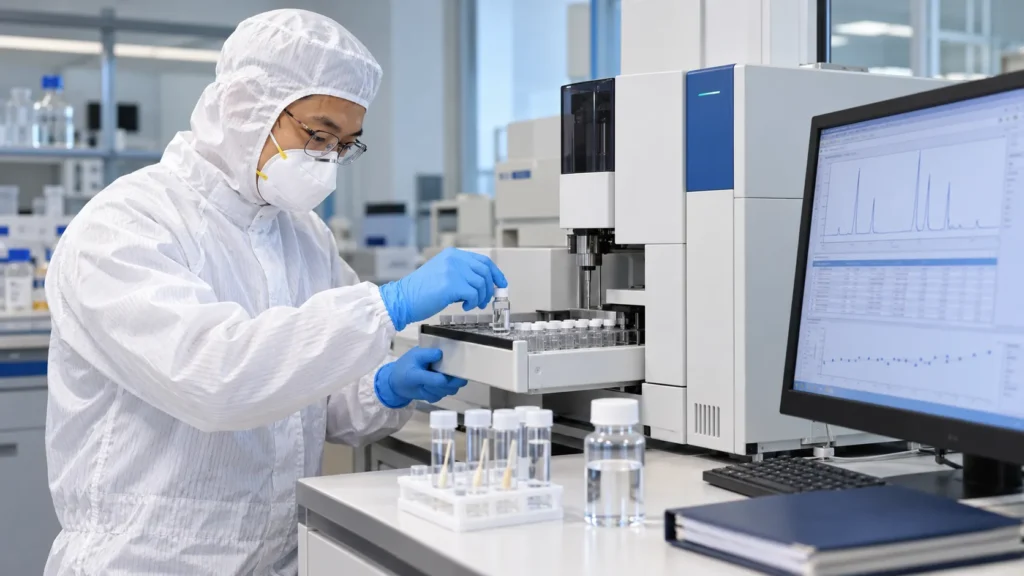
Cleaning validation demonstrates that a defined cleaning process consistently achieves predetermined acceptance criteria. It is most relevant where product-contact equipment is shared, residues could affect the next product or cleaning performance cannot be assured by visual inspection alone.
When Cleaning Validation Is Required
Cleaning validation is commonly expected for shared product-contact equipment and other situations where residues may create a product-quality risk. The validation approach should be based on risk and scientific rationale.
The manufacturer is responsible for establishing acceptable residue limits. There is no universal detergent-residue limit that applies to every product and process.
Establishing Scientifically Justified Acceptance Criteria
Acceptance criteria should be practical, achievable, verifiable and supported by data. They may consider:
- Health-based exposure limits
- Toxicological or pharmacological potency
- Product quality requirements
- Solubility and detectability
- Surface area and batch size
- Cleaning-agent residue limits
- Microbiological and endotoxin risk where relevant
Swab, Rinse and Visual Inspection Methods
Each method has a different purpose.
- Swab sampling assesses residue on a defined, accessible surface and is useful for worst-case locations.
- Rinse sampling can assess large or inaccessible internal surfaces, provided the rinse method can recover the residue of concern.
- Visual inspection checks for visible residue and general cleanliness but does not replace appropriate analytical evidence where residue risk is significant.
Sampling locations and methods should be justified. FDA notes that rinse sampling alone is generally not sufficient for cleaning validation when direct surface sampling is feasible.
Validating Dirty Hold Time and Clean Hold Time
Dirty hold time studies show that equipment can still be cleaned effectively after the maximum permitted period between use and cleaning. Clean hold time studies show that cleaned equipment remains protected and suitable for use for the defined storage period.
Both limits should reflect actual operating conditions, including campaign duration, shutdowns and equipment storage practices.
Ongoing Monitoring and Periodic Review
Validation is not a one-time exercise. Routine verification confirms that the validated process remains in control.
Ongoing review may include:
- Review of cleaning records and deviations
- Periodic visual inspections
- Trending of environmental-monitoring results
- Residue monitoring based on risk
- Review of cleaning-agent and disinfectant controls
- Reassessment after changes to products, equipment or processes
Building an Inspection-Ready GMP Cleaning Program
An inspection-ready program is not a folder of completed forms. It is a system in which procedures, facility design, trained people, records and verification all support the same contamination-control objective.
A Practical Review of Scope, Documentation and Facility Controls
Use this review to identify gaps:
- Map every area, equipment item, utility and transfer point within scope.
- Identify contamination risks for each product and process.
- Confirm that procedures are specific, current and approved.
- Check that cleaning tools, chemicals and equipment are controlled.
- Review the facility for damaged, inaccessible or hard-to-clean surfaces.
- Confirm that cleaning frequencies, hold times and campaign controls are justified.
- Verify that personnel are trained for the tasks they perform.
- Review records for completeness, traceability and timely review.
- Trend deviations, missed tasks and recurring cleaning issues.
- Assess whether changes require updated validation or verification.
Questions to Ask Before Appointing a GMP Cleaning Provider
Outsourcing cleaning does not transfer the manufacturer’s GMP accountability. Any provider should be capable of working within the site’s approved quality system.
Ask potential providers:
- Can your team follow our approved SOPs, gowning requirements and access controls?
- How do you train and assess cleaners for controlled environments?
- How do you control cleaning tools, chemicals and equipment by area?
- What records can you complete at the point of use?
- How do you manage missed tasks, deviations and escalation?
- Can you support out-of-hours cleaning without disrupting production controls?
- How do you prevent cross-contamination between sites, rooms or zones?
- What supervision and quality checks are included in the service?
The right cleaning provider supports your GMP system with disciplined execution, clear documentation and reliable communication.
The manufacturer remains responsible for approving the program, assessing risk and demonstrating that cleaning controls are suitable for the intended process.